

TL;DR:
- Most women overlook the powerful influence of their daily diet on skin, hair, and confidence, instead focusing on topical treatments. Proper nutrition supports collagen production, sebum regulation, and skin barrier health, leading to visible improvements in appearance. Small dietary changes can significantly enhance self-esteem and body positivity by nourishing the body from the inside out.
Most women spend hundreds of dollars on serums, creams, and treatments, yet overlook the single most powerful factor shaping their skin, hair, and overall glow: what they eat every day. Nutrition influences appearance through collagen synthesis, sebum regulation, skin barrier function, and keratin production, meaning your plate has more influence over how you look than most beauty aisles ever will. This guide unpacks exactly how nutrition affects your outer appearance, what the research actually says, and how to use that knowledge to build real, lasting confidence from the inside out.
Table of Contents
- How nutrition affects your skin, hair, and nails
- The science behind nutrition and a healthy glow
- Nutrition, acne, and inflammation: What the research shows
- How nutrition influences confidence and body positivity
- Rethinking beauty: Why nutrition is your ultimate self-care tool
- Next steps: Fueling your glow with expert support
- Frequently asked questions
Key Takeaways
| Point | Details |
|---|---|
| Nutrients impact appearance | Iron, protein, omega-3s, and vitamins are essential for healthy skin, hair, and nails. |
| Diet affects skin clarity | Low glycemic and fiber-rich diets reduce acne and lead to plumper, less inflamed skin. |
| Supplements aren’t a shortcut | Supplements work only if you have a deficiency; balanced food choices matter more. |
| Nutrition boosts confidence | Balanced nutrition helps you feel energized, strong, and more positive about your body. |
How nutrition affects your skin, hair, and nails
Your skin, hair, and nails are living tissues that depend on a steady supply of nutrients to stay strong, vibrant, and healthy. When your diet falls short, these areas are often the first to show it because your body redirects limited nutrients toward vital organs first. That means visible changes in how you look are frequently your body’s earliest warning signal.
The connection between diet and appearance is not subtle. Iron deficiency causes hair thinning and excessive shedding, while inadequate protein and omega-3 fatty acids leave hair weak, dull, and prone to breakage. These are not rare edge cases; they are among the most common nutritional issues women face, especially during periods of stress, dieting, or hormonal shifts.
Deficiencies in iron, zinc, biotin, and selenium can show up as dry or uneven skin, patchy pigmentation, and brittle nails that split or peel easily. Each of these nutrients plays a distinct role in how your body builds and repairs external tissues.
Here is a breakdown of the key nutrients and their specific roles:
| Nutrient | Role in appearance | Deficiency signs |
|---|---|---|
| Iron | Supports hair follicle function and circulation | Hair shedding, pale or dull skin |
| Protein | Builds keratin for hair and nails | Weak, slow-growing hair and nails |
| Omega-3 fatty acids | Reduces inflammation, hydrates skin | Dry, flaky skin and dull hair |
| Biotin | Supports keratin production | Brittle nails, thinning hair |
| Zinc | Regulates oil glands, aids skin repair | Acne, slow wound healing |
| Selenium | Antioxidant protection for skin cells | Skin inflammation, hair loss |
| Vitamin C | Essential for collagen production | Fine lines, easy bruising |
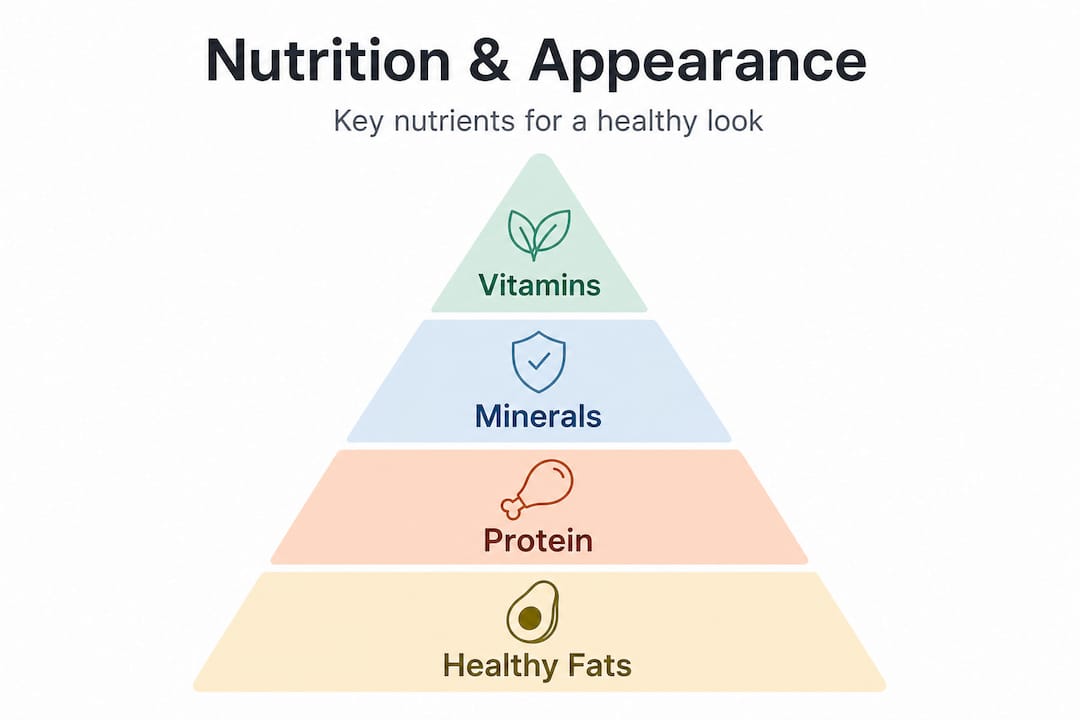
The good news is that nutrition and body confidence are closely linked, and even small, consistent improvements in your diet can create visible, meaningful changes. The key is knowing what to look for and acting before deficiencies become severe.
Signs to watch for:
- Increased hair shedding when showering or brushing
- Nails that crack, peel, or break easily
- Skin that feels persistently dry even after moisturizing
- Uneven skin tone or dull, tired-looking complexion
- Slow nail growth or hair that seems to stop growing
Pro Tip: Before reaching for supplements for appearance, get your iron, zinc, and vitamin D levels checked. Targeted supplementation only helps if you have an actual deficiency; otherwise, whole food sources are your best bet.
The science behind nutrition and a healthy glow
Understanding which nutrients affect your outer appearance is only part of the story; now let’s look at how those nutrients actually change the way you look, backed by science.
Your skin is not a static surface. It is constantly regenerating, repairing, and responding to internal signals, many of which come directly from the food you eat. Three key mechanisms drive most of what you see in the mirror: collagen synthesis, sebum regulation, and skin barrier integrity.
Collagen synthesis is arguably the most talked-about process in beauty, and for good reason. Collagen is the structural protein that keeps skin firm and elastic. Vitamin C is the critical cofactor your body needs to build collagen. Without enough of it, skin begins to lose structure, fine lines appear earlier, and healing slows noticeably. This is why eating vitamin-C-rich foods like bell peppers, strawberries, and citrus regularly supports a firmer, more youthful-looking complexion over time.
Sebum regulation affects how oily or breakout-prone your skin appears. High-glycemic foods (white bread, sugary drinks, processed snacks) cause rapid blood sugar spikes, which in turn increase insulin levels. Elevated insulin signals your oil glands to ramp up sebum production, which clogs pores and leads to acne. Shifting toward natural weight gain tips rooted in low-glycemic whole foods can visibly reduce this cycle.
A varied eating pattern can support your wider wellness and weight gain goals. Include foods you enjoy that provide fiber, protein and dietary fats; a specific daily fiber amount should not be presented as a skin-plumping treatment.
“The foods you eat every day either build your skin up or quietly break it down. There is no neutral choice at the dinner table when it comes to how you look.”
Here is a comparison of how dietary patterns affect key skin outcomes:
| Dietary pattern | Skin outcome |
|---|---|
| High glycemic diet (processed foods, sugar) | Increased acne, oiliness, inflammation |
| Low glycemic diet (whole grains, vegetables, legumes) | Clearer skin, reduced breakouts |
| Omega-3 rich diet (fatty fish, flaxseed, walnuts) | Hydrated, supple, less inflamed skin |
| Fiber-rich diet (fruits, vegetables, whole grains) | Plumper skin, reduced wrinkles |
| Protein-adequate diet (lean meats, legumes, eggs) | Stronger hair, nails, and skin structure |
Practical shifts that support a healthy glow include:
- Swapping white rice for brown rice or quinoa
- Adding a handful of walnuts or flaxseeds to smoothies
- Eating at least five servings of vegetables daily
- Drinking enough water to support skin hydration alongside fiber intake
Pro Tip: Visiting resources focused on women-focused nutrition can help you build a practical eating plan that supports both how you look and how you feel, without obsessing over every single meal.
Nutrition, acne, and inflammation: What the research shows
With this science in mind, what does research say specifically about breakouts and inflammation? Let’s break it down with clear steps.
Acne is not just a teenage problem. Many women in their 20s, 30s, and even 40s deal with persistent breakouts, and diet plays a far bigger role than most skincare marketing will tell you. The research here is solid and growing.
The strongest evidence points to glycemic load, which is the overall blood-sugar impact of your diet, as a primary dietary driver of acne. When blood sugar spikes repeatedly throughout the day, insulin surges promote skin inflammation and stimulate sebum overproduction. The result is clogged pores and more frequent breakouts.
Here is a practical four-step approach to using nutrition to reduce acne:
- Replace high-glycemic staples. Start by swapping out white bread, white pasta, and sugary cereals for whole-grain alternatives. This single change reduces daily insulin spikes considerably.
- Add fiber-rich foods intentionally. Aim for 30 grams of fiber per day through a mix of vegetables, fruits, legumes, and whole grains. Fiber feeds beneficial gut bacteria that support a healthier skin microbiome.
- Include skin-supporting fats. Foods like almonds, avocados, and salmon provide anti-inflammatory fats that calm the skin from within. Almonds in particular support the skin microbiome and have shown promise in lessening breakout frequency.
- Reduce added sugar and dairy if breakouts worsen. Both have connections to hormonal acne in some women, though individual responses vary. Pay attention to how your skin responds when you reduce or reintroduce these foods.
Diet and acne are complex, and individual responses differ. Persistent breakouts deserve a skin assessment rather than a promised percentage improvement from a dietary change.
Understanding the weight gain benefits for women who shift to nutrient-dense eating patterns also reinforces why balanced macronutrients matter beyond just appearance. When your body receives consistent, quality nutrition, inflammation across the board tends to decrease, and that reduction shows up on your skin.
It is also worth noting that not every supplement marketed for clear skin delivers results. Individual needs vary widely, and products that work for one person may do little for another. Whole food patterns remain the most reliable foundation.
How nutrition influences confidence and body positivity
Nutrition isn’t just about appearance; it powerfully affects how you view yourself. Here’s how your diet can lift your confidence and sense of self-worth.
There is a real, documented link between what you eat and how you feel about your body. Balanced nutrition improves energy, strength, and self-esteem and actively works against the weight stigma that many women face. This connection is not just motivational language; it reflects genuine psychological and physiological shifts that happen when you nourish your body well.

When you eat in a way that gives your body what it needs, energy levels stabilize. You move through your day feeling capable and strong rather than sluggish and depleted. That physical shift directly feeds into a more confident, settled mindset.
Key ways nutrition supports body confidence:
- Stable energy fuels a positive self-image. When blood sugar is balanced, mood swings reduce and you feel more emotionally steady, which makes it easier to feel good about yourself.
- Visible results reinforce the habit. As skin clears, hair strengthens, and nails grow in healthier, you see the results of your choices. That visible feedback loop builds motivation and self-esteem.
- Nourishing your body is an act of self-respect. Choosing foods that support your health signals to your subconscious that you value yourself, which is foundational to body positivity and wellness.
- Food flexibility reduces food-related anxiety. Moving away from restrictive diets toward balanced eating reduces the mental burden of food rules, which frees up emotional energy for genuine self-acceptance.
“Confidence doesn’t start with how you look. It starts with how you treat yourself. And few acts of self-treatment are as consistent and powerful as what you choose to eat.”
Building positive body image tips into your daily life can be as simple as starting with one nutritious meal per day and building from there. Sustainable habits, not dramatic overhauls, are what create lasting shifts in how you see yourself.
You can also explore body positivity routines that combine nutrition with movement, self-care, and mindset work for a truly grounded approach to feeling good in your body. The goal is not perfection. It is consistency and kindness toward yourself.
Rethinking beauty: Why nutrition is your ultimate self-care tool
Here is a perspective that the beauty industry does not profit from sharing: the most powerful beauty routine you can follow costs far less than a high-end serum and works at a cellular level every single day. It is your diet.
We have been trained to look outward for solutions. Cleanse, tone, treat, moisturize. Layer products, follow trends, invest in the latest ingredient. And while some of those things have their place, they are maintenance at best. They cannot replicate what your body does when it is genuinely well-nourished.
What we consistently see in women who shift their attention to nutrition is not just better skin or stronger hair. It is a different relationship with their bodies entirely. Women who start eating to support themselves rather than to punish or restrict begin to notice that body confidence follows naturally. Not because they look a certain way, but because they feel present in their bodies.
The uncomfortable truth is that chasing external fixes often deepens the sense that something is wrong with you. Nutrition reframes the story. Instead of treating your body as a problem to be corrected, you begin treating it as something worth investing in. That mindset shift is more transformative than any product on the shelf.
Women’s nutritional needs also change constantly, shaped by hormones, stress, age, and lifestyle. What worked at 25 may not feel right at 38. Tuning in to how your body responds to different foods is a more sustainable strategy than following a rigid plan designed for someone else. The confidence habits that work long-term are always the ones built around your actual, current body rather than an idealized version of it.
Next steps: Fueling your glow with expert support
You now have a clear picture of how nutrition shapes your skin, hair, nails, and confidence. The next step is putting it into action in a way that feels realistic and genuinely supportive of your goals.
Get Thick Products is built around exactly this kind of journey. As a women-focused wellness and beauty brand, we offer resources, supplements, and body care products designed to support women who want to feel confident, nourished, and comfortable in their curves. Whether you are exploring natural weight gain, body enhancement, or simply want to feel more empowered in your daily routine, our blog and product range offer practical, body-positive support every step of the way. Start where you are. Fuel yourself well. Let the glow follow.
Frequently asked questions
Can what I eat really affect my skin, or is it mostly genetics?
What you eat genuinely affects your skin. Diets rich in fiber, vitamins, and healthy fats visibly improve texture and reduce wrinkles, although genetics do play a supporting role.
How quickly can nutrition changes improve my appearance?
Appearance changes vary with the person, concern and routine. A balanced eating plan can support your goals, but this article does not establish a fixed timeline or percentage improvement for skin, hair or nails.
Are supplements necessary for better skin and hair?
Generally no. Evidence for supplements is limited unless you have a diagnosed deficiency. Whole food sources are more effective and better absorbed for most women.
Can improving my nutrition help build confidence and fight body stigma?
Absolutely. Balanced nutrition boosts energy, strength, and self-esteem, which directly supports a more positive relationship with your body and reduces the impact of weight stigma over time.
Recommended
- How supplements support women’s body shape and wellness – Get Thick Products
- 7 Surprising Benefits of Weight Gain for Women Naturally – Get Thick Products
- Body Confidence Tips That Work: Natural Weight Gain – Get Thick Products
- Why choose appearance enhancement: Boost confidence – Get Thick Products