

Feeling confident in your body isn’t just about looks. Science shows it’s deeply linked to what and how you eat. Body image satisfaction improves with balanced, nutrient-rich intake and positive eating habits. This article explores how nutrition shapes self-image, the research connecting adaptive eating to higher satisfaction, and practical strategies you can use today to feel more confident through smarter food choices.
Table of Contents
- Why nutrition matters for body confidence
- The science: Nutrition, eating behaviors, and satisfaction
- Balanced approaches: What actually builds body confidence?
- Strategies for healthy weight gain and muscle-building confidence
- Integrating nutrition with self-care routines for confidence
- Take the next step: Boost your body confidence with effective nutrition
- Frequently asked questions
Key Takeaways
| Point | Details |
|---|---|
| Balanced eating boosts confidence | Eating a variety of nutrients is directly linked to increased body satisfaction in women. |
| Flexible nutrition works best | Restrictive diets can harm self-esteem, while balanced approaches build confidence. |
| Healthy weight gain strategies | A targeted calorie surplus with strength training supports muscle growth and self-image. |
| Daily routines matter | Combining nutrition with self-care habits leads to lasting improvements in body confidence. |
Why nutrition matters for body confidence
Now that you know nutrition matters, let’s break down the connection between what you eat and feeling good in your body. The relationship between food and confidence runs deeper than most women realize. Body image satisfaction is negatively associated with uncontrolled eating and emotional eating. When you eat reactively or restrictively, your self-image suffers. Conversely, balanced eating patterns support both physical health and mental well-being.
Poor nutrition and restrictive eating take an emotional toll. Chronic dieting, skipping meals, or labeling foods as good or bad creates anxiety around eating. This anxiety feeds body dissatisfaction. Women show greater body dissatisfaction and risk for disordered eating compared to men, making it especially important to adopt adaptive eating styles that support confidence rather than undermine it.
Adaptive eating means listening to your body, choosing nourishing foods without guilt, and allowing flexibility. It’s the opposite of rigid rules or emotional reactions to hunger.
Adaptive eating styles support confidence by removing the mental burden of perfection. You eat when hungry, stop when satisfied, and choose foods that make you feel energized. This approach aligns with your body’s natural signals and builds trust in yourself. Building a wellness routine for women that includes balanced nutrition is a powerful step toward lasting confidence.
Common pitfalls include social media and harmful food trends. Scrolling through clean eating content or extreme diet challenges can distort your perception of healthy eating. These trends often promote restriction disguised as wellness, which backfires on body satisfaction. Following a body positivity checklist helps you filter out harmful messages and focus on what truly supports your confidence.
Key factors that link nutrition to confidence:
- Eating patterns influence mood and energy levels
- Restrictive diets increase anxiety and dissatisfaction
- Balanced intake supports stable blood sugar and mental clarity
- Flexible eating reduces guilt and builds self-trust
The science: Nutrition, eating behaviors, and satisfaction
With that context, let’s look at what the latest studies say about nutrition’s precise role in shaping body confidence. Recent research clarifies how nutritional intake, body image, and eating habits interlink for women. Body satisfaction correlated with adaptive eating; dissatisfied individuals had higher maladaptive behaviors. This means the way you eat matters as much as what you eat.
Restrained eating involves strict rules and constant monitoring of food intake. Uncontrolled eating means eating past fullness or in response to external cues rather than hunger. Both patterns correlate with lower body satisfaction. Women who practice flexible, intuitive eating report higher confidence and better relationships with food.
Diet quality plays a significant role. Balanced Mediterranean diets improved body satisfaction and mental health outcomes for women. This eating pattern emphasizes whole foods, healthy fats, lean proteins, and plenty of vegetables. It avoids extreme restriction while naturally supporting nutrient needs. Understanding confidence and curves explained helps you see how nutrition supports your body goals.
| Eating Pattern | Impact on Body Satisfaction | Key Characteristics |
|---|---|---|
| Adaptive/Flexible | High satisfaction | Listens to hunger cues, allows variety, no guilt |
| Restrained | Moderate to low satisfaction | Strict rules, constant monitoring, fear of certain foods |
| Uncontrolled | Low satisfaction | Eating past fullness, emotional triggers, loss of control |
| Emotional | Low satisfaction | Using food to cope with stress or negative feelings |
An eating routine that feels flexible and nourishing can support your personal weight gain and confidence goals. Your needs and preferences matter more than an unsupported comparison between groups of women.
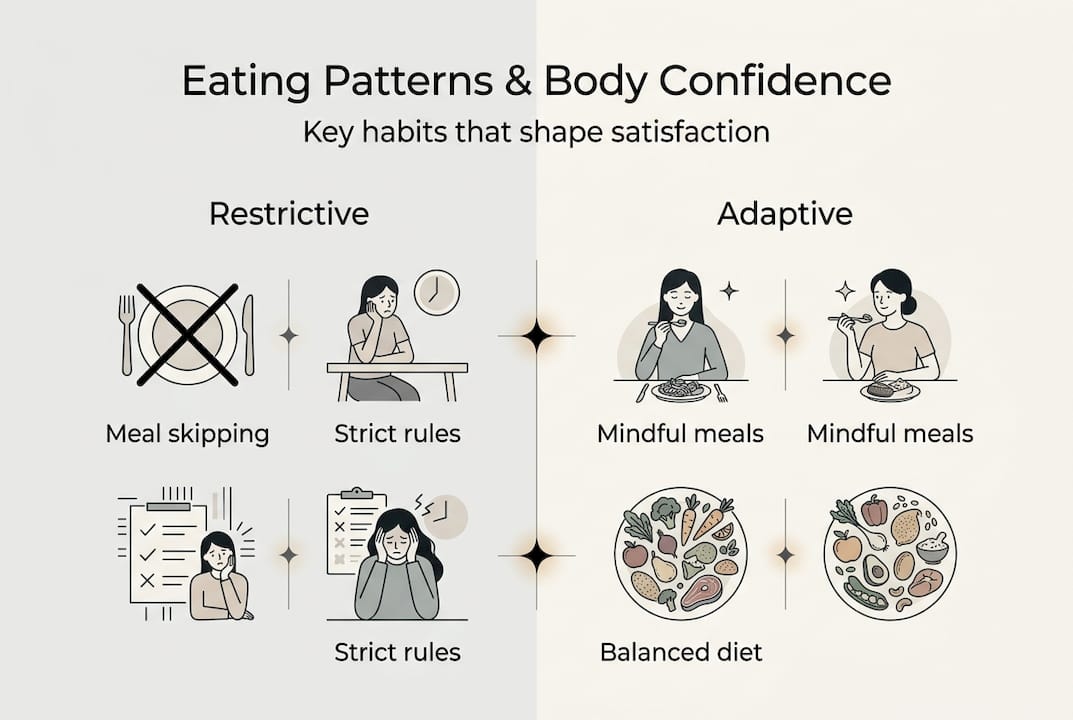
Maladaptive behaviors include skipping meals, binge eating, or using food as punishment or reward. Adaptive behaviors include eating regular meals, choosing foods you enjoy, and stopping when comfortably full. The difference in outcomes is dramatic. Women who shift from maladaptive to adaptive patterns see improvements in confidence within weeks.
Balanced approaches: What actually builds body confidence?
The science is clear, but how does that translate into everyday choices and what approaches work best for modern women? The answer lies in flexible, realistic eating that sparks confidence instead of anxiety. Overly restrictive or clean eating creates more problems than it solves. When you label foods as forbidden, you increase cravings and guilt. This cycle damages body satisfaction over time.
Social media clean eating content may decrease body satisfaction; flexible approaches are better for most women. Clean eating trends often promote an all-or-nothing mindset that’s impossible to sustain. When you inevitably eat something off-limits, you feel like a failure. Flexible eating removes this trap entirely.
| Restrictive Behaviors | Adaptive Behaviors |
|---|---|
| Avoiding entire food groups | Including all foods in moderation |
| Counting every calorie obsessively | Eating to satisfaction without tracking |
| Feeling guilty after eating | Enjoying food without judgment |
| Skipping social events due to food | Participating fully in life |
| Labeling foods as good or bad | Viewing all foods neutrally |
Pro Tip: Focus on pleasure and satisfaction, not perfection. Choose foods that taste good and make you feel energized. If a meal doesn’t satisfy you, adjust the next one. This mindset shift transforms your relationship with food and your body.
Signs your approach needs to change include constant food thoughts, anxiety around meals, avoiding social situations with food, or feeling out of control when eating. If you experience these, it’s time to adopt more flexible patterns. Exploring wellness supplements for women can complement balanced eating without replacing it.
Indicators of a healthy eating approach:
- You eat when hungry and stop when satisfied
- Food choices feel neutral, not emotional
- You enjoy meals without guilt
- Energy levels stay stable throughout the day
- You can eat socially without stress
Understanding the natural weight gain benefits helps if you’re underweight or want to build curves. Balanced nutrition supports healthy weight changes without compromising confidence.
Strategies for healthy weight gain and muscle-building confidence
Balanced eating patterns are key, but if you want to gain healthy weight and feel great, here’s how to do it naturally. Underweight women benefit from targeted, nutrient-rich surplus eating. This means consuming slightly more calories than you burn, focusing on whole foods that provide vitamins, minerals, and energy. Healthy weight gain involves 300-500 calorie surplus, nutrient-dense foods, and strength training 2-3 times per week.
Step-by-step approach to building muscle for confidence:
- Calculate your baseline calorie needs using an online calculator
- Add 300-500 calories daily through nutrient-dense foods
- Prioritize protein at every meal (aim for 0.7-1 gram per pound of body weight)
- Include strength training 2-3 times weekly, focusing on major muscle groups
- Track progress through how you feel and how clothes fit, not just the scale
- Adjust intake based on energy levels and results after 2-3 weeks
Calorie-dense foods make gaining weight easier without feeling overly full. Nuts and nut butters provide healthy fats and protein in small portions. Avocados add creamy texture and nutrients to meals. Full-fat dairy offers calcium and calories together. Olive oil, seeds, and dried fruits are other smart choices. These foods support weight gain while nourishing your body.
Pro Tip: Pair nutrition with resistance training for the best confidence results. Building muscle creates curves, improves strength, and boosts metabolism. You’ll feel capable and powerful, which translates directly to body confidence.
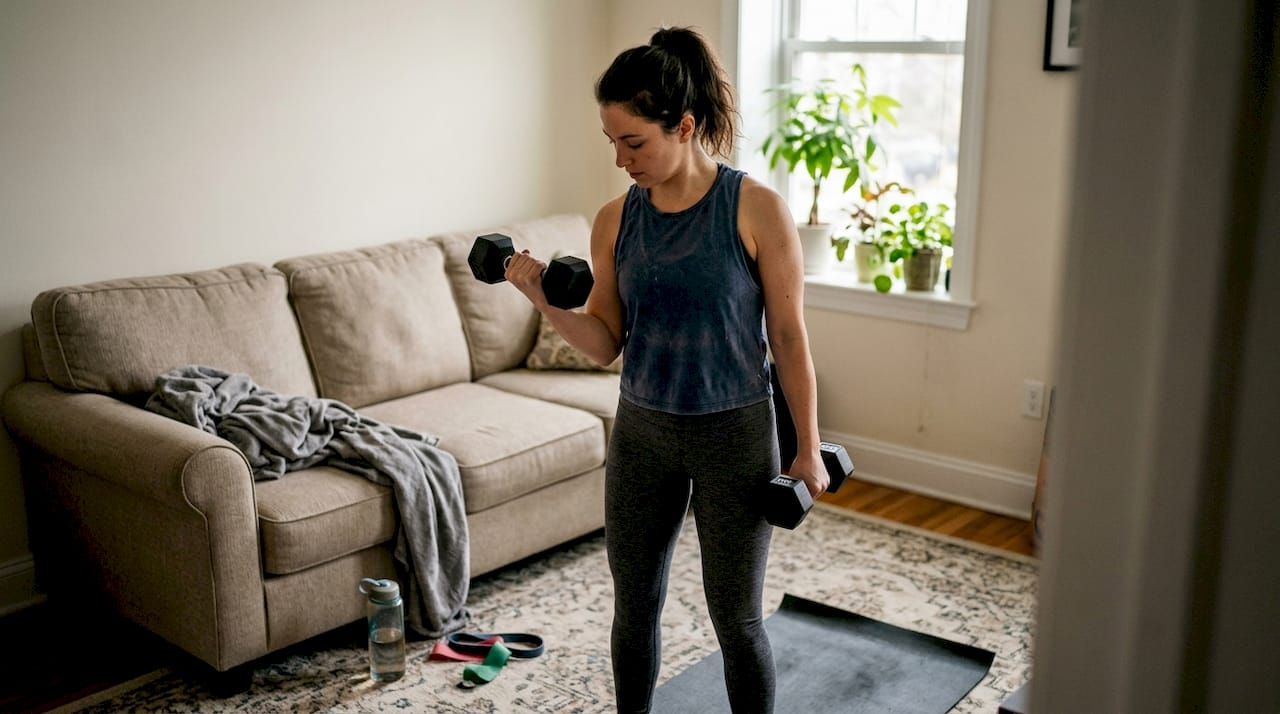
For athletes, energy surplus of 500-1000 kcal/day, protein 1.6-2.4 g/kg/day, and adequate energy availability support mass gain with body satisfaction. Even if you’re not an athlete, these principles apply. Consistent surplus eating plus strength work builds lean mass that enhances your shape and confidence. Learning how to gain weight fast and healthy gives you a complete roadmap.
Integrating nutrition with self-care routines for confidence
Confidence isn’t just about what you eat. It’s how you integrate these habits into your wider self-care practice. Routines, rituals, and habits boost sustainable change by making healthy choices automatic. When you pair meal prepping with body care, both become easier to maintain. Sunday meal prep sessions can include face masks or bath time, creating a holistic self-care experience.
Pairing positive dietary habits with physical activity helps boost self-esteem and confidence. Movement and nutrition work together synergistically. A morning walk followed by a nourishing breakfast sets a positive tone for the day. Evening yoga paired with a satisfying dinner helps you wind down while honoring your body’s needs.
Affirmations and self-talk matter when making nutrition choices. Instead of thinking “I shouldn’t eat this,” try “I choose foods that make me feel good.” This subtle shift removes guilt and builds agency. You’re making empowering choices rather than following restrictive rules. Over time, this mindset becomes automatic.
Creating your personalized food confidence routine:
- Schedule regular meal times that fit your lifestyle
- Prep ingredients or full meals on a designated day
- Combine cooking with enjoyable activities like podcasts or music
- Practice gratitude before meals to enhance satisfaction
- Check in with hunger and fullness cues throughout the day
- Celebrate food wins without judgment of perceived failures
Exploring weight gain supplements can support your nutrition goals when whole foods alone aren’t enough. Supplements work best as additions to a solid eating foundation, not replacements. Building a natural wellness routine that includes balanced nutrition, movement, rest, and body care creates lasting confidence from the inside out.
Take the next step: Boost your body confidence with effective nutrition
You now have the knowledge. Here’s how you can put it into action with the right supportive products. Get Thick Products offers beauty and wellness solutions designed specifically for women seeking to enhance body confidence through effective nutrition and natural approaches. Our products complement the balanced eating strategies you’ve learned, supporting your journey toward feeling amazing in your body.
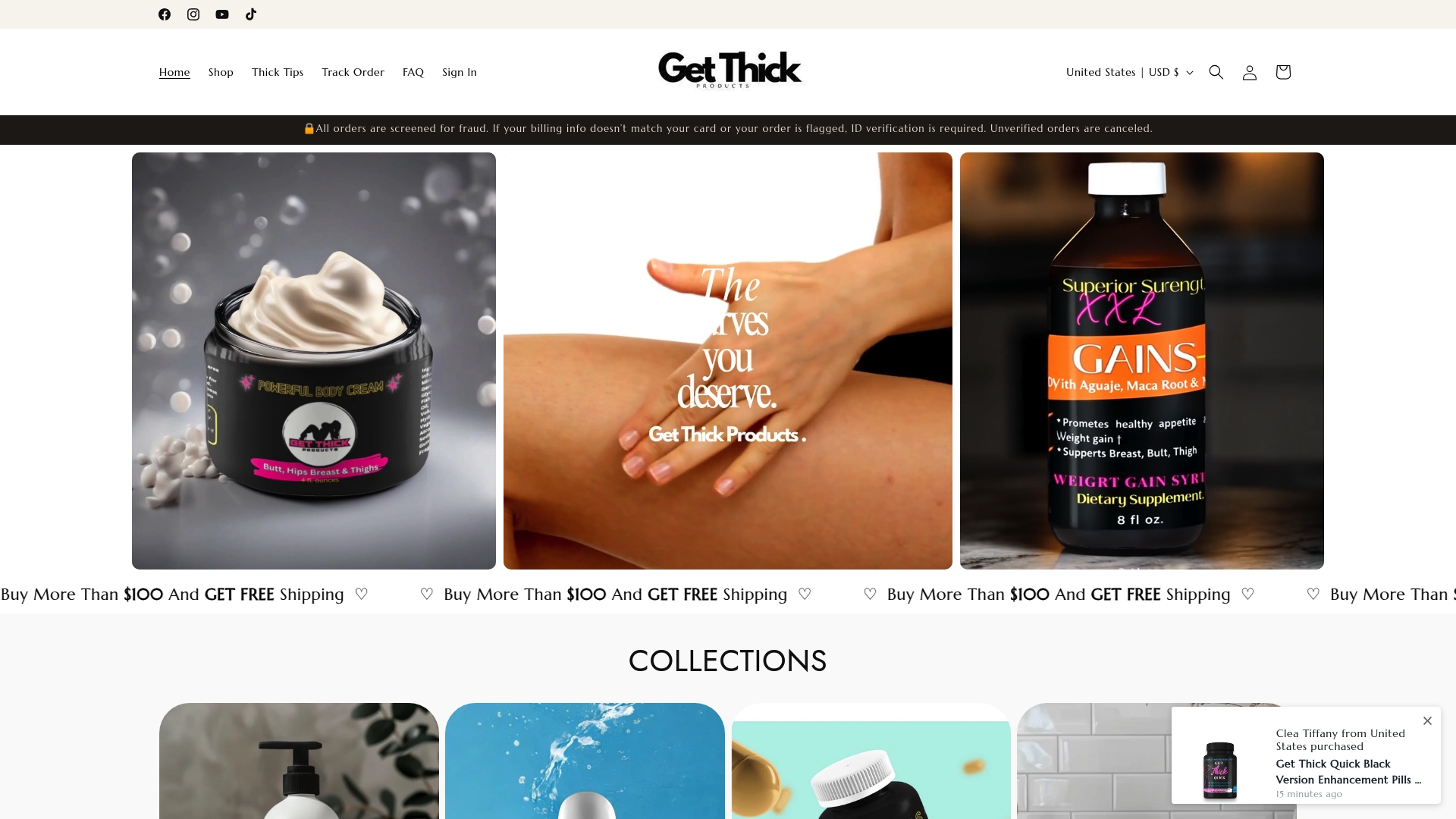
Whether you’re working on healthy weight gain, building curves, or simply wanting to feel more confident, we provide targeted support that aligns with your goals. Explore our range of nutrition for body confidence products formulated to work alongside proper nutrition and lifestyle habits. From dietary supplements to body enhancement cosmetics, each product emphasizes appearance enhancement and body positivity. Discover weight gain support options that help you achieve your confidence goals naturally and sustainably.
Frequently asked questions
Can changing my diet really improve body confidence?
Research shows a balanced, nutrient-rich diet improves body satisfaction and reduces harmful eating behaviors. The connection between nutrition and confidence is scientifically validated.
What’s the safest way for women to gain weight and boost confidence?
A healthy calorie surplus using whole foods plus strength training builds lean muscle and confidence naturally. Aim for 300-500 extra calories daily from nutrient-dense sources.
Do restrictive or clean eating trends help with body image?
Excessive clean eating often decreases body satisfaction; flexible eating habits are generally healthier for confidence. Avoid all-or-nothing approaches that create guilt and anxiety.
How can I combine nutrition with other self-care practices for better confidence?
Blend nourishing meals, physical activity, and positive self-talk for the best confidence results. Pairing positive dietary habits with movement and mindfulness creates synergistic benefits that enhance both physical and mental well-being.
Recommended
- 7 Surprising Benefits of Weight Gain for Women Naturally – Get Thick Products
- Build confidence with a natural wellness routine for women – Get Thick Products
- Body positivity checklist for women: 10 steps to confidence – Get Thick Products
- Wellness supplements for women: curves, confidence & results – Get Thick Products