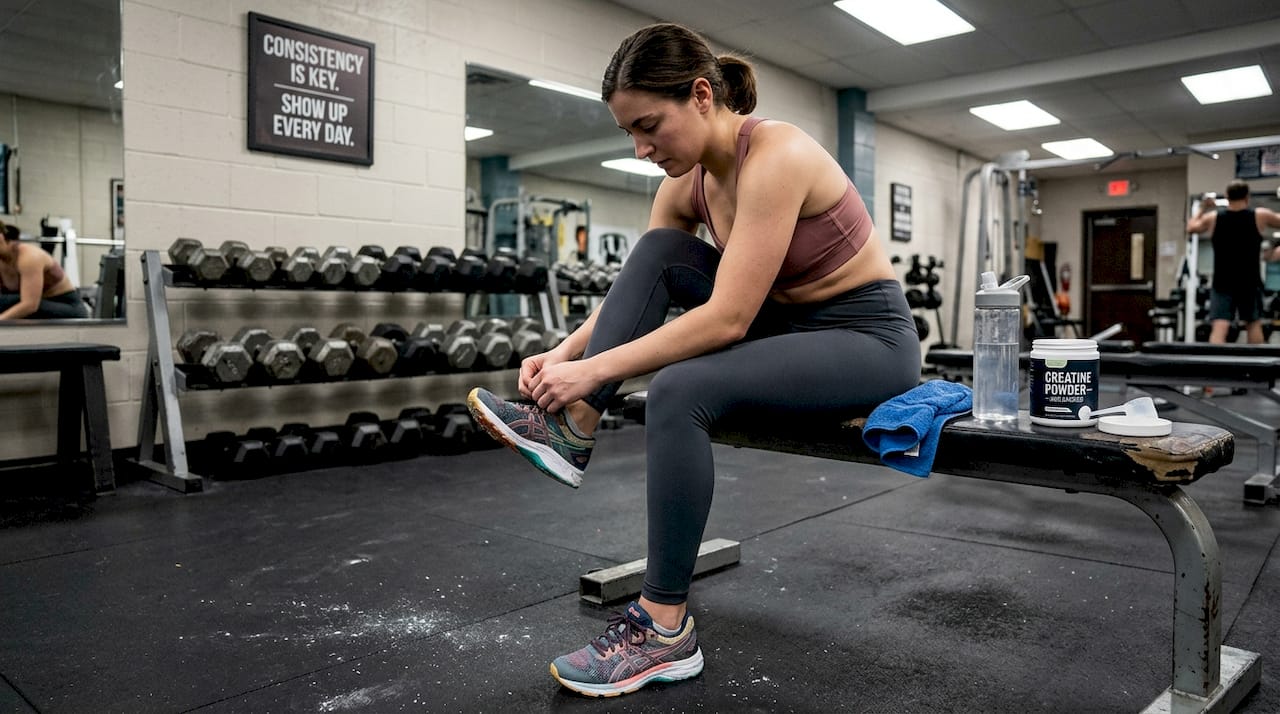
Woman mixing supplement in urban kitchen

How supplements support women's body shape and wellness


TL;DR:

  • Modest muscle gains from supplements like protein and creatine improve body shape with resistance training.
  • Many marketed supplements have little evidence and may pose health risks; focus on proven options.
  • Confidence develops through consistent routines, physical progress, and lasting lean muscle, not just supplement use.

Many women turn to supplements hoping for a shortcut to a fuller figure, better curves, and a stronger sense of confidence. But here’s what most supplement marketing won’t tell you: the results are real, just modest, and they require more than popping a capsule. Understanding how cosmetic supplements actually work, what the evidence says, and which strategies genuinely support healthy weight gain can save you time, money, and frustration. This article breaks down the science behind protein, creatine, and other popular options, separates fact from hype, and gives you a practical roadmap to build the body and confidence you’re after.

Table of Contents

Key Takeaways

Point Details
Protein and creatine are key These supplements, combined with exercise, provide modest, evidence-backed gains in lean mass for women.
Mass gainers offer little benefit Calorie-dense and weight-loss supplements rarely deliver meaningful results or body shape improvements.
Confidence comes from routines Building curves and self-esteem require consistent training, smart nutrition, and patience—not just supplements.
Results take time Expect changes in body shape over 12 or more weeks of sustained routine and supplement use.
Consult for safety Always check with your healthcare provider before starting new supplement regimens, especially for health conditions.

How supplements influence body shape and confidence

Walk into any supplement store and you’ll see bold promises: “Build curves fast,” “Gain weight in 30 days,” “Transform your shape overnight.” The reality is more nuanced, and honestly, more interesting. Most cosmetic supplements deliver modest gains, and those gains depend heavily on what you do alongside taking them.

The strongest evidence points to protein supplements. Whey and multi-ingredient protein supplements combined with resistance exercise increase fat-free mass by an average of 0.45 kg in healthy women aged 18 to 73. That’s lean muscle, not fat, and it’s the kind of weight that actually reshapes your silhouette. Muscle sits differently on your frame than fat does. It fills out your hips, lifts your glutes, and creates the kind of curves that last.

What about confidence? It’s a bit more indirect. Modest gains of 0.5 kg FFM require 12 or more weeks of consistent training before you notice real physique changes. Supplements don’t directly wire your brain for confidence. But when you see your body changing, when clothes fit differently and you feel stronger, that shift in self-perception is powerful. Understanding your confidence and wellness routine matters as much as the supplements themselves.

Safety is another piece most people skip. The NIH supplement guidance is clear: many products make claims that outpace their evidence. Realistic expectations protect you from wasted money and potential health risks.

Here’s a quick comparison of commonly used supplements and what the evidence actually supports:

Supplement Evidence level Average result Best use case
Whey protein Strong +0.45 kg FFM Lean mass with resistance training
Creatine Moderate to strong +0.59 kg FFM Strength, lean mass, body shape
Mass gainers Weak Variable, often fat gain Bulking, not curve enhancement
Weight loss pills Very weak Minimal to none Not recommended for body shaping
Collagen peptides Emerging Skin and joint support Cosmetic skin quality

Key things to keep in mind when evaluating any supplement:

  • Look for products with peer-reviewed research behind them
  • Avoid anything promising rapid transformation without exercise
  • Check for third-party testing and transparent ingredient labels
  • Match the supplement to your actual goal, lean mass versus generic weight

Pro Tip: Your goal should be lean mass gain, not just weight gain. A pound of muscle looks and feels completely different from a pound of fat, and it’s what creates lasting curves.

The connection between confidence and curves runs deeper than the scale. Focus on what your body can do and how it’s changing shape, not just the number you see each morning.

Protein and creatine: Evidence-backed supplements for women

Now that you’ve seen which supplements truly make a difference, let’s focus on the most effective options: protein and creatine. These two are the most researched, the most practical, and the most relevant for women who want to support healthy weight gain and body shape enhancement.

Protein is the building block of muscle. When you eat enough of it and pair it with resistance training, your body has the raw material it needs to build and repair muscle tissue. Sports nutrition experts recommend 1.6 to 2.4 grams of protein per kilogram of body weight per day for women focused on body composition, alongside a calorie surplus of 500 to 1,000 kcal per day. For a 140-pound woman, that’s roughly 100 to 150 grams of protein daily. Most women fall well short of that through food alone, which is exactly where a quality protein supplement earns its place.

Creatine works differently. It helps your muscles regenerate ATP, which is the energy currency your body uses during intense exercise. More available energy means you can train harder, lift more, and recover faster. A 7-day creatine wash-in leads to 0.59 kg greater lean body mass gain in women during resistance training. That’s a meaningful edge, and it comes without the bulky look many women worry about.

Woman prepping for training in gym

Here’s a practical data snapshot for both supplements:

Supplement Recommended dose Timeline for results Average FFM gain
Whey protein 20 to 40 g post-workout 8 to 12 weeks +0.45 kg
Creatine monohydrate 3 to 5 g daily 4 to 8 weeks +0.59 kg

How to incorporate both safely and effectively:

  1. Start with protein first. Get your daily intake dialed in through food, then add a shake to close the gap.
  2. Add creatine monohydrate at 3 to 5 grams per day. No need for a loading phase if you’re patient.
  3. Time your protein shake within 30 to 60 minutes after your workout for best muscle protein synthesis.
  4. Stay well hydrated when using creatine, as it draws water into muscle cells.
  5. Give it at least 8 weeks before evaluating results. Consistency beats intensity every time.

Check out the healthy weight gain guide for a deeper look at structuring your nutrition alongside supplements. And if you’re wondering whether supplements are even worth it, using weight gain supplements breaks down the reasoning clearly.

Pro Tip: Creatine can be especially beneficial for perimenopausal women, supporting strength and even sleep quality. However, if you have any kidney concerns, skip creatine and talk to your doctor first.

Why calorie-dense mass gainers and weight-loss supplements fall short

While protein and creatine show promise, not all supplements are reliable. Let’s address the highly marketed options and their pitfalls.

Mass gainers are everywhere in supplement aisles, and they’re aggressively marketed to women who want to gain weight quickly. These products pack anywhere from 600 to 1,200 calories per serving, mostly from sugars and starches. The problem is that without a structured resistance training program, those extra calories tend to add fat rather than muscle. That’s not the kind of weight gain that creates the curves most women are after.

Weight loss supplements have the opposite pitch but often the same outcome: disappointment. The NIH has been direct on this:

“Dietary supplements for weight loss have little scientific evidence for efficacy and may pose safety risks, with no strong support for cosmetic weight gain or body composition products.”

That’s a significant statement from one of the most credible health institutions in the country. It means the flashy labels and celebrity endorsements don’t hold up under scrutiny.

Common products that often disappoint women seeking body shape enhancement:

  • Thermogenic fat burners: Marketed for weight loss, not curve building. Often contain stimulants that cause jitteriness and elevated heart rate.
  • Appetite suppressants: Counterproductive if your goal is healthy weight gain and a fuller figure.
  • Herbal mass gainers: Typically lack clinical evidence and may contain undisclosed ingredients.
  • Detox or cleanse products: No evidence they support body composition changes; may cause digestive issues.
  • Unregulated curve enhancement pills: Often rely on anecdotal testimonials rather than research.

The weight gain myths around these products run deep. Many women spend months on products that simply don’t work because the marketing is so convincing. A more useful frame is this: if a supplement can’t point to peer-reviewed research showing meaningful results in women, it’s probably not worth your money or your trust.

Building a positive body image starts with realistic goals. Chasing rapid transformation through unproven products often leads to frustration, not confidence. The women who see the best results are the ones who commit to a consistent, evidence-backed routine and measure progress in weeks, not days.

Making supplements work: Practical strategies for healthy weight gain and body curves

With supplement dangers and benefits in mind, here’s how to structure a routine that actually delivers results.

The most important thing to understand is that supplements are amplifiers, not foundations. They work best when layered on top of a solid exercise and nutrition base. Whey protein supports fat-free mass preservation and modest gains during weight interventions in women, but those effects are significantly enhanced with resistance exercise. Without training, the benefits flatten out.

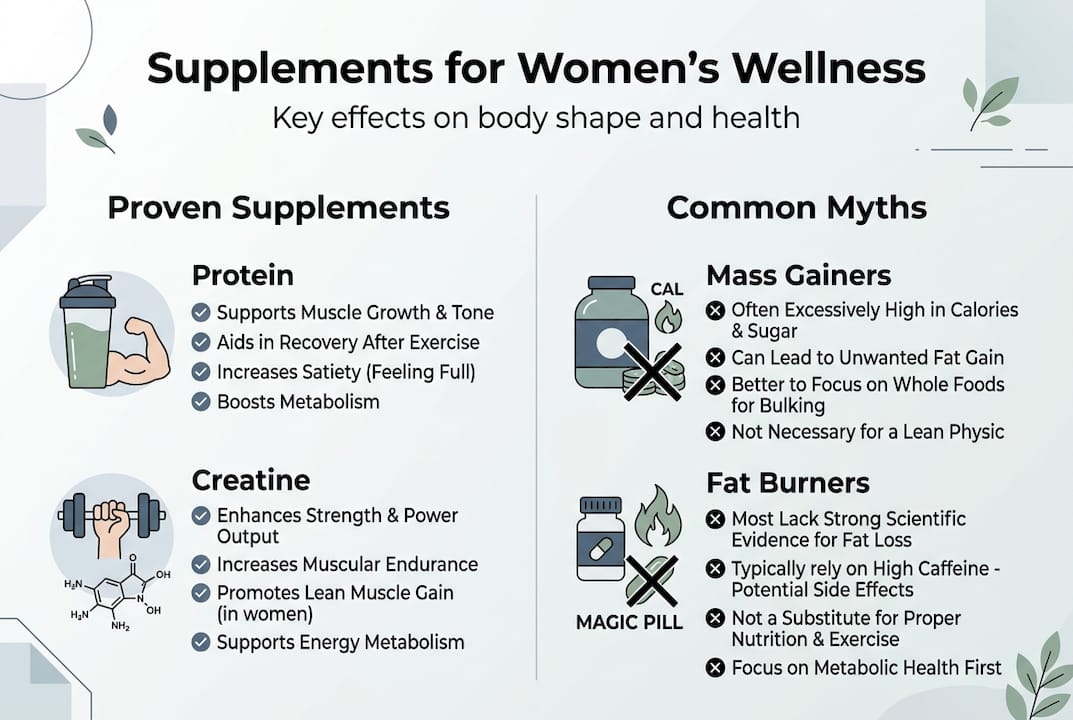
Infographic: supplements impact body shape wellness

Even with training, post-exercise whey protein in pre-menopausal women increases daily protein intake but shows only 1.8 to 2.0% additional lean mass gains over exercise alone. That’s still meaningful over time, but it reinforces the point: the training is doing the heavy lifting, and the supplement is supporting it.

Here’s a practical action plan for women aged 21 to 55 who want to build curves and support healthy weight gain:

  1. Start resistance training at least 3 days per week. Focus on compound movements like squats, hip thrusts, and rows that target the muscle groups associated with a fuller, curvier shape.
  2. Set a calorie surplus of 300 to 500 calories above your maintenance level. Use whole foods as your base, then add supplements to fill gaps.
  3. Hit your protein target of 1.6 to 2.4 g per kilogram of body weight. Use a quality whey or plant-based protein supplement to reach this consistently.
  4. Add creatine monohydrate at 3 to 5 grams daily. Take it at the same time each day to build the habit.
  5. Track lean mass, not just weight. Use measurements, progress photos, and how your clothes fit. The scale alone misses the story.
  6. Consult your healthcare provider before starting any new supplement routine, especially if you have existing health conditions or are perimenopausal.

Pro Tip: Muscle curves last longer than fat-based weight gain. Prioritize lean mass progress over total scale weight, and you’ll build a shape that holds up over time.

For more on building a results-focused routine, explore wellness supplements for curves and how nutrition fuels body confidence. You can also read more about the benefits of natural weight gain to understand why this approach pays off long-term.

Why confidence comes from smart routines—not just supplements

Here’s a perspective most articles miss: confidence isn’t a side effect of a supplement. It’s a byproduct of showing up consistently for yourself.

We’ve seen women spend hundreds of dollars on trending products, only to feel defeated when the results don’t match the promise. The frustrating truth is that the supplement was never the problem or the solution. The routine was. When you build a structured wellness habit, one that includes resistance training, proper nutrition, and evidence-backed supplements, something shifts. You start trusting your body. You see it respond. That’s where real confidence lives.

The empirical data backs this up. Modest gains take 12 or more weeks to appear. Most women quit before they get there. The ones who stay the course don’t just see physical changes. They develop a relationship with their body that no product can manufacture. Exploring women-focused nutrition as part of a broader lifestyle shift is far more powerful than any single supplement purchase.

Don’t chase trends. Apply what’s proven, be patient with the process, and let the results build your confidence from the inside out.

Explore wellness solutions for body shape and confidence

If you’re ready to take actionable steps, there are tools designed specifically for women who want to support their body goals with intention. At Get Thick Products, we’ve built a line of wellness supplements, topical enhancement creams, and body care products with women’s confidence and curves in mind.

https://getthickproducts.com

Our products are designed to complement the evidence-backed strategies covered in this article, not replace them. Whether you’re looking for dietary support, topical body enhancement, or resources to build a custom wellness routine, explore our wellness solutions for women and find what fits your goals. Your body, your routine, your results.

Frequently asked questions

Which supplement is best for improving body shape in women?

Protein and creatine are the most evidence-supported options for enhancing lean mass and body shape. Whey protein increases fat-free mass by 0.45 kg on average, while creatine supports lean mass gains during resistance training, both working best when paired with consistent exercise.

How long does it take to see results from supplements?

Expect modest but visible muscle gains after 12 or more weeks of combining supplements with resistance training. Empirical benchmarks show that 0.5 kg of fat-free mass gain requires at least 12 weeks of consistent effort.

Are mass gainers or weight-loss supplements safe or effective for women?

Most have little evidence supporting efficacy and may carry health risks. The NIH notes minimal evidence for these products and advises caution, making protein and creatine far safer and more effective alternatives.

Can supplements directly boost confidence?

Supplements support confidence indirectly by improving physique over time, but no direct link exists between taking a supplement and feeling more confident. Confidence grows from consistent wellness routines and seeing real physical progress.

Should women consult a healthcare provider before using supplements?

Yes, always. This is especially important if you have existing health conditions, as creatine should be avoided by women with kidney issues, and a provider can help tailor supplement choices to your personal health profile.

Back to blog

Leave a comment

Please note, comments need to be approved before they are published.