

TL;DR:
- Cosmetic body shaping is a science-backed process focused on refining specific body areas rather than promoting overall weight loss. It includes surgical and non-surgical options that target stubborn fat, loose skin, and contours to boost confidence and body positivity. Safe and effective results depend on realistic expectations, individual health, and integrating body shaping with a supportive self-care routine.
Cosmetic body shaping is not just another weight loss trend. It’s a science-backed approach that uses targeted methods to change how your body looks and feels in specific areas, rather than simply shrinking numbers on a scale. According to body contouring research, the goal is always about refining your silhouette and boosting confidence, not chasing someone else’s ideal. In this guide, you’ll learn exactly what cosmetic body shaping is, how different options compare, which consumer products are worth your attention, and how to make smart, body-positive choices that actually serve you.
Table of Contents
- What is cosmetic body shaping?
- Types of cosmetic body shaping: Surgical vs. non-surgical
- How do non-surgical body shaping technologies work?
- Are consumer products like creams and supplements safe or effective?
- Who is a good candidate for cosmetic body shaping?
- A fresh perspective on body shaping: What most guides don’t tell you
- Empower your routine: Products and resources for body-positive shaping
- Frequently asked questions
Key Takeaways
| Point | Details |
|---|---|
| Targeted contour focus | Cosmetic body shaping enhances specific areas for curves, not overall weight loss. |
| Surgical vs. non-surgical | Procedures differ in invasiveness, speed, and recovery—pick what fits your goals and comfort. |
| Clinical vs. consumer | Device evidence is specific to the authorized device, body site and intended use. |
| Safety first | Only certain candidates are suited for each method, so check health guidelines. |
| Confidence is key | Blending smart body shaping with body positivity brings the best long-term results. |
What is cosmetic body shaping?
Let’s start by demystifying what cosmetic body shaping really means and why it’s not just about slimming down.
Cosmetic body shaping is a term that covers a wide range of treatments and practices designed to alter how specific parts of your body look. It is not the same as dieting or a general weight loss program. According to Cleveland Clinic, body shaping treatments reshape targeted areas of the body by reducing unwanted fat, tightening loose or sagging skin, and refining body contours. The focus is always on specific zones, not your overall body weight.
This distinction matters. When you lose weight through diet and exercise, you lose fat throughout your body more or less evenly, and your shape may not change as dramatically as you’d like in stubborn areas. Cosmetic body shaping zeroes in on those specific spots, whether that’s your hips, belly, thighs, or arms, and works to refine them in targeted ways.
Here’s what cosmetic body shaping is actually about:
- Refining your silhouette in problem areas that don’t respond to exercise
- Tightening skin that has loosened over time or after weight changes
- Reducing localized fat deposits in specific zones
- Enhancing curves to create a more proportional, confident appearance
- Feeling great in your clothes, not just on a scale
“Body shaping is conceptually distinct from overall weight loss: it aims at localized contour changes, and results depend on factors like being near one’s ideal weight.”
It’s also worth noting that cosmetic body shaping works best when you’re already close to your natural weight. It’s not a substitute for general health habits. Instead, think of it as a finishing tool, something that helps you fine-tune areas that lifestyle alone can’t always change. Exploring body positivity routines alongside shaping options can create a much more satisfying and sustainable result. And if you’re newer to this space, reading about body enhancement explained is a great place to build your foundation.
Types of cosmetic body shaping: Surgical vs. non-surgical
Now that you understand the big picture, let’s break down the main approaches to shaping your body and how they compare.
Cosmetic body shaping falls into two broad categories: surgical and non-surgical. Each has its own set of benefits, trade-offs, and ideal candidates.
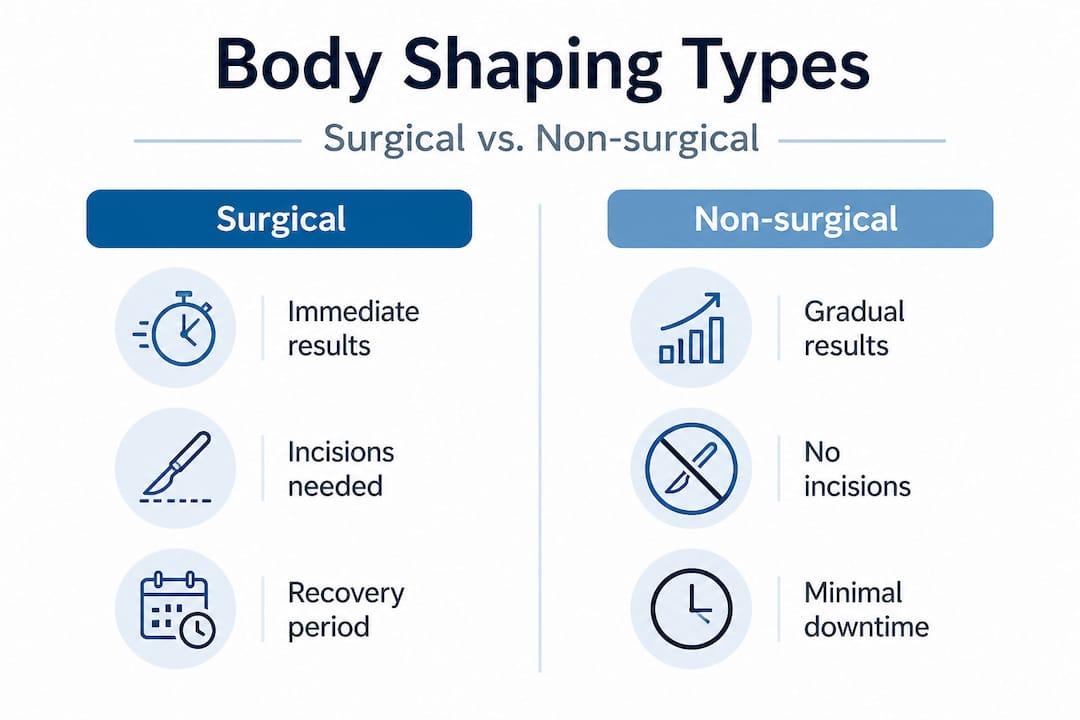
Surgical options include procedures like liposuction, tummy tucks, and body lifts. These involve incisions and anesthesia. The results tend to be more immediate and dramatic, and surgical methods can also address excess skin, which non-surgical options generally cannot. Recovery time is longer, and as with any surgery, there are risks to consider.
Non-surgical options are performed entirely on the skin’s surface without any incisions. According to the FDA, non-surgical body shaping technologies include energy-based approaches such as cryolipolysis (fat freezing), radiofrequency, and laser or light-based methods, which aim to reduce fat and improve skin tightness over time. Results tend to appear gradually over several weeks to months.
Here’s a side-by-side look at how the two approaches compare:
| Feature | Surgical | Non-surgical |
|---|---|---|
| Results timeline | Immediate to a few weeks | Several weeks to months |
| Invasiveness | Incisions, anesthesia required | No incisions, surface-based |
| Downtime | Weeks of recovery | Minimal to none |
| Skin removal | Yes, can address loose skin | Limited ability |
| Cost | Generally higher | Generally lower per session |
| Best for | Major contouring, excess skin | Targeted fat reduction, gradual tightening |
Cleveland Clinic notes that surgical options can deliver more noticeable or immediate results and can address skin removal, while non-surgical approaches tend to be more gradual and are typically less invasive with different risk and recovery trade-offs.
Here’s a practical breakdown of how to choose:
- Think about your timeline. If you want visible change quickly for an upcoming event, surgical options work faster.
- Consider your lifestyle. Can you take weeks off for recovery? If not, non-surgical fits better.
- Assess the area you want to target. Excess skin after major weight loss often needs surgery. Stubborn fat pockets may respond well to non-surgical methods.
- Weigh cost vs. commitment. Non-surgical often requires multiple sessions; surgical is typically a one-time procedure.
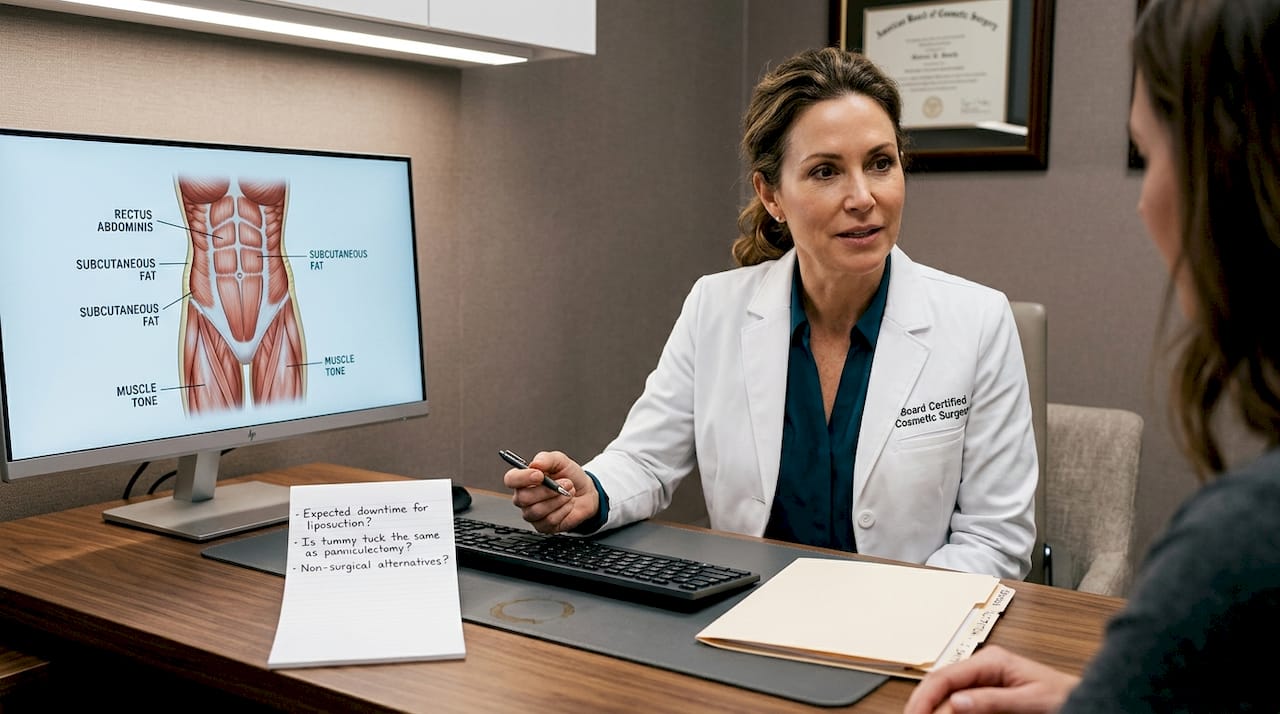
Pro Tip: Book a consultation with a board-certified provider before committing to any procedure. Many offer free initial appointments where you can discuss your goals and get a realistic sense of what to expect from each option. You can also explore cosmetic body care routines as a complementary strategy alongside either approach.
How do non-surgical body shaping technologies work?
With that foundation, let’s dive deeper into how the most popular non-surgical body shaping technologies get results and what to look out for.
Non-surgical body shaping has grown dramatically over the past decade because it offers real options without the commitment of surgery. Understanding how each technology works helps you ask better questions and set realistic expectations.
Cryolipolysis uses a medical device to apply controlled cooling to a selected area. It has risks, including burns and paradoxical adipose hyperplasia, in which a firm bulge develops instead of the intended reduction. FDA body-contouring guidance describes the device-specific limitations. This research is not evidence that a topical gel such as Freeze Away freezes or destroys fat cells.
Radiofrequency (RF) treatments use heat energy delivered into the deeper layers of skin to stimulate collagen production and gradually tighten tissue. RF works well for loose or crepey skin on areas like the abdomen or inner thighs. Results build slowly but can last a long time with proper maintenance.
Laser and light-based methods use targeted wavelengths to heat fat cells or stimulate tissue remodeling. Some systems combine multiple wavelengths for both fat reduction and skin tightening in the same session.
Here’s a quick reference on popular non-surgical technologies:
| Technology | Mechanism | Primary benefit | Timeline |
|---|---|---|---|
| Cryolipolysis | Controlled cold | Fat reduction | 1 to 3 months |
| Radiofrequency | Heat energy | Skin tightening | 2 to 4 months |
| Laser/light-based | Targeted wavelengths | Fat and skin | 1 to 3 months |
Key things to know before booking a non-surgical session:
- Ask specifically what the device targets: fat reduction, skin tightening, or both
- Confirm the provider is trained and the device is FDA-cleared
- Understand that results are gradual and often require more than one session
- Plan for some temporary redness, swelling, or tenderness depending on the method
Pro Tip: Don’t compare your results to before-and-after photos in marketing materials. Those images are often taken under ideal lighting with professional styling. Focus instead on measurable changes like how your clothing fits or how you feel in your body.
Topical products and beauty supplements are also part of many women’s routines. Keeping up with beauty supplement trends can give you a clearer sense of what the market offers and where the real opportunities lie.
Are consumer products like creams and supplements safe or effective?
But what about the sea of creams, supplements, and “sculpting gummies” seen online? Let’s separate facts from marketing.
Medical devices, cosmetic creams and dietary supplements are different categories. Device studies cannot establish the effects of a topical cream or gummy. Explore products for their labeled purpose and your own curves-focused or weight gain routine, while keeping medical-procedure expectations separate.
This doesn’t mean every product is useless. It means you need to be a smart shopper. Here’s how to approach the category wisely:
- Look for transparency. Reputable brands list their ingredients clearly and don’t make medical claims.
- Check for FDA warnings. The FDA periodically flags products making false or dangerous claims. A quick search before purchasing goes a long way.
- Manage your expectations. A body-firming cream can support skin hydration and may create a temporary toned appearance, but it won’t reshape your body structure the way a clinical device can.
- Use them as part of a routine, not a solution. Layering a quality lotion into your self-care practice can feel great and support skin health even if it doesn’t change your measurements.
- Prioritize lifestyle as the base. Nutrition, hydration, movement, and sleep are the foundation that any product builds on.
Pro Tip: When evaluating any supplement or cream, look for brands that are honest about what their product can and cannot do. Claims that sound too dramatic, like “lose 4 inches in a week,” are almost always red flags. Understanding the cosmetic supplements science behind what you’re using will help you feel more confident in your choices. You can also explore body-focused supplements designed with women’s wellness goals in mind.
Who is a good candidate for cosmetic body shaping?
Making safe, empowered choices is crucial, so here’s how to tell if cosmetic body shaping might be right for you.
Not everyone is an ideal candidate for every body shaping method. Knowing where you stand helps you choose wisely and avoid disappointment or risk.
The best candidates for non-surgical body shaping generally share certain characteristics:
- They are close to their natural or goal weight. Cleveland Clinic emphasizes that body shaping works best for those already near their ideal weight who want to target stubborn areas that diet and exercise don’t fully change.
- They have realistic expectations. Body shaping creates refinements, not complete transformations.
- They are in generally good health. Most non-surgical procedures require basic health screening before starting.
- They have identified specific areas they want to address. The more targeted your goal, the better matched you’ll be to the right treatment.
Some people should approach certain methods with extra caution or avoid them altogether. The FDA notes that cryolipolysis fat freezing is not suitable for people with certain medical conditions, particularly cold sensitivity disorders like cryoglobulinemia or paroxysmal cold hemoglobinuria.
“Your safety always comes first. No body shaping result is worth a health risk. Always discuss your full medical history with a qualified provider before starting any procedure.”
It’s equally important to check in with your own motivations. Are you shaping your body because you want to feel more like yourself? Or are you chasing an external standard that keeps shifting? The best outcomes come from supporting body shape wellness as part of a positive, self-directed routine rather than a response to outside pressure.
A fresh perspective on body shaping: What most guides don’t tell you
Bringing it all together, let’s look at body shaping in a way that goes beyond surface-level solutions.
Most articles on this topic either sensationalize results or bury the useful information under layers of clinical language. What we rarely see discussed is the emotional and psychological dimension of choosing body shaping in the first place.
We believe that wanting to change how you look is completely valid. There’s nothing shallow about caring how you feel in your body. The problem shows up when body shaping becomes a chase instead of a choice, when you’re running after an image that no procedure or product will ever actually deliver because the goalposts keep moving.
The truth is that confidence doesn’t come from a procedure. It’s built through consistent self-care, realistic goals, and a genuine relationship with your own body. Body shaping can be one meaningful part of that relationship. But if you’re relying on it to fix how you feel about yourself, the results will always feel incomplete.
What we’ve seen, working with women across different goals and body types, is that the most satisfied people are those who come into body shaping already working on their self-acceptance. They use body shaping as a tool, not a rescue. They celebrate gradual progress rather than demanding overnight transformation. And they combine practical steps like the ones outlined in boost body positivity steps with consistent lifestyle habits that support their overall wellbeing.
The mainstream narrative sells you on perfection. We’d rather help you build something better: a routine that genuinely makes you feel good, built on honest information and real self-kindness.
Empower your routine: Products and resources for body-positive shaping
Ready to take action? Here’s where you can begin building your routine and find confidence-forward body shaping resources.
At Get Thick Products, we create body care and wellness supplements specifically for women who want to feel great in their curves, on their own terms. Our formulas are designed to complement a healthy lifestyle and support your confidence journey, not to promise miracles.
Whether you’re looking for topical body care products to support skin appearance, dietary supplements to complement healthy weight goals, or simply a community that gets what you’re going through, we’re here for it. Start with our body positivity checklist to build a routine that works on every level: physical, emotional, and practical. Real confidence is built one consistent step at a time, and we want to be part of that journey with you.
Frequently asked questions
Is cosmetic body shaping the same as losing weight?
No. Cosmetic body shaping targets specific areas for contouring and tightening, while weight loss is a general reduction in body mass across the whole body.
How long do non-surgical body shaping treatments take to show results?
Results typically build up over several weeks to months. Fat freezing and other methods require time for the body to process and clear targeted fat cells before visible changes appear.
Are body shaping creams or supplements effective?
Most are not proven to significantly reshape the body. The efficacy of consumer body shaping products like creams and gummies is not established at the level of regulated medical devices, though some may offer minor cosmetic effects.
Who should avoid fat-freezing body shaping treatments?
Anyone with cold sensitivity disorders or certain underlying health conditions should not use cryolipolysis and should consult a healthcare provider before pursuing any body shaping procedure.
What’s the safest way to enhance curves naturally?
Pair evidence-based body shaping options with balanced nutrition, consistent movement, quality sleep, and confidence-building self-care routines that honor your body at every stage.
Recommended
- Confidence-boosting beauty for curvy women: A guide – Get Thick Products
- Best Body Confidence Habits for Women: Real Results – Get Thick Products
- Cosmetic Body Care: What Really Works for Curves – Get Thick Products
- Cosmetic Supplements: Science, Confidence & Body Benefits – Get Thick Products
- Confidence Coaching for Women: Essential Guide to Authentic Self-Love and Discovery | Navigating Through Quicksand
- Subtle ways to enhance your look: the ultimate men’s guide – NORML