

TL;DR:
- Many curvy-focused supplements lack scientific evidence for targeted fat redistribution.
- Proven weight and muscle gain rely on protein intake and strength training, not herbal supplements.
- Experts advise critical evaluation and consulting healthcare providers before using unverified herbal products.
Scroll through social media for five minutes and you’ll find dozens of ads promising you fuller hips, a rounder butt, and more curves, all from a daily capsule. The beauty supplement market is booming, and a growing niche is targeting women who want natural weight gain and a curvier silhouette. But between the glossy before-and-after photos and the influencer testimonials, it’s genuinely hard to know what’s real. This article cuts through the noise, examines the actual science behind popular ingredients, and gives you the practical tools to make choices that truly support your body and confidence.
Table of Contents
- The rise of curvy-focused supplements in 2026
- Popular ingredients: Fact, fiction, and what science actually says
- Evidence gaps and expert opinions: What do professionals recommend?
- Safe choices and practical steps for real body confidence
- A fresh perspective: Why chasing curves with supplements misses the bigger picture
- Explore safe and supportive wellness options
- Frequently asked questions
Key Takeaways
| Point | Details |
|---|---|
| Curvy supplement trend is niche | Most supplement growth in 2026 focuses on skin health or weight loss, not curvy body enhancement. |
| Evidence is weak for curves | No credible studies show herbal supplements can add curves or targeted weight gain. |
| Mainstream experts recommend protein | Protein and balanced nutrition are widely endorsed for supporting healthy muscle and weight gain. |
| Read claims with caution | Most curvy-focused supplement claims are based on anecdotal evidence, not clinical trials. |
| Confidence comes from holistic wellness | Building confidence and a curvy body shape starts with nutrition, exercise, and informed self-care choices. |
The rise of curvy-focused supplements in 2026
Let’s explore why these products have become such a hot topic for women seeking natural curves.
A new wave of direct-to-consumer (DTC) brands, meaning companies that sell straight to you online without going through traditional retailers, has flooded the market with products promising curvier bodies. These brands target women aged 21 to 55 who want fuller hips, a bigger butt, and a more defined waist without surgery or extreme dieting. The pitch is simple: take this supplement daily, and your body will do the rest. It sounds appealing. And for many women, it feels like a natural, empowering option.
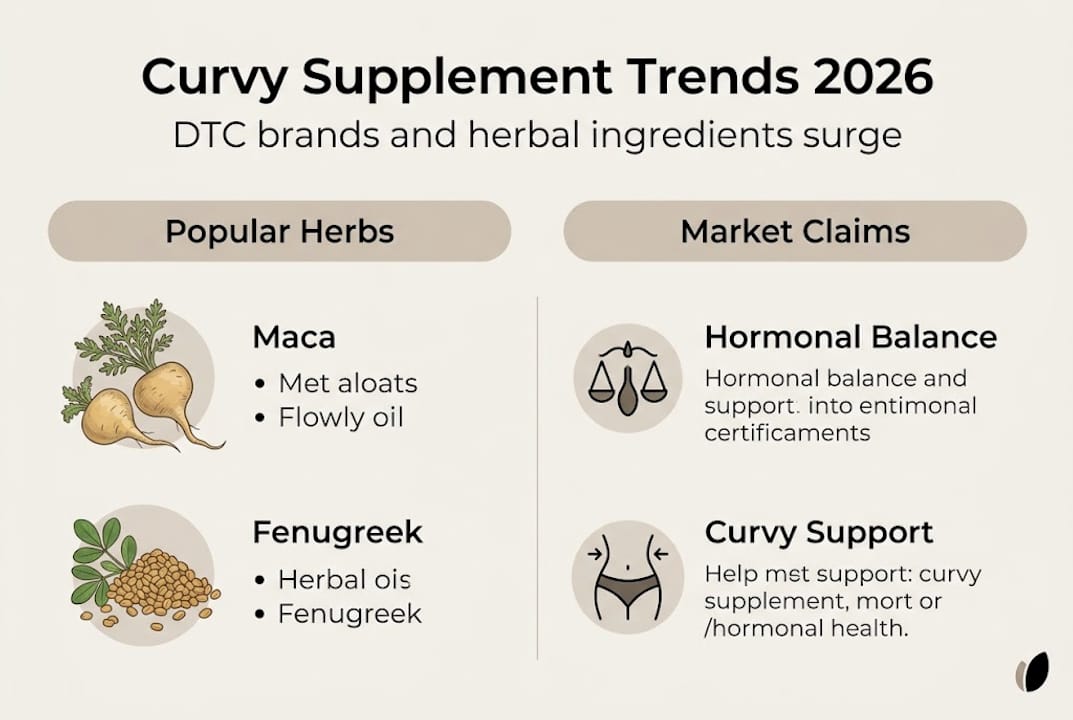
The ingredients you’ll see most often in these products include maca root, fenugreek, and saw palmetto. Brands market these herbs as natural hormone supporters that encourage fat distribution in the hips and bust. The trend has been fueled by body positivity culture, Instagram and TikTok aesthetics celebrating curvy figures, and a general shift toward “natural” solutions over surgical ones. As noted in research on supplements for women’s curves, this niche has grown rapidly among women seeking body confidence through wellness routines.
Beauty supplements cover many categories, including skin-focused formulas, protein and weight gain products. Compare products by their actual label and purpose rather than the size or growth rate of the wider market.
Popular ingredients in curvy-focused supplements:
- Maca root: A Peruvian root vegetable marketed for hormonal balance and libido
- Fenugreek: An herb often promoted for breast and hip fullness
- Saw palmetto: Typically used in men’s health but repurposed in some women’s formulas
- Wild yam extract: Claimed to mimic estrogen and encourage curves
- Protein blends: Sometimes included for overall weight and muscle support
| Supplement type | Primary market claim | Mainstream market focus |
|---|---|---|
| Maca root capsules | Hormonal balance, curves | Energy, libido |
| Fenugreek extract | Hip and bust fullness | Milk production (nursing) |
| Saw palmetto | Curvy fat distribution | Men’s prostate health |
| Protein powder | Weight and muscle gain | Fitness, muscle recovery |
The consumer demand is real. Women want options. But the science behind whether these products actually deliver on their curvy-specific promises is a very different story.
Popular ingredients: Fact, fiction, and what science actually says
But what’s actually in these supplements, and do the ingredients live up to the claims?
Let’s be direct. When it comes to ingredients like maca root, fenugreek, and saw palmetto specifically for curvy enhancement or targeted weight gain, the clinical evidence is nearly nonexistent. There are no large-scale randomized controlled trials (RCTs), which are the gold standard for proving a supplement works, that show these herbs cause fat to redistribute to the hips or butt in women.
Contrast that with mainstream muscle gain supplements. Protein and creatine have decades of peer-reviewed research backing their effectiveness for healthy weight and muscle gain. They’re not glamorous, but they work. Creatine supports muscle energy during workouts, and protein provides the building blocks your body needs to grow muscle tissue. Neither of these targets a specific body part, but they support overall body composition changes when paired with strength training.
Here’s a side-by-side look at the evidence:
| Ingredient | Marketed benefit | Clinical evidence level |
|---|---|---|
| Maca root | Hormonal curves | Very low, mostly animal studies |
| Fenugreek | Bust and hip fullness | Anecdotal, limited human trials |
| Saw palmetto | Curvy fat distribution | No RCTs for this purpose |
| Protein (whey/plant) | Muscle and weight gain | Strong, decades of research |
| Creatine | Muscle volume and strength | Strong, well-documented |
Some of these herbal ingredients do have biological activity. Fenugreek, for example, has phytoestrogens, which are plant compounds that weakly mimic estrogen. That’s where the marketing story comes from. But “has some hormonal activity” is very different from “will give you curves.” The leap from one to the other is where the fiction begins.

Pro Tip: If a supplement’s ingredient list reads like a herbal tea blend with no protein or creatine, it’s unlikely to support meaningful body composition changes on its own. Pair any supplement routine with resistance training for real results.
Here’s a quick framework for evaluating any supplement claim:
- Look for human clinical trials, not just animal studies
- Check if the study was funded by the brand selling the product
- Search for independent reviews from registered dietitians
- Ask whether the ingredient has an established effective dose
- Consider whether the claimed effect is biologically plausible
Exploring wellness supplements for curves with this framework in mind helps you cut through marketing language and focus on what actually supports your goals. And supporting your body shape through informed choices is always more effective than chasing trends.
Evidence gaps and expert opinions: What do professionals recommend?
Taking a closer look at the research, what do nutrition and medical experts really say about these supplements?
The honest answer is that most mainstream nutrition professionals are skeptical of curvy-specific supplements. Not because they dismiss women’s wellness goals, but because the evidence simply isn’t there yet. Registered dietitians and physicians consistently point back to the basics: adequate protein intake, strength training, and balanced nutrition for sustainable body composition changes.
“The supplement industry moves faster than the science. Just because an ingredient is natural doesn’t mean it’s effective, and just because it’s popular doesn’t mean it’s safe.”
This reflects a broader concern in the field. The 2026 consumer supplement report from NMI highlights growth in women’s hormonal health products and muscle maintenance supplements, particularly as GLP-1 weight loss medications become more common and create new nutritional gaps. But even within this growing women’s wellness category, the focus remains on protein, general hormonal support, and evidence-based formulas, not targeted curvy enhancement.
Here’s what experts consistently flag as consumer red flags:
- Claims that a supplement targets fat to specific areas of the body
- Before-and-after photos without disclosure of diet and exercise changes
- Proprietary blends that hide individual ingredient doses
- No third-party testing or certification (look for NSF, USP, or Informed Sport seals)
- Testimonials replacing clinical data on product pages
The confidence and curves guide at Get Thick Products approaches this honestly, emphasizing that supplements work best as part of a broader wellness routine, not as standalone magic solutions. That’s the kind of transparency worth looking for in any brand you trust with your health.
Experts also point to potential hormonal risks. Herbs with estrogenic activity, like fenugreek and wild yam, may not be appropriate for women with conditions like PCOS or endometriosis. Always bring any new supplement to your healthcare provider before starting, especially if you have a hormonal condition.
Safe choices and practical steps for real body confidence
With so much conflicting advice, how can you choose safe, effective steps that truly support your goals?
Body confidence isn’t something you buy in a bottle. But that doesn’t mean supplements have no role in your wellness routine. The key is choosing them wisely and pairing them with habits that actually move the needle.
Pro Tip: Before buying any supplement, take a photo of the label and run the key ingredients through the NIH’s Office of Dietary Supplements database. It’s free, reliable, and takes five minutes.
Here’s a practical step-by-step approach to building a safe, confidence-supporting routine:
- Start with nutrition basics. Aim for 0.7 to 1 gram of protein per pound of body weight daily to support muscle growth
- Add strength training. Glute-focused exercises like squats, hip thrusts, and deadlifts build the curves that supplements alone cannot
- Evaluate supplements critically. Use the five-question framework from the previous section before purchasing
- Consult a healthcare provider. Especially important if you have any hormonal conditions or take medications
- Give it time. Real body composition changes take months, not weeks
The NIQ 2026 beauty report notes that ingestible beauty is growing fast, but the dominant consumer interest is in skin health and weight management, not weight gain. That means the curvy supplement space is still largely unregulated and under-researched. As a consumer, that puts the responsibility on you to ask hard questions.
Some practical things to look for in any supplement brand:
- Transparent ingredient dosing (no proprietary blends hiding amounts)
- Third-party testing certifications
- Clear, non-medical language that doesn’t promise specific body changes
- A brand that encourages pairing supplements with nutrition and fitness
The body confidence guide and nutrition for confidence and curves resources offer practical frameworks for building real, lasting results. Because niche DTC products with unverified herbal claims can feel exciting, but they’re no substitute for a solid foundation.
A fresh perspective: Why chasing curves with supplements misses the bigger picture
To wrap up, let’s rethink the obsession with instant curves and focus on a more empowering, sustainable approach.
We get it. The promise of a supplement that gives you the body you want feels exciting, especially when social media makes it look effortless. But here’s the uncomfortable truth: the women who feel most confident in their bodies aren’t the ones who found the perfect pill. They’re the ones who stopped outsourcing their confidence to products and started building it from the inside out.
Social media body trends change every two years. What’s celebrated today may be completely different in 2028. But your health, your hormones, and your relationship with your body are long-term investments. Learning to read supplement labels, question marketing claims, and understand what your body actually needs is a skill that pays off forever.
At Get Thick Products, we believe in being honest with you. Supplements can be a supportive part of a wellness routine, but they work best alongside nutrition and body confidence practices that are grounded in real science. The real superpower in 2026 isn’t finding the trendiest supplement. It’s knowing how to tell the difference between what works and what just sounds good.
Explore safe and supportive wellness options
Ready to apply these insights to your own wellness journey? Here’s where to find supportive tools and information.
Get Thick Products was built for women who want real information alongside real products. We don’t believe in overpromising or hiding behind vague ingredient lists. Our approach is rooted in body positivity, transparency, and wellness routines that actually fit your life.
Whether you’re just starting to explore supplements or you’re refining a routine that already works for you, our shop body confidence solutions has options designed to complement your nutrition and fitness habits. And if you want to go deeper on what actually supports a curvy, confident body, our beauty for curvy women guide is a great next read. You deserve products and information you can trust.
Frequently asked questions
Are beauty supplements for curves safe to use?
Many curvy-focused supplements contain unproven herbal ingredients with potential hormone risks, including estrogenic effects that can be problematic for women with PCOS or endometriosis, so always consult a healthcare professional before starting any new supplement.
Can supplements actually make you gain weight in curves versus other areas?
No credible science supports targeted fat gain to specific areas like hips or butt. As clinical evidence shows, only overall weight or muscle gain is possible, not spot-specific redistribution.
What ingredients should I watch out for in curvy-focused supplements?
Be cautious with herbal ingredients like maca root and fenugreek, which lack proven efficacy for curvy enhancement and may carry hormone-related risks for some women.
What do doctors and nutritionists recommend for healthy weight or muscle gain?
Most professionals point to balanced nutrition with adequate protein and consistent strength training as the most reliable path. Evidence-based muscle gain approaches consistently outperform herbal supplement trends in clinical settings.
Is the trend for weight gain and curvy-focused supplements growing in 2026?
Beauty supplements cover many categories, including skin-focused formulas, protein and weight gain products. Compare products by their actual label and purpose rather than the size or growth rate of the wider market.
Recommended
- Body-focused supplements: benefits for women’s curves – Get Thick Products
- Step-by-step appearance boost guide for natural curves – Get Thick Products
- Wellness supplements for women: curves, confidence & results – Get Thick Products
- Confidence-boosting beauty for curvy women: A guide – Get Thick Products