

Products marketed as body-focused supplements vary widely. Research on a particular nutrient does not prove that every blend creates curves or causes weight gain in selected areas. This guide separates general supplement information from claims that need evidence for the finished product.
Table of Contents
- Understanding supplement categories
- What research can and cannot show
- Comparing supplements with food and training
- Choosing and using supplements carefully
- Confidence and realistic expectations
- Explore product information
Key Takeaways
| Focus | What to consider |
|---|---|
| Research | Match findings to the exact ingredient, formulation and setting studied. |
| Body shape | Localized fat gain or enlargement is not established here. |
| Directions | Follow the actual label; avoid generic dosing advice. |
| Quality | Testing does not guarantee safety or effectiveness. |
Understanding supplement categories
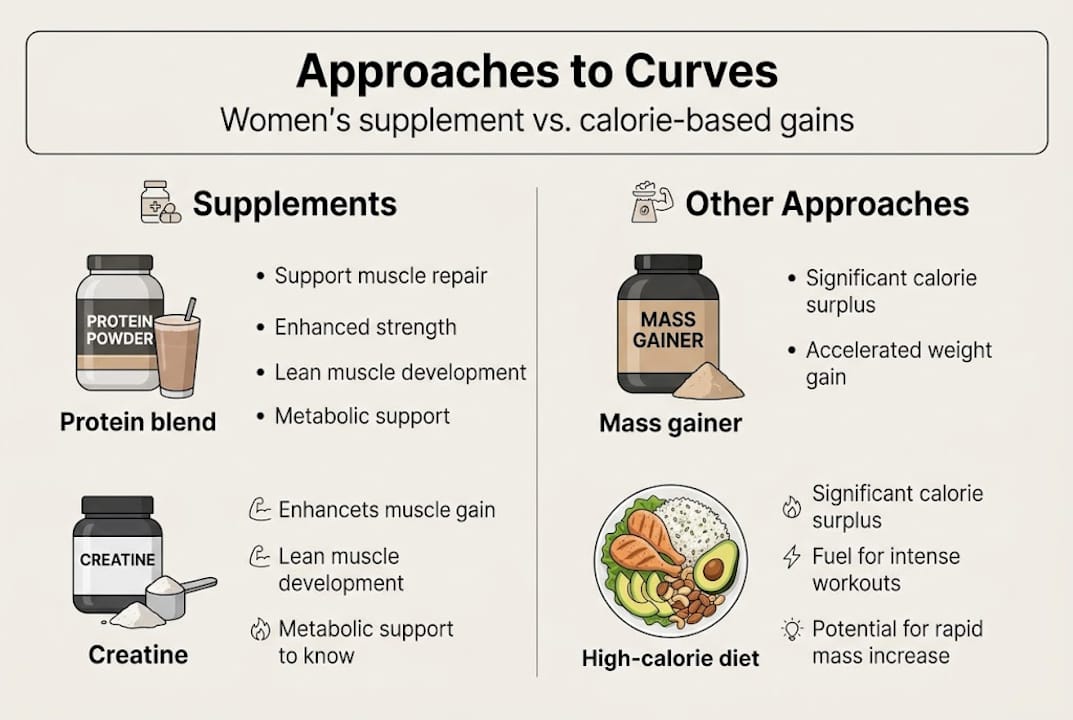
Protein powders, creatine and herbal blends have different ingredients and purposes. Read the Supplement Facts panel and other ingredients. Do not assume a pill supplies significant calories, contains creatine or has the same effect as a protein powder unless its actual label says so.

What research can and cannot show
The review Creatine Supplementation in Women’s Health: A Lifespan Perspective discusses creatine and potential strength or exercise performance benefits in studied settings. It does not establish targeted hip, breast or buttock enlargement, and it is not a clinical study of Get Thick Products formulations. Average changes from a study cannot be promised to an individual shopper.
Comparing supplements with food and training
Food, exercise and supplements are not interchangeable. Where weight gain is appropriate, work toward a suitable eating plan and training routine. No supplement makes exercise unnecessary for a strength goal. Collagen, amino acid blends and mass gain products should not be presented as equally proven ways to sculpt curves.
Choosing and using supplements carefully
Use the specific label’s directions rather than a generic dose or a supposed mandatory post-workout window. NIH supplement guidance explains that supplements can have side effects and interact with medicines. Discuss suitability with a healthcare professional, especially if you have a health condition, take medicines, are pregnant or are breastfeeding. A testing seal is not a guarantee of safety or effectiveness.
Confidence and realistic expectations
Choose goals that include wellbeing and capability. Neither weight gain nor supplement use guarantees confidence. Avoid judging yourself against a fixed transformation deadline or an advertised body shape.
Explore product information
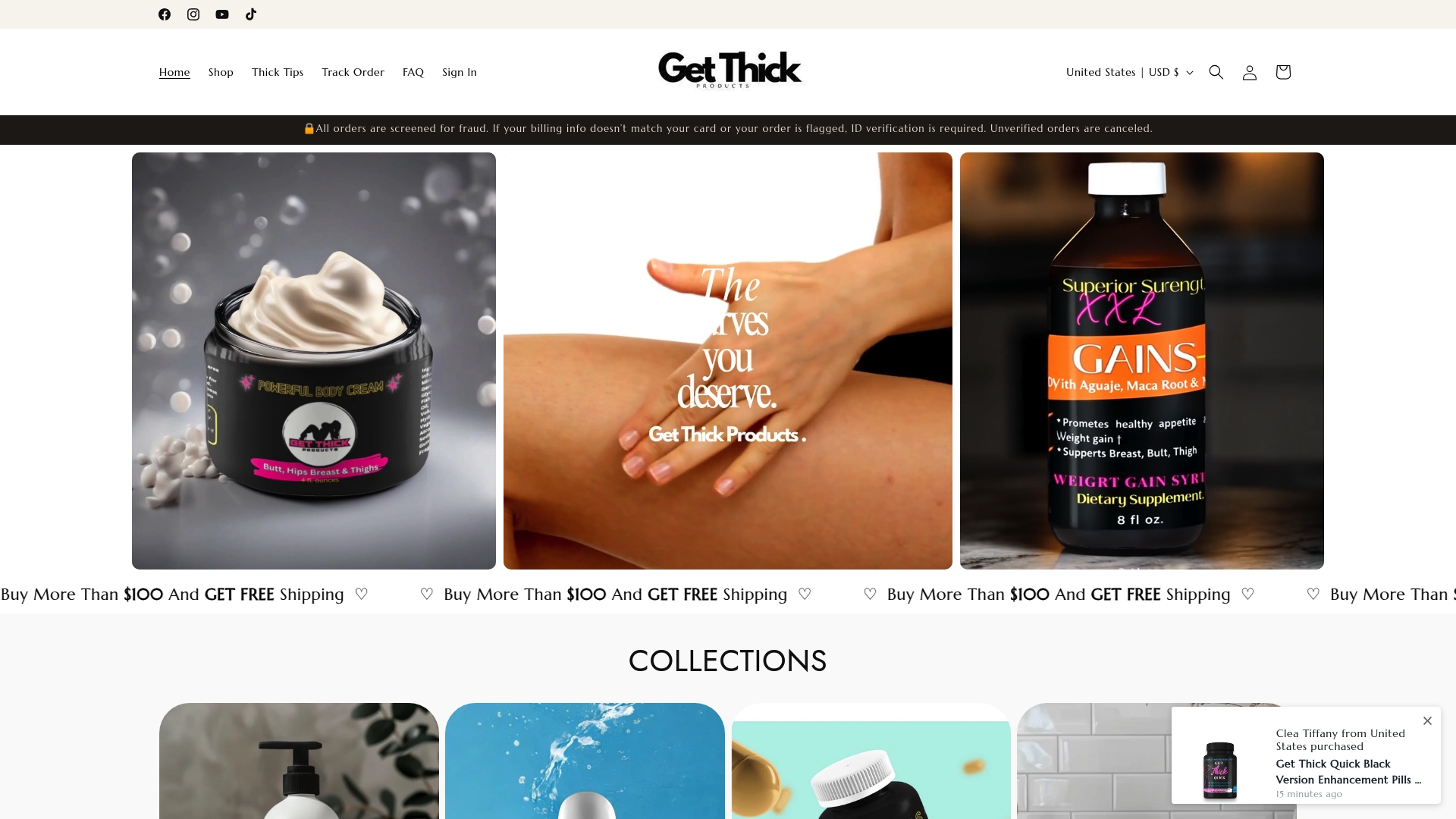
Browse Get Thick Products and review each item’s ingredients and directions. This article does not assign an ingredient, dose or research-backed benefit to a store product unless supported by that product’s verified information.
Frequently Asked Questions
Are body-focused supplements safe for women seeking natural curves?
Safety depends on the product and your circumstances. Natural ingredients do not establish safety; review the label and ask a healthcare professional about suitability.
How quickly can I see results from body-focused supplements?
There is no universal deadline. Outcomes depend on the product, diet, training, health and other individual factors.
Do I need to exercise to benefit from body-focused supplements?
Supplements do not replace an appropriate eating or exercise plan. Muscle and strength goals require suitable training.
Is creatine safe for women, and why is it recommended?
Creatine has been studied for exercise-related outcomes in women, but suitability is individual. That research does not prove localized curve growth or establish a benefit for an unrelated blend.