

TL;DR:
- Topical creams do not scientifically cause natural fat redistribution or weight gain.
- Body products mainly support hydration, skin texture, and barrier repair, not body shaping.
- Consistent self-care rituals boost mental well-being and confidence more than miracle claims.
Do body creams actually reshape your curves, or is that just clever marketing talking? It’s a question worth asking honestly, because the beauty and wellness space is flooded with bold promises that outpace what the science actually supports. The truth is, no empirical evidence backs topical creams causing natural weight gain or fat redistribution. But that doesn’t mean these products are pointless. Far from it. This guide cuts through the noise so you can make smarter choices, build real self-care habits, and feel genuinely confident in your skin without chasing results that don’t exist.
Table of Contents
- Demystifying cosmetic body products: What do they really claim?
- How cosmetic ingredients impact skin and body: What science says
- Psychology, ritual, and self-confidence: Why your routine matters
- Practical application: How to build a meaningful, effective body care routine
- Our take: What most people miss about cosmetic body products
- Bring science and self-care together with Get Thick Products
- Frequently asked questions
Key Takeaways
| Point | Details |
|---|---|
| Science over hype | Most enhancement claims by body creams lack scientific proof, so focus on evidence-based products. |
| Ingredient effectiveness | Plant-based oils hydrate and repair, while animal-based and exotic oils present more risks than benefits. |
| Empowering rituals | Self-care routines can support confidence when balanced with realistic expectations and evidence. |
| Smart product choices | Transparent, regulated ingredients are safest for building a positive body care routine. |
Demystifying cosmetic body products: What do they really claim?
Walk into any beauty aisle or scroll through your social feed and you’ll find body products promising everything from smoother skin to fuller curves. The marketing can feel overwhelming, and honestly, a little confusing. So let’s break down what these products are actually claiming versus what the evidence supports.
Most body enhancement products fall into a few categories. Some focus on hydration and skin texture, which is well-supported by science. Others claim to target anti-aging, a more nuanced area with some legitimate backing depending on the ingredient. Then there are products that promise fat redistribution or natural weight gain through topical application. This last category is where things get murky.
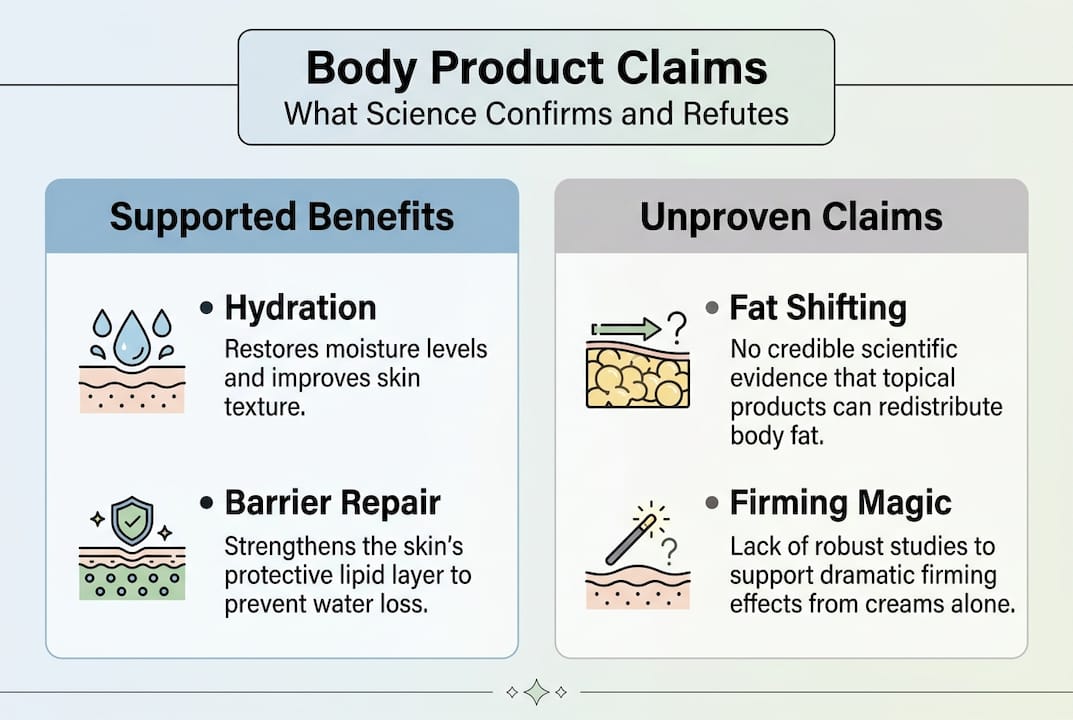
Here’s a simple comparison to frame things clearly:
| Product Claim | What Science Confirms |
|---|---|
| Deep hydration | Supported for many moisturizing ingredients |
| Improved skin texture | Supported with consistent use |
| Anti-aging effects | Partially supported, ingredient-dependent |
| Fat redistribution via cream | No scientific support |
| Natural weight gain from topicals | No scientific support |
The fat redistribution claim is particularly persistent, but experts find no data to back it up. Commercial sites often repeat these claims without independent verification.
So why do people keep buying these products? Because rituals matter. When you apply a cream mindfully each morning, you’re doing something intentional for your body. That act alone has real psychological value, even if the product itself doesn’t remodel your silhouette. Understanding topical enhancement creams helps you shop smarter and use them in ways that genuinely serve you.
Here’s what most body products can legitimately do:
- Moisturize and soften skin
- Support the skin’s natural barrier function
- Improve the appearance of dry or rough patches
- Create a sensory ritual that supports emotional well-being
- Complement confidence-building habits when paired with other routines
When you approach body enhancement for curves with this lens, products become tools for self-care rather than miracle workers. That shift in perspective changes everything.
How cosmetic ingredients impact skin and body: What science says
Now that expectations are set, it’s crucial to know how these ingredients perform and what your skin really needs. Not all ingredients are equal, and understanding the difference helps you spend smarter and care better.

Effective body care ingredients typically share a few traits: they absorb well, support the skin’s moisture barrier, and have a solid safety record. Plant oils are some of the most studied topical ingredients available.
Here’s how a few popular options stack up:
| Ingredient | Primary Benefit | Evidence Level |
|---|---|---|
| Shea butter | Barrier repair, hydration | Strong |
| Macadamia oil | Reduces water loss, softens skin | Moderate to strong |
| Coconut oil | Moisturizing | Moderate |
| Beef tallow | Anecdotal claims | Weak |
| Exotic botanical oils | Varies widely | Often limited |
Macadamia oil, for example, is rich in palmitoleic acid, a fatty acid naturally present in young skin that decreases with age. It helps reduce transepidermal water loss, meaning your skin holds onto moisture more effectively. Shea butter has strong data behind its role in soothing dry, irritated skin and supporting barrier repair after damage.
Beef tallow has become a trend, but tallow can clog pores and lacks the clinical data that plant-based alternatives enjoy. The hype is louder than the evidence.
Regulated moisturizers, meaning products formulated to meet safety standards and tested for stability and efficacy, consistently outperform random “natural” ingredient mixes. That’s not an argument against natural ingredients. It’s an argument for choosing products where someone has done the homework. Learn more about what really works for curves and how ingredients factor into realistic results.
Pro Tip: When evaluating a body product, flip it over and scan the ingredient list before reading the front label. If the first few ingredients are proven humectants or emollients like glycerin, shea, or plant oils, that’s a promising sign. If the label leads with vague “proprietary blends,” proceed with healthy skepticism.
Psychology, ritual, and self-confidence: Why your routine matters
Knowing what’s in your bottle is just part of the equation. The bigger impact often begins in the mind and your daily rituals.
Body care routines create something that goes well beyond moisturized skin. They signal to your brain that you are worth taking care of. That message, repeated daily, builds a foundation of self-regard that no single product can manufacture on its own.
Research on habitual self-care consistently connects daily rituals with reduced stress and improved mood. When you slow down to massage lotion into your arms or apply a body oil before bed, you’re practicing presence. That’s a real benefit.
“Rituals empower, but over-reliance on products risks reinforcing insecurities rather than resolving them. The goal is evidence-based hydration and self-acceptance, not chasing enhancement claims that science doesn’t support.”
That balance matters. A routine becomes a problem when it’s built around the hope that a product will fix how you feel about yourself. Products can support confidence. They can’t create it from scratch.
Here are three steps for building confidence that goes beyond the bottle:
- Start with intention. Choose your routine products based on what your skin genuinely needs, like hydration, barrier repair, or soothing. Not based on marketing promises about reshaping your body.
- Create consistency. A simple routine practiced daily beats an elaborate one used occasionally. Consistency reinforces the habit of self-care, which is where the real confidence-building happens.
- Pair it with movement and nourishment. Body confidence grows when you take care of your whole self. A lotion applied mindfully after a walk or a meal you’re proud of hits differently than a rushed application between obligations.
Exploring appearance enhancement and confidence through this lens reframes the entire conversation. And diving into body positivity and self-care as linked practices gives you tools that actually last.
Practical application: How to build a meaningful, effective body care routine
With mindset and science aligned, it’s time to translate ideas into routine because what you do daily matters most.
Building an effective body care routine doesn’t require a shelf full of products. It requires a clear process and honest goals. Here’s how to get started:
- Audit what you’re already using. Pull out every body product you own. Check ingredient lists. If a product promises fat redistribution or dramatic body reshaping, set it aside. If it promises hydration, barrier support, or skin softening, keep it.
- Identify your skin’s actual needs. Dry elbows? Rough knees? Dull skin on your arms? Match your product choices to specific, real needs rather than abstract desires for transformation.
- Introduce one product at a time. When you add something new, wait two weeks before evaluating results. This lets you track what’s actually working without blaming or crediting the wrong product.
- Commit to a daily window. Post-shower is ideal because your skin absorbs products more effectively when slightly damp. Five minutes daily beats thirty minutes once a week.
- Reassess every month. Skin changes with seasons, hormones, and lifestyle. Your routine should evolve with it.
Natural plant oils hydrate and repair, but solid routines require more than trending ingredients. Regulation, testing, and formulation integrity matter too.
Pro Tip: If a product’s main selling point is a before-and-after photo or a celebrity endorsement, look past it. Ask instead: What are the active ingredients? Is there third-party testing? Is this brand transparent about what its products can and cannot do? Topical creams for confidence work best when they’re part of a realistic, informed routine.
Our take: What most people miss about cosmetic body products
Here’s something we’ve observed repeatedly: people either over-believe in body products or dismiss them entirely. Both extremes miss the point.
Products are not magic. A cream cannot reroute fat cells or override biology. But the reflexive “it’s all a scam” dismissal ignores something real: the ritual, the sensory experience, the daily act of care. These things matter to your mental health and your relationship with your body.
What we push back on is the marketing that sells impossible outcomes to women who already feel pressure to look a certain way. That’s not empowerment. That’s exploitation dressed up in wellness language.
The honest truth? Rituals empower, hydration works, and consistency builds confidence. Chasing miracle solutions doesn’t. We believe in showing up for yourself with products that are transparent about what they do and don’t do. That’s where real self-care lives.
Curious about what’s actually shaping the industry right now? Check out supplement trends for curves to see where the conversation is heading in 2026 and what to watch for.
Bring science and self-care together with Get Thick Products
You’ve done the reading. You know what to look for, what to skip, and how to build a routine that actually serves you. Now it’s time to put that knowledge to work.
Get Thick Products was built for women who want transparency, not hype. Every product in our range is developed with educational content to back it up, so you understand what you’re applying and why. Whether you’re exploring topical body care or curious about body-focused supplement benefits, we make it easy to shop with confidence. Real ingredients. Honest claims. Genuine care for your self-care journey.
Frequently asked questions
Can body creams or oils naturally increase my curves or cause weight gain?
No scientific evidence supports any topical cream or oil increasing curves or causing weight gain, and most claims are unverified by independent experts. These products work on the skin’s surface, not the body’s fat distribution system.
Are plant-based or natural oils better for my skin than tallow or exotic ingredients?
Plant oils like macadamia and shea are well-supported for hydration and barrier repair, while tallow can clog pores and lacks robust clinical data compared to plant-based alternatives. Proven ingredients consistently outperform trending ones.
Does using beauty products boost self-confidence?
Body care routines can genuinely support self-confidence, but empowerment comes from healthy, consistent habits and realistic expectations. Over-reliance on products without addressing underlying self-perception can reinforce rather than resolve insecurities.
How can I safely choose body products for my routine?
Look for products with transparent ingredient lists, regulatory backing, and honest claims about what they do. Avoid anything leading with miracle enhancement promises that lack independent verification or scientific support.