

Finding accurate advice about natural weight gain can feel overwhelming when every source seems to offer conflicting information. For many American women seeking to enhance their curves and body confidence, the journey is clouded by persistent myths about diet, genetics, and body image. Unpacking the true science behind weight gain means understanding that biological complexity influences body weight through factors like metabolism, hormones, and lifestyle, not just calories eaten or burned.
Table of Contents
- Weight Gain Myths And Core Concepts
- Biology Versus Beliefs About Gaining Weight
- Nutrition, Supplements, And Lifestyle Factors
- Body Confidence, Wellness, And Social Messaging
- Avoiding Pitfalls And Making Empowered Choices
Key Takeaways
| Point | Details |
|---|---|
| Understanding Weight Gain | Weight gain is influenced by biological mechanisms, including genetics, hormones, and environmental factors, rather than just calorie intake. |
| Holistic Approach | Successful weight gain requires balanced nutrition, consistent exercise, and attention to hormonal health, stress, and sleep. |
| Body Confidence and Wellness | Building body confidence involves rejecting harmful societal standards and focusing on individual health and self-acceptance. |
| Avoiding Common Pitfalls | It’s crucial to avoid extreme diets and comparisons with others, instead embracing personalized strategies and consulting professionals. |
Weight Gain Myths And Core Concepts
Understanding weight gain requires moving beyond simplistic assumptions and recognizing the complex biological mechanisms involved. Many women struggle with misinformation about body composition, weight, and health - often leading to frustration and ineffective strategies.
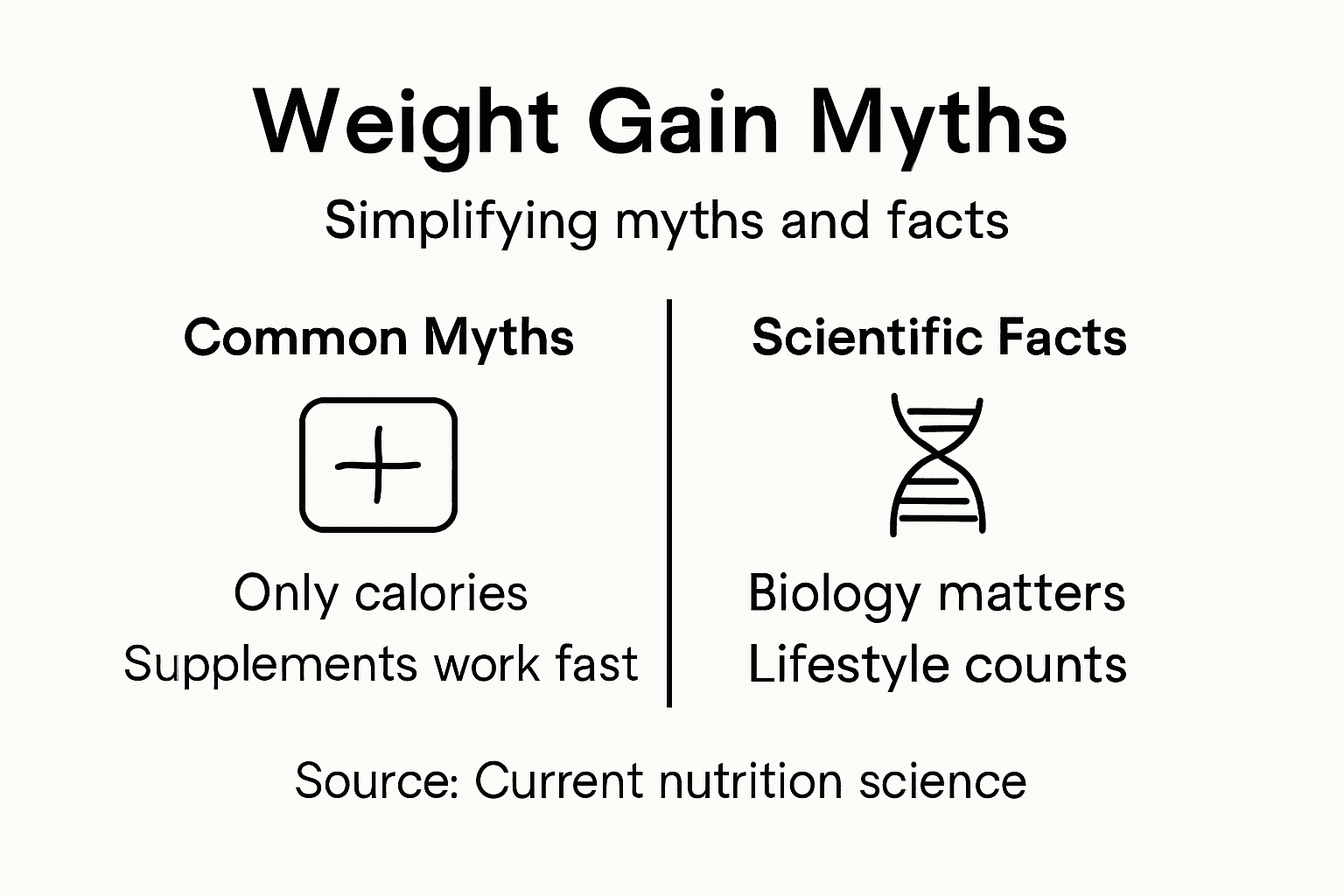
Weight gain is far more nuanced than popular narratives suggest. Biological complexity influences body weight through intricate interactions between genetics, metabolism, hormones, and environmental factors. This means that calories alone do not tell the complete story of weight management.
Key misconceptions about weight gain include:
- Assuming weight gain is purely about eating more
- Believing all weight gain is unhealthy
- Thinking BMI is a perfect health indicator
- Expecting linear, predictable body changes
Research reveals that weight regulation involves sophisticated molecular signaling and metabolic processes. The human body maintains complex communication systems between organs that control hunger, energy storage, and cellular metabolism. Weight-related health myths often overlook these intricate biological mechanisms.
Individuals seeking healthy weight gain must understand that progress depends on multiple interconnected factors:
- Balanced nutrition
- Consistent exercise
- Hormonal health
- Stress management
- Adequate sleep
Pro tip: Approach weight gain as a holistic journey of understanding your unique body, not a one-size-fits-all formula.
Here’s a comparison of common weight gain myths versus scientific realities:
| Myth | Scientific Reality | Real-World Impact |
|---|---|---|
| Only calories matter | Genetics, hormones, environment all play a role | Requires holistic health focus |
| BMI measures health perfectly | BMI ignores body composition and metabolic factors | Alternative indicators are needed |
| Weight gain always means poor health | Weight gain can be healthy if done properly | Better education reduces stigma |
| Willpower controls weight | Biological factors influence outcomes | Empowers personalized strategies |
Biology Versus Beliefs About Gaining Weight
Weight gain represents a complex biological process that extends far beyond simplistic beliefs about personal willpower and food consumption. Popular narratives often oversimplify weight management, reducing it to a matter of individual choice when scientific research reveals a much more nuanced reality.

Metabolic adaptations significantly influence weight gain through intricate physiological mechanisms that challenge traditional understanding. The body’s metabolic system operates like an intelligent network, constantly adjusting energy storage and expenditure based on multiple internal and external signals.
Key differences between popular beliefs and biological reality include:
- Calories are not the only determinant of weight
- Metabolism is not a fixed, unchanging process
- Individual genetic factors play a crucial role
- Hormonal balance significantly impacts weight regulation
- Environmental factors influence metabolic responses
Biological mechanisms are far more sophisticated than most people realize. Weight gain results from complex interactions between dietary intake, physical activity, genetic predispositions, and metabolic adaptations. These interactions create a dynamic system that cannot be controlled through willpower alone.
Understanding weight management requires recognizing these key biological principles:
- Metabolic rates vary between individuals
- Hormonal systems regulate energy storage
- Genetic factors influence body composition
- Stress and sleep impact weight regulation
- Nutritional quality matters more than quantity
Pro tip: Approach weight management as a holistic biological journey, not a battle of willpower against your body.
Nutrition, Supplements, And Lifestyle Factors
Weight gain is a nuanced journey that involves strategic nutritional planning, targeted supplementation, and holistic lifestyle management. Women seeking healthy weight gain must look beyond simplistic calorie counting and embrace a comprehensive approach that supports their body’s unique metabolic needs.
Food environments significantly impact body weight outcomes, revealing that nutrition is more complex than just consuming more calories. The quality of food, proximity to nutritional resources, and overall dietary composition play crucial roles in supporting healthy weight gain.
Key nutritional strategies for effective weight gain include:
- Prioritize nutrient-dense whole foods
- Balance macronutrients strategically
- Focus on protein and healthy fat intake
- Time meals around metabolic windows
- Incorporate calorie-rich but nutritious options
Lifestyle factors interact dynamically with nutritional approaches. Diet modification behaviors shape weight gain efforts through intentional eating patterns that go beyond passive consumption. This means actively designing meal plans that support muscle development and metabolic health.
Effective weight gain requires a multifaceted approach:
- Develop personalized nutrition plan
- Integrate targeted supplementation
- Manage stress and sleep cycles
- Implement consistent resistance training
- Monitor progress with objective measurements
Pro tip: Create a holistic weight gain strategy that treats your body as an interconnected system, not just a calorie calculator.
This summary highlights how nutrition, lifestyle, and supplementation interact for healthy weight gain:
| Factor | Core Role | Long-Term Benefit |
|---|---|---|
| Balanced nutrition | Supports metabolic health | Sustained healthy weight gain |
| Targeted supplements | Fills nutrient gaps | Improved energy and recovery |
| Lifestyle habits | Manage stress and sleep | Enhanced overall wellness |
| Resistance training | Builds muscle mass | Increases strength and confidence |
Body Confidence, Wellness, And Social Messaging
Body confidence transcends physical appearance, representing a deeply personal journey of self-acceptance and empowerment. Modern women navigate complex social landscapes where external messaging constantly challenges their perception of worth, beauty, and personal value.
Weight-related myths perpetuate harmful social stigmas, creating unrealistic expectations that undermine individual wellness. These pervasive narratives often reduce human complexity to simplistic body measurements, ignoring the rich, multifaceted nature of personal health and identity.
Key aspects of positive body messaging include:
- Rejecting one-size-fits-all beauty standards
- Celebrating individual body diversity
- Challenging harmful weight-related stereotypes
- Promoting holistic health over aesthetic ideals
- Recognizing personal worth beyond physical appearance
Social pressures significantly impact women’s self-perception and wellness journeys. Cultural messaging shapes body image experiences through complex psychological mechanisms that extend far beyond physical appearance. Understanding these dynamics becomes crucial for developing genuine self-confidence.
Strategies for building body confidence involve:
- Challenge negative internal dialogues
- Surround yourself with supportive communities
- Practice self-compassion
- Focus on functional fitness
- Reject external validation standards
Pro tip: Reframe your wellness journey as a personal celebration of strength, not a battle against your body.
Avoiding Pitfalls And Making Empowered Choices
Successful weight gain requires strategic thinking and a nuanced understanding of individual biological needs. Many women fall into common traps that derail their wellness journey, mistaking oversimplified approaches for sustainable progress.
Diet modifications reveal complex weight gain strategies that go beyond simplistic calorie counting. Understanding these intricate nutritional approaches helps individuals make informed decisions tailored to their unique metabolic profiles.
Common weight gain pitfalls to avoid include:
- Following extreme or restrictive diets
- Comparing personal progress to others
- Ignoring individual metabolic differences
- Relying solely on supplements
- Neglecting mental health components
Empowered choices emerge from comprehensive knowledge and self-awareness. Evidence-based insights challenge traditional weight management myths, emphasizing that successful weight gain involves more than willpower or generic strategies.
Strategic approaches for making empowered decisions:
- Consult healthcare professionals
- Track individual progress scientifically
- Develop personalized nutrition plans
- Practice holistic self-assessment
- Embrace flexible, adaptive strategies
Pro tip: Create a personalized weight gain roadmap that treats your body as a unique ecosystem, not a one-size-fits-all machine.
Discover Real Support for Your Healthy Weight Gain Journey
The article highlights how weight gain is a complex biological process involving nutrition, hormones, and lifestyle rather than just calories or willpower. If you are struggling with common challenges like slow progress, misinformation, or frustration from unrealistic expectations this is your moment to embrace a better way. Understand that your body deserves a holistic approach that celebrates your unique needs while enhancing your natural beauty and confidence.

Explore tailored solutions designed specifically for women at Get Thick Products. Our range of body enhancement cosmetics, topical creams, and wellness supplements work alongside balanced nutrition and lifestyle habits to support healthy weight gain and body positivity. See how weight gain support products can complement your personalized strategy with non-medical, confidence-boosting options made for real life. Start your empowered transformation today and celebrate the strength of your body with a plan that truly understands you.
Frequently Asked Questions
What are some common myths about weight gain?
Many myths about weight gain include the beliefs that weight gain is solely based on calorie intake, that all weight gain is unhealthy, and that BMI is a perfect indicator of health. Recognizing these misconceptions can help in creating a more effective approach to weight gain.
Why is understanding biological factors important for weight management?
Understanding biological factors, such as genetics, hormones, and metabolism, is crucial because they play significant roles in how the body regulates weight. These factors mean that managing weight is not just about calorie counting; it also involves a holistic understanding of one’s unique biology.
How can lifestyle factors influence healthy weight gain?
Lifestyle factors such as balanced nutrition, resistance training, stress management, and adequate sleep are essential for healthy weight gain. These elements work together to support metabolic health and overall wellness, emphasizing the importance of an interconnected approach.
What strategies can help in building body confidence while managing weight?
Building body confidence while managing weight can be achieved by challenging negative thoughts, seeking support from communities, practicing self-compassion, and focusing on functional fitness rather than just aesthetic goals. Celebrating individuality and rejecting harmful societal standards also play a crucial role.