

TL;DR:
- Building body confidence relies on self-compassion resilience and self-efficacy rather than appearance.
- External influences like media and family comments significantly impact women’s body image, but environment can be reshaped.
- Embracing body neutrality and focusing on functionality fosters lasting confidence beyond societal ideals.
Social pressure can affect how women feel about their bodies. Build confidence around your own priorities, supportive surroundings and a curves-focused routine that feels right for you.
Table of Contents
- Internal drivers of body confidence: Self-compassion, resilience, and self-efficacy
- External influences: Overcoming societal pressures, media, and family attitudes
- Body positivity vs. body neutrality: Which mindsets actually boost confidence?
- Practical ways to enhance confidence: From self-care to embracing curves
- The overlooked truth about body confidence: Why chasing social ideals misses the mark
- Start your journey: Practical resources to build your body confidence and embrace your shape
- Frequently asked questions
Key Takeaways
| Point | Details |
|---|---|
| Self-compassion matters most | Treating yourself with kindness and acceptance is a top predictor of body confidence for women. |
| Resist social pressures | Cultivating resilience against negative media and cultural ideals can dramatically boost self-image. |
| Focus on functionality | Confidence grows by appreciating what your body can do, not just how it looks. |
| Community support helps | Building a supportive network of friends or groups counters isolation and lifts self-perception. |
| Real change starts with healthy habits | Adopting sustainable self-care, movement, and realistic goals create lasting body confidence. |
Internal drivers of body confidence: Self-compassion, resilience, and self-efficacy
Body confidence is not a fixed trait you either have or do not have. It is built, layer by layer, through three core psychological qualities: self-compassion, resilience, and self-efficacy.
Self-compassion means treating yourself with the same kindness you would offer a close friend when you feel bad about your body. It is not about ignoring your feelings. It is about not amplifying them into shame. Resilience is your ability to bounce back when outside forces, a cruel comment, a bad photo, a social media scroll, chip away at how you feel. Self-efficacy (your belief that you can take effective action) is especially powerful because it links your mindset directly to your behavior.
Research shows that physical activity self-worth and resilience significantly predict body appreciation in women. Importantly, these traits work both directly and indirectly, meaning building resilience through movement also improves how you feel about your shape. Separately, self-compassion and planned activity lead to higher body appreciation and well-being in women than in men, which means these tools are especially well-suited to you.
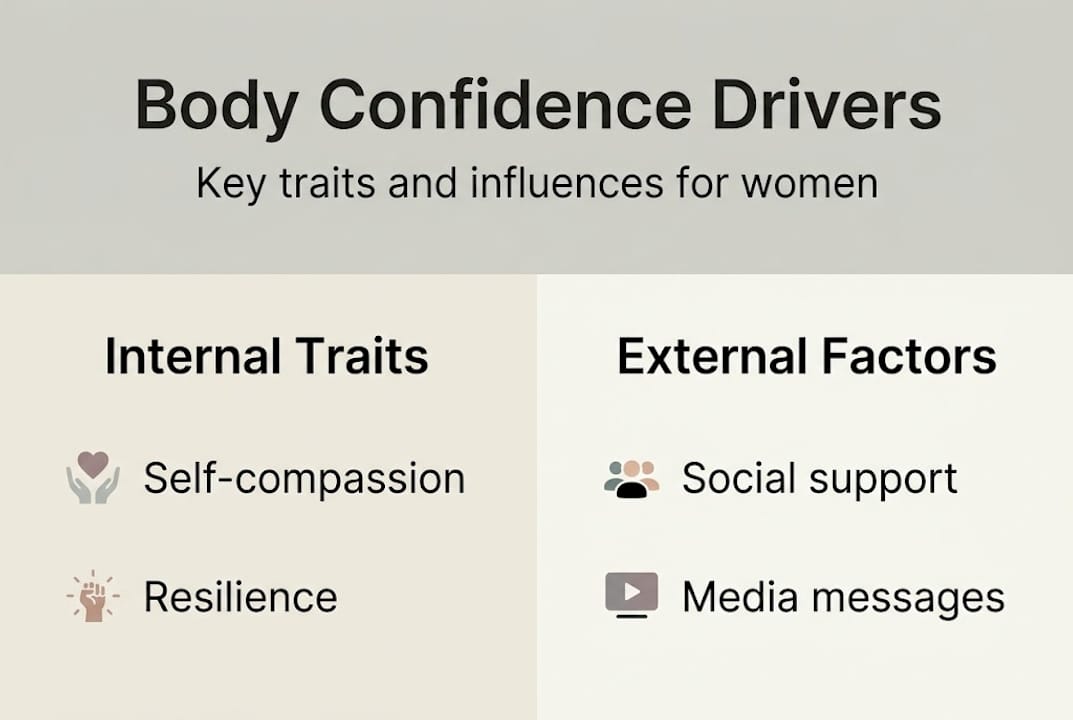
| Trait | How it builds body confidence |
|---|---|
| Self-compassion | Reduces shame, softens self-criticism after setbacks |
| Resilience | Helps you recover faster from negative body image moments |
| Self-efficacy | Motivates healthy behaviors and reinforces positive identity |
Building these traits is practical, not abstract. Pairing natural wellness routines with intentional mindset work creates a feedback loop where action and attitude reinforce each other.
Pro Tip: Start a two-minute body gratitude journal each morning. Write one thing your body did for you yesterday, not how it looked, but what it accomplished. This small habit directly trains self-compassion and shifts focus toward function.
Here are psychological habits that reinforce body positivity over time:
- Practice mindful movement, any activity done for joy rather than punishment
- Use body-neutral affirmations that focus on capability, not appearance
- Set boundaries with conversations or content that triggers shame
- Celebrate non-appearance wins: energy, strength, mood, sleep
- Revisit your body confidence steps regularly to track your growth
External influences: Overcoming societal pressures, media, and family attitudes
Having addressed the internal side, it is equally vital to understand how external influences shape and sometimes sabotage body confidence.
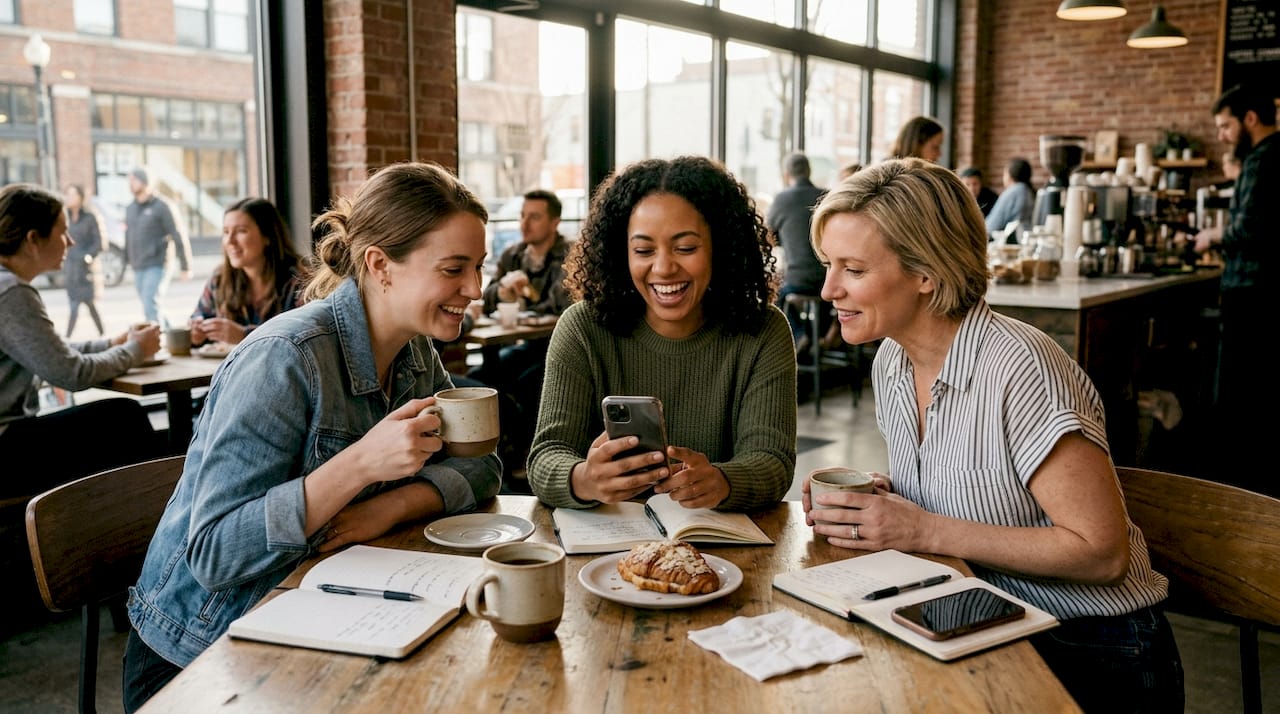
The sources of negative body image are well-documented. Media, teasing, and family attitudes are among the leading causes of poor body image in women. These are not abstract forces. They show up as offhand comments at family dinners, fitness ads that imply your body is a problem to fix, and social feeds curated around one narrow beauty standard.
Social pressure can affect how women feel about their bodies. Build confidence around your own priorities, supportive surroundings and a curves-focused routine that feels right for you.
| Negative influence sources | Positive influence sources |
|---|---|
| Idealized media imagery | Diverse, size-inclusive content creators |
| Critical family comments | Supportive family conversations about health |
| Peer teasing or comparison | Communities built on shared goals and encouragement |
| Diet culture advertising | Wellness messaging focused on energy and joy |
The good news is that you can actively reshape your environment. Here is how:
- Audit your social media feed. Unfollow accounts that make you feel worse about your body. Follow creators who reflect diverse shapes and celebrate functionality.
- Have direct conversations with family. Let people close to you know which comments are off limits. Most people do not realize the impact of casual body remarks.
- Seek out supportive communities. Online groups and local wellness circles built around shared goals, not appearance, dramatically shift your baseline mood.
- Use your body positivity checklist as a weekly reset to stay grounded when external noise gets loud.
- Limit exposure to diet culture content. This includes ads, shows, and conversations that frame your natural body as a problem requiring correction.
Building resilience against external pressure is not about becoming immune to the world. It is about choosing your inputs more deliberately and finding spaces where your curves are celebrated, not just tolerated. Resources that help you boost body positivity can also anchor you when outside voices get too loud.
Body positivity vs. body neutrality: Which mindsets actually boost confidence?
Beyond external factors, how you think about your body sets the frame for confidence gains. Two popular philosophies dominate the conversation: body positivity and body neutrality. Both have real value, and understanding the difference helps you choose the right tool for the moment.
Body positivity encourages you to actively love and celebrate your body as it is right now, curves, stretch marks, and all. It is rooted in self-esteem and challenges beauty standards directly. Body neutrality takes a quieter approach. It asks you to stop assigning moral value to your body’s appearance and instead focus on what your body does and how it feels.
“Body positivity is more strongly tied to self-esteem and body image satisfaction, while body neutrality centers on function and mindfulness, making each approach valuable depending on where a woman is in her journey.” Contrasting body positivity and neutrality
Neither approach is universally superior. Body positivity works powerfully when you want to challenge internalized shame and rebuild pride in your appearance. Body neutrality is more accessible on hard days when forced positivity feels dishonest.
Here is how each mindset plays out in daily life:
- Body positivity in action: Wearing the outfit you love without waiting to lose weight first; posting a photo without heavy editing; saying “I look great” and meaning it
- Body neutrality in action: Eating lunch because your body needs fuel, not as a reward or punishment; skipping the mirror check before leaving the house; focusing on how a workout felt, not how you looked doing it
Pro Tip: Use body positivity for intentional confidence-building moments, like getting dressed or taking photos. Switch to body neutrality during stressful periods when self-love feels like too much pressure. Both are valid, and blending them creates a more sustainable mindset. Explore positivity steps and body positivity benefits to find what resonates with your personality.
Practical ways to enhance confidence: From self-care to embracing curves
Now, let us move from mindsets to how you can put evidence-based strategies for confidence into daily action.
Research confirms that positive body image develops through self-care routines like exercise, healthy eating, appreciating functionality, and social support. These are not passive outcomes. They are built through consistent, intentional choices.
Here are evidence-backed actions to start today:
- Move for pleasure, not punishment. Choose activities you genuinely enjoy, dancing, walking, swimming. Enjoyable movement builds self-worth faster than forced exercise.
- Practice daily affirmations focused on capability. “My body is strong and capable” lands differently than appearance-based statements.
- Join a supportive community. Whether online or in person, shared goals and encouragement accelerate confidence more than solo effort.
- Appreciate your body’s function. Notice what your body does, carries you through your day, lets you hug someone, gives you energy.
- Set realistic, empowering goals. Goals tied to how you feel rather than how you look create sustainable motivation.
For women embracing their natural curves, these approaches also support confidence:
- Prioritize nutrition for confidence by eating foods that genuinely fuel your energy and mood
- Explore nutrition for curves to understand how food choices support your body goals
- Understand the benefits of weight gain for women who are working toward a fuller figure intentionally
- Wear clothing that fits your current body, not your aspirational one
- Challenge weight stigma by separating health from body size in your own thinking
It is also worth noting that positive body attitude correlates with health behaviors, especially at higher self-efficacy levels. In other words, when you believe you can make a difference in your own wellness, you actually do. That belief is worth cultivating above almost anything else.
The overlooked truth about body confidence: Why chasing social ideals misses the mark
Here is something most confidence content will not tell you directly: appearance-focused approaches have a ceiling. You can optimize your look indefinitely and still feel deeply insecure, because confidence built on appearance is always one bad photo or one critical comment away from collapsing.
Real, lasting body confidence grows from what your body does for you, its strength, its resilience, its capacity for pleasure and connection, not from how closely it matches a current trend. Women who report the highest body satisfaction are not necessarily those who fit media ideals. They are the ones who have built self-respect, set boundaries, and stopped outsourcing their worth to outside validation.
Wellness products, including supplements and body care, can absolutely support your self-care rituals and make you feel more intentional about your body. But they work best as part of a broader foundation of self-acceptance, not as a shortcut to it. Check out evidence-backed confidence tips to see how a holistic approach brings everything together. The goal is not to look a certain way. It is to feel genuinely at home in your body, long-term.
Start your journey: Practical resources to build your body confidence and embrace your shape
You now have a clearer picture of what actually drives body confidence and how to build it from the inside out. The next step is putting it into consistent practice with the right support around you.
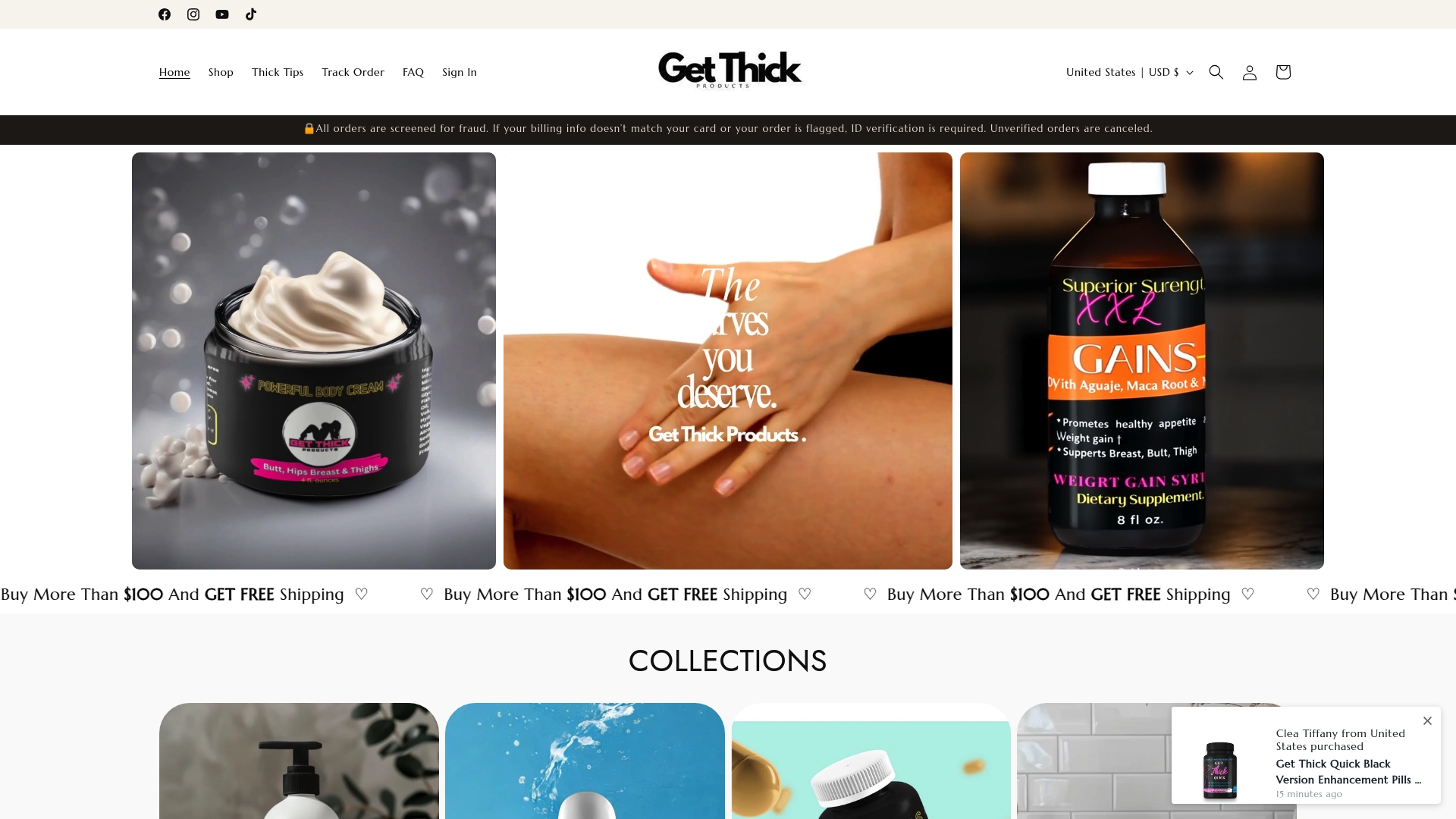
At Get Thick Products, we have built a library of real, practical resources for women who want to feel confident in their curves and take their wellness seriously. From expert tips to real stories and step-by-step guides, everything is designed with your goals in mind. Start with our 10-step confidence guide for a structured path forward. Your body deserves care, attention, and a community that gets it.
Frequently asked questions
What are the top factors that boost women’s body confidence?
Physical activity, resilience, and self-worth are among the strongest predictors of body appreciation in women. Social support and self-compassion also play a major role in building lasting confidence.
Does gaining weight or using supplements improve body confidence for women?
No strong evidence links supplements or intentional weight gain alone to higher body confidence. Self-care and body acceptance are the most reliable foundations, with products serving a supportive rather than primary role.
How do social media and culture affect women’s body image?
Media and social pressure are leading causes of negative body image in women. Actively curating your social feed and seeking size-inclusive communities significantly reduces this impact.
Is body positivity or body neutrality more effective for confidence?
Body positivity boosts self-esteem and image, while neutrality supports mindfulness and function. Blending both depending on your emotional state offers the most practical, sustainable approach.
What practical steps can women take today to enhance confidence?
Positive body image grows through self-care, social support, and focusing on what your body can do. Start with enjoyable movement, daily affirmations, and one supportive community connection this week.
Recommended
- Body confidence guide for curvy women: 10 proven steps – Get Thick Products
- Confidence-boosting beauty for curvy women: A guide – Get Thick Products
- Body confidence checklist: empower your curves & self-care – Get Thick Products
- Body Confidence Tips That Work: Natural Weight Gain – Get Thick Products