

TL;DR:
- Cosmetic wellness emphasizes aligning outer appearance with internal health, fostering genuine confidence. It involves layered treatments and internal care strategies that support long-term results and overall wellbeing. Prioritizing internal health and emotional readiness ensures more satisfying, authentic aesthetic outcomes.
Most people hear “cosmetic wellness” and picture filler appointments or fancy serums. That framing misses most of the story. What is cosmetic wellness, really? It’s the intentional alignment of your outer appearance with your inner physical and mental health, so that how you look genuinely reflects how you feel. It’s not chasing perfection. It’s building a sustainable relationship with your body that supports confidence from the inside out. This guide breaks down the definition, the real benefits, the most effective treatments, and how to build a practice that actually works for you.
Table of Contents
- Key takeaways
- What cosmetic wellness actually means
- The real benefits of cosmetic wellness
- Popular cosmetic wellness treatments
- How to achieve cosmetic wellness safely
- Trends shaping cosmetic wellness in 2026
- My take: why this matters more than people admit
- Support your cosmetic wellness with Getthickproducts
- FAQ
Key takeaways
| Point | Details |
|---|---|
| More than aesthetics | Cosmetic wellness integrates physical health, mental wellbeing, and aesthetic care into one approach. |
| Confidence is the goal | The primary benefit is improved self-esteem and body image, not just surface appearance. |
| Layered treatments work best | Sequenced, whole-person plans consistently outperform isolated or one-step cosmetic fixes. |
| Internal health drives results | Nutrition, sleep, hormones, and stress management directly shape how treatments perform. |
| Readiness matters | Emotional and psychological readiness before treatments leads to better outcomes and satisfaction. |
What cosmetic wellness actually means
Cosmetic wellness is not a single treatment or product category. It’s a philosophy. The concept emerged from a growing recognition that aesthetic care works better, and lasts longer, when it’s connected to overall health rather than applied as a surface-level fix.
At its core, what does cosmetic wellness mean? It means treating your appearance as one expression of your whole health, not something separate from it. Your skin, your body shape, your energy, and your confidence are all connected. Addressing one while ignoring the others tends to produce short-term results at best.
The field draws from several disciplines:
- Aesthetic medicine: Treatments designed to enhance or restore appearance, including topical care, injectables, and energy-based procedures
- Functional medicine: Root-cause health optimization covering nutrition, hormone balance, gut health, and inflammation
- Aesthetic health psychology: The study of how appearance and self-perception interact with mental and emotional wellbeing
- Preventive skin science: Long-term strategies for maintaining skin resilience, cellular health, and natural radiance
What separates cosmetic wellness from traditional cosmetic treatment is intention and integration. A standard cosmetic appointment treats a specific concern. A cosmetic wellness approach asks why that concern exists, what internal factors may be contributing, and how to address it in a way that supports your health long term. Research into integrated aesthetic frameworks shows that this biopsychosocial model produces better patient satisfaction and more ethical outcomes than isolated cosmetic procedures alone.
The importance of cosmetic wellness lies in this: it treats you as a whole person, not a collection of problem areas to be corrected.
The real benefits of cosmetic wellness
Feeling good about how you look is not vanity. It’s a legitimate component of psychological wellbeing. Research consistently shows that confidence and body image satisfaction are directly linked to mental health outcomes including anxiety, social engagement, and overall quality of life.
The cosmetic wellness benefits extend well beyond a good mirror moment. When your external appearance aligns with your sense of self, you show up differently. You take up space more easily. You engage more openly. You worry less about how you look and focus more on what you’re doing.
Keep your personal goals and comfort at the center of your body care routine. Cosmetic products and procedures are different, and neither should be presented as a guarantee of confidence or psychological wellbeing.
This insight reframes the entire conversation. Cosmetic wellness is not about becoming someone else. It’s about looking like the healthiest, most vital version of yourself. That distinction matters enormously for outcomes. People who pursue natural appearance enhancement rather than dramatic transformation report significantly higher satisfaction scores and lower rates of regret.
Cosmetic wellness also reduces anxiety tied to appearance. When you have a consistent, thoughtful self-care practice, you spend less mental energy worrying about your skin, your body, or how others perceive you. That mental space gets redirected toward things that actually matter to you. Learning how self-care transforms your appearance and confidence is one of the most underrated places to start this process.

Popular cosmetic wellness treatments
Understanding cosmetic wellness treatments means looking at two categories that work together: aesthetic procedures and internal wellness protocols. Neither works as well alone as they do together.
Here’s a practical breakdown of how modern cosmetic wellness programs are structured:
- Complexion care: start with skin texture, hydration and a routine suited to your skin. Ingredient research does not establish that every cream promotes healing before or after a procedure. Follow your clinician’s specific aftercare instructions for medical treatments.
-
Contour and volume work: Once skin health is established, treatments that address volume, lift, and structural support are layered in. This includes neuromodulators, dermal fillers, and regenerative techniques like platelet-rich plasma therapy.
- Whole-person care: consider nutrition, stress, sleep and your individual health needs alongside your appearance goals. Medical issues such as hormone concerns should be assessed by a qualified clinician rather than treated as a general cosmetic routine.
-
Body care and enhancement: Topical creams, body treatments, and targeted supplements that support skin elasticity, body composition goals, and overall appearance from the outside in.
-
Mental wellness support: Increasingly, clinics incorporate psychological check-ins or outcome tracking to make sure patients are pursuing treatments for the right reasons and with realistic expectations.
The layered, sequenced treatment approach is considered best practice because it addresses muscle, skin, volume, and systemic health together. The result is harmonious, natural-looking rejuvenation rather than a one-dimensional fix that looks obvious or fades quickly.
Pro Tip: Before booking any cosmetic treatment, get clear on what internal factors might be contributing to your concern. Chronic stress and poor sleep are responsible for more skin aging than most topical products can reverse.
How to achieve cosmetic wellness safely
Knowing how to achieve cosmetic wellness comes down to three things: honest self-assessment, personalized planning, and patience with the process. Here’s what that looks like in practice.
Cosmetic wellness vs. beauty: understanding the difference
Traditional beauty routines focus on covering, correcting, or enhancing specific features with products or procedures. Cosmetic wellness asks a different question: what does your skin and body need to thrive, and how can your external care reflect that internal health?
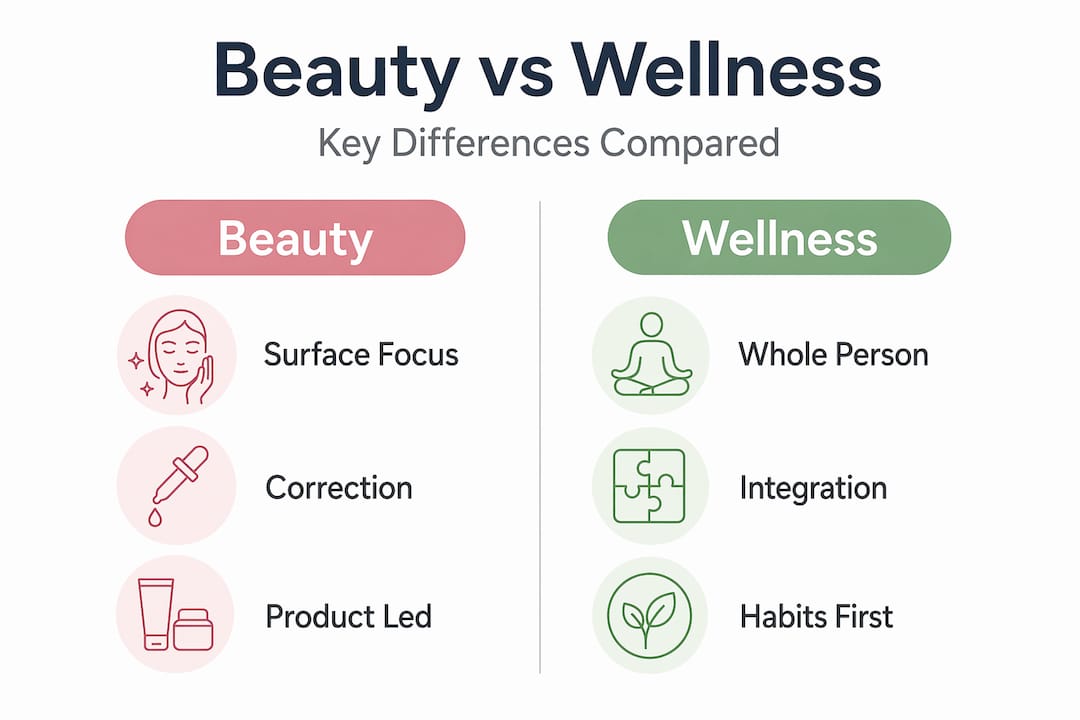
| Approach | Traditional Beauty | Cosmetic Wellness |
|---|---|---|
| Focus | Surface correction | Whole-person health and appearance |
| Method | Isolated treatments or products | Layered, sequenced care with internal support |
| Goal | Look better immediately | Build lasting confidence and health |
| Mental health role | Not considered | Central to assessment and outcome |
| Nutrition and lifestyle | Separate | Integrated into the plan |
This side-by-side view makes the importance of cosmetic wellness clear. It’s not that traditional beauty is wrong. It’s that it addresses only part of the picture.
When you’re evaluating your options, start by asking what’s driving the concern you want to address. Is it a lifestyle factor? A hormonal shift? A long-standing insecurity? Your answer shapes whether you need a product, a procedure, a lifestyle change, or all three. How nutrition shapes your appearance is a practical place to start, since internal health factors affect how your skin looks and responds to any treatment you choose.
One critical safeguard: clinics now screen for emotional readiness before recommending aesthetic treatments, because patients who are psychologically prepared and have realistic goals consistently achieve better outcomes. You deserve that same level of care in how you approach your own wellness decisions.
Pro Tip: Build your cosmetic wellness routine in layers. Start with sleep, hydration, and nutrition. Add topical care. Then consider targeted treatments. Skipping the foundational steps makes everything else less effective.
Trends shaping cosmetic wellness in 2026
The field is shifting fast, and several developments are worth watching as you build your own practice.
- Preventive care: build habits you can maintain and choose products for their labeled purpose. Research on selected ingredients does not establish that every combination of supplements and topicals extends results or slows aging.
- Authenticity over transformation: Satisfaction in aesthetic medicine now correlates most strongly with how authentic and like-themselves patients feel after treatment, not with how dramatically different they look.
- Psychological screening in clinics: Aesthetic health psychology is being integrated into aesthetic clinics to screen for body dysmorphic disorder and track patient-reported outcomes, making care more ethical and effective.
- Whole-person regenerative programs: Regenerative wellness treatments that combine physical rejuvenation with mental wellbeing modalities are gaining traction as the standard of quality care.
- Beauty optimization as a lifestyle segment: Consumers who invest in longevity and skincare treatments contribute approximately $3,000 annually to the beauty ecosystem, and this segment is expected to generate over $30 billion in revenue as it expands.
These trends point in the same direction: cosmetic wellness is becoming the dominant model because it actually works better than anything that came before it.
My take: why this matters more than people admit
People approach cosmetic care with different goals. Some want a simple daily ritual; others want to explore a new look. A satisfying routine starts with knowing what you want and choosing options that fit your life.
Treat your appearance goals as part of your wider self-care. Set personal priorities, compare the options and choose a routine that feels manageable and rewarding.
The shift from “fix how I look” to “support how I feel and let that show” is not a small one. It requires unlearning a lot of messaging about beauty standards. But it’s genuinely freeing. When you pursue holistic beauty that aligns wellness and confidence, you stop chasing an external standard and start building something that actually belongs to you.
My honest advice? Don’t wait until you’re unhappy with your appearance to start. Build the practice now, from the inside out, and let your external care be a reflection of how well you’re taking care of yourself overall.
— Nakeisha
Support your cosmetic wellness with Getthickproducts
If you’re building a cosmetic wellness practice, having the right products as part of your daily routine makes a real difference.
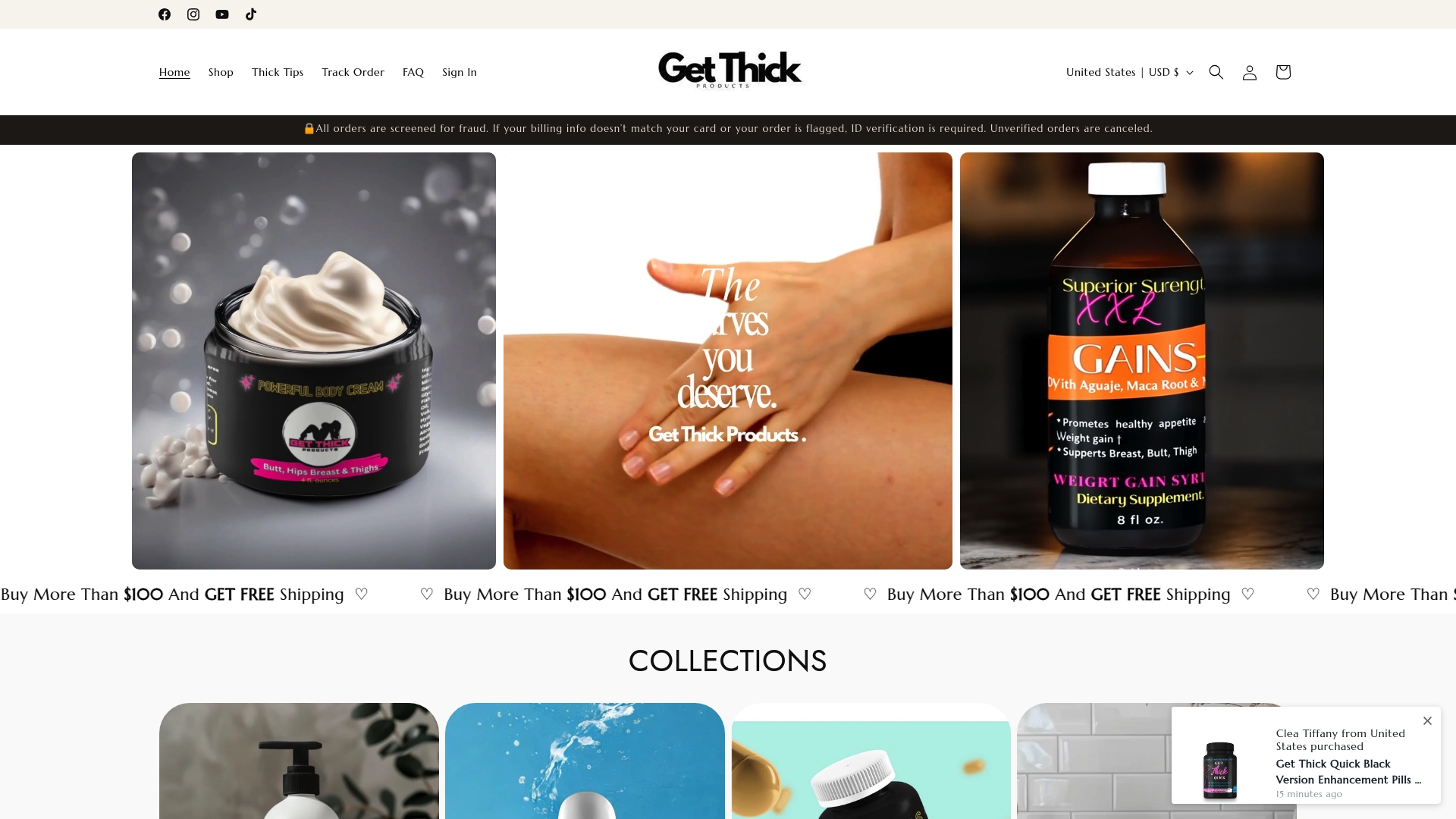
Getthickproducts offers a range of body care products, topical enhancement creams, and wellness supplements designed specifically for women who want to support their appearance and confidence from multiple angles. Every product is formulated with cosmetic and wellness goals in mind, using language and ingredients focused on appearance enhancement and lifestyle support rather than medical claims. Whether you’re working toward body confidence, smoother skin, or a more consistent self-care routine, the Getthickproducts collection is built to complement the thoughtful, layered approach that cosmetic wellness is all about. Explore what’s available and find what fits where you are right now.
FAQ
What is cosmetic wellness in simple terms?
Cosmetic wellness is the practice of combining aesthetic care with internal health strategies, including nutrition, sleep, and mental wellbeing, to support both appearance and confidence long term. It treats how you look as one expression of your overall health rather than a separate concern.
How is cosmetic wellness different from regular beauty treatments?
Regular beauty treatments address specific appearance concerns in isolation, while cosmetic wellness takes a whole-person approach that considers internal health, emotional readiness, and lifestyle factors alongside any aesthetic procedure or product.
What are the main cosmetic wellness benefits?
The core benefits include improved self-esteem, greater body confidence, reduced appearance-related anxiety, and more sustainable results from aesthetic treatments because internal health factors are addressed alongside external care.
Do you need professional treatments to practice cosmetic wellness?
No. Cosmetic wellness begins with foundational habits like nutrition, hydration, sleep, and stress reduction. Professional treatments can enhance results, but a strong internal wellness routine is the most impactful starting point for most people.
How do I know if I’m emotionally ready for cosmetic treatments?
Clinics increasingly use psychological screening to assess readiness before recommending aesthetic procedures. A good self-check is whether your motivation is to feel more like yourself or to meet an external standard. The former tends to produce much higher satisfaction.