

TL;DR:
- Choose safe, certified supplements aligned with specific body and confidence goals.
- Resistance training and proper nutrition are essential complements to supplements.
- Choose progress measures that fit your goals, such as strength, comfort, weight trends or how clothes fit. You do not need a medical scan to start tracking a personal weight gain routine.
You’re standing in the supplement aisle, phone in hand, searching for something that actually works. The shelves are stacked with bold promises and before-and-after photos, but nothing tells you what’s right for your body, your goals, or your health history. Sorting through hundreds of products while trying to avoid anything risky or ineffective is genuinely overwhelming. The good news is that choosing appearance-enhancing supplements doesn’t have to feel like a gamble. With the right framework, you can identify safe, targeted options that support your confidence, your curves, and your overall sense of self.
Table of Contents
- Understand your goals and what’s possible
- Know what to look for: Safe and effective supplement selection
- Personalize your supplement stack: Choosing what works for you
- How to use and track appearance-enhancing supplements for sustainable results
- The real story: What most guides miss about appearance enhancement
- Discover appearance-enhancing solutions tailored to you
- Frequently asked questions
Key Takeaways
| Point | Details |
|---|---|
| Set clear goals | Define what confidence and enhancement mean for you and make your plans fit those priorities. |
| Prioritize safety | Always choose third-party certified supplements and verify ingredients before buying. |
| Customize selection | Consult healthcare professionals and tailor your supplement stack to your body and preferences. |
| Track real results | Choose progress measures that fit your goals, such as strength, comfort, weight trends or how clothes fit. You do not need a medical scan to start tracking a personal weight gain routine. |
| Confidence comes first | Sustainable appearance enhancements are built on self-acceptance, nutrition, and patience—not just quick fixes. |
Understand your goals and what’s possible
Before you spend a single dollar on supplements, get specific about what you actually want. That might sound obvious, but most women skip this step and end up with products that don’t match their real priorities.
Ask yourself:
- Are you focused on gaining curves in specific areas, like fuller hips and thighs?
- Do you want to support lean muscle for a more toned, sculpted silhouette?
- Is skin, hair, and nail health part of your appearance goals?
- Or is this mostly about feeling good in your body and reclaiming your confidence?
Each of these goals points toward different products, different nutrients, and different timelines. A woman building lean muscle through resistance training has completely different supplement needs than someone supporting skin health and fullness.
Here’s the reality that most marketing won’t tell you: supplements alone don’t build muscle. You still need resistance training, adequate protein around 1.6 grams per kilogram of bodyweight per day, and a caloric surplus to see real body composition changes. Supplements support that foundation. They don’t replace it.
Building body confidence tips into your everyday mindset matters just as much as any supplement. Think of your wellness routine for women as the engine, and supplements as one of many supportive tools.
Pro Tip: Write your top two or three goals down before shopping. Track progress beyond the scale too, including how your clothes fit, how energized you feel, and even confidence gains. If you have access to a DEXA scan, use it to track lean mass separately from total body weight for the clearest picture.
Know what to look for: Safe and effective supplement selection
Once you’ve set your goals, it’s time to get smart about product selection. This is where most women either get it right or fall into expensive, disappointing traps.
The single most important thing to look for is third-party certification. These are seals from independent organizations that verify a product actually contains what the label says, at the right dosage, without harmful contaminants like heavy metals or banned substances. The three most trusted certifications to look for are:
- USP Verified (United States Pharmacopeia)
- NSF Certified for Sport
- Informed-Sport
Third-party certifications like USP and NSF give you confidence that the product is pure, potent, and accurately labeled. Without these seals, you’re essentially trusting the manufacturer on their word alone.
Next, verify ingredients before you buy. The NIH runs a free tool called the Dietary Supplement Label Database where you can look up exact ingredients, forms, and quantities on product labels. This matters because many supplements list ingredients without disclosing dosages clearly. Over 207,000 supplement products are tracked in this database, which gives you enormous power as a consumer to compare and verify.
Here’s a quick comparison to help you evaluate products:
| Feature | Green flag | Red flag |
|---|---|---|
| Third-party certification | USP, NSF, or Informed-Sport | No certification listed |
| Ingredient transparency | Full dosages listed | “Proprietary blend” with no amounts |
| Sugar content | Less than 5g per serving | 20g+ of simple sugars per serving |
| Serving size | Realistic and labeled clearly | Unrealistically small serving |
| Claims | Wellness and appearance-focused | Guaranteed medical results |
For women focused on natural curves and confidence rather than bulking up, it’s worth paying attention to the carbohydrate profile too. Mass gainers often contain enormous amounts of simple sugars and refined carbs, which can lead to generalized fat gain rather than the targeted fullness and definition most women are looking for. Look into supplements for women’s body shape and stay aware of supplement trends for curves so you’re choosing products that align with how the science is actually moving.

Personalize your supplement stack: Choosing what works for you
Knowing what makes a supplement safe is half the battle. The other half is choosing what actually fits you, specifically, including your health history, digestion, lifestyle, and body composition targets.
Here’s a step-by-step approach:
- Talk to a healthcare provider first. This is non-negotiable, especially for women between 21 and 55. Consulting a healthcare provider helps you identify any deficiencies like low iron, potential interactions with medications, and what your body genuinely needs based on your diet, training habits, and health status.
- Match your supplements to your specific goals. See the table below for a starting framework.
- Check for food allergies and intolerances. Whey protein, for example, is dairy-based and won’t work for women who are lactose intolerant.
- Account for your digestive health. If you have a sensitive stomach or low appetite, ease in slowly.
- Start with one supplement at a time. Add more only after you’ve established how your body responds.
| Goal | Suggested supplement type | Notes |
|---|---|---|
| Lean muscle and curves | Protein powder (whey or plant-based) | Choose based on tolerance |
| Skin fullness and glow | Collagen peptides | Look for hydrolyzed forms |
| Gut health and digestion | Probiotics | May improve nutrient absorption |
| General weight support | Calorie-dense protein shakes | Pair with complex carbs |
| Muscle retention | Creatine monohydrate | Well-studied and generally safe |
Women with low appetite or digestive challenges face a unique hurdle. Probiotics and digestive enzymes may help the body absorb nutrients more effectively from calorie-dense shakes, but it’s important to rule out underlying digestive conditions first rather than masking them with supplements.
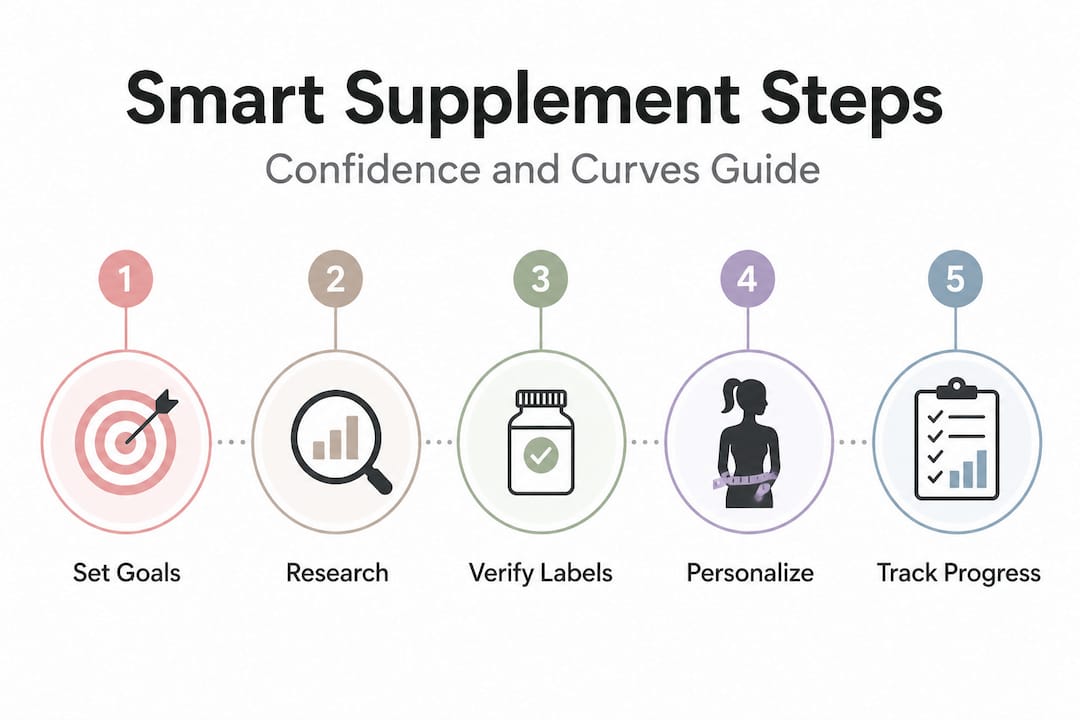
Explore body-focused supplements designed with women’s body goals in mind, and check out this positive body image guide to keep your mindset aligned with your physical goals throughout the process.
Pro Tip: Give each new supplement at least four weeks before evaluating whether it’s working. Changing too many things at once makes it impossible to know what’s actually helping.
How to use and track appearance-enhancing supplements for sustainable results
You’ve set your goals, picked safe products, and personalized your stack. Now it’s about using those supplements strategically and actually measuring what’s happening in your body.
Here’s a practical, step-by-step tracking plan:
- Log your starting point. Take photos from multiple angles, note your weight, and if possible, get a DEXA scan to measure your lean mass and fat distribution before you begin.
- Track your intake daily. Use a food tracking app to monitor your protein and calorie intake alongside supplement use. This removes guesswork.
- Incorporate resistance training consistently. Aim for two to four sessions per week focusing on compound movements like squats, hip thrusts, and rows to stimulate the muscle groups you want to develop.
- Reassess at the four-week mark. Review your photos, measurements, and how you feel. Don’t just check the scale.
- Consider a DEXA scan at three months. This gives you objective data on lean mass gain versus fat gain, which helps you adjust your approach with precision.
“The goal isn’t just to weigh more. It’s to feel better, look the way you want, and build a body that reflects your sense of self.”
A common mistake women make is over-relying on the hype around a single product while skipping the foundational steps. Resistance training and caloric surplus are non-negotiables if your goal includes visible muscle or fuller curves. No supplement changes that equation.
One noteworthy research finding worth knowing: collagen protein outperforms whey for fat-free mass and strength gains in resistance-training women, according to a network meta-analysis. This runs counter to conventional advice that whey is always the gold standard, and it’s worth discussing with your provider.
Learn more about the benefits of weight gain as part of a healthy lifestyle and dig into the science of cosmetic supplements to understand what’s actually happening in your body when you use these products consistently.
Common pitfalls to avoid:
- Expecting overnight results. Visible body composition changes realistically take 4 to 12 weeks of consistent effort.
- Skipping protein tracking. Without enough protein, supplements have little to work with.
- Buying based on packaging alone. Marketing is not evidence. Always check for certifications and ingredient transparency.
- Changing your entire routine at once. Isolate variables so you know what’s working.
The real story: What most guides miss about appearance enhancement
Here’s something most supplement guides won’t say out loud: the majority of women who feel disappointed by supplements were never set up to succeed. Not because they failed, but because they were sold a fantasy.
Generic mass gainers are a perfect example. They’re marketed broadly, often targeting anyone who wants to gain weight fast. But for women focused on building real curves and body confidence, those products frequently deliver generalized fat gain in areas they didn’t want, without the definition or fullness they were actually after. Evidence favors targeted supplements like creatine or HMB over broad-spectrum mass gainers, while the NCCIH specifically warns that many performance supplements are ineffective or potentially harmful.
Choose progress measures that fit your goals, such as strength, comfort, weight trends or how clothes fit. You do not need a medical scan to start tracking a personal weight gain routine.
Confidence has to be the center of this journey, not a side effect. When the goal is purely a number on the scale, it’s easy to feel like you’re constantly failing. When the goal is feeling strong, looking the way you want, and appreciating your body’s capacity to change, progress feels real even during the slow weeks. That reframe changes everything.
The women who get the best results are consistent, patient, and willing to listen to their bodies. They adjust when something isn’t working. They don’t abandon the process at week three. And they know that supplements are one part of a much bigger picture, not a shortcut to bypass the work. Check out our take on body enhancement explained for a deeper look at how all the pieces fit together.
Discover appearance-enhancing solutions tailored to you
You now have a clear, evidence-backed framework for choosing supplements that support your confidence, your curves, and your body positivity goals. The next step is finding products that actually align with everything you’ve learned.
At Get Thick Products, we’ve built a curated line of appearance-enhancing supplements specifically for women who want real results without the confusion or compromise. From topical enhancement creams and body care products to wellness supplements designed for healthy weight gain support, everything in our collection is formulated with your goals and your safety in mind. Browse, compare, and find the right fit for your personal enhancement journey. Your confidence deserves products that were made with you at the center.
Frequently asked questions
How do I know if an appearance-enhancing supplement is safe?
Look for supplements with third-party certifications like USP Verified or NSF Certified, and confirm ingredients using the NIH Label Database before purchasing.
Are natural weight gainers better than mass gainers for women?
Natural weight gainers with complete proteins and complex carbs support lean mass more effectively and avoid the excess sugar found in most mass gainers, making them a smarter choice for curve-focused goals.
Should I talk to a doctor before starting supplements for appearance?
Yes, especially for women 21 to 55. A healthcare provider consultation helps identify deficiencies, catch potential interactions, and personalize recommendations based on your unique health status.
How long does it take to see results from appearance-enhancing supplements?
Visible changes typically appear in 4 to 12 weeks when you combine the right supplements with consistent resistance training and adequate protein and calorie intake.
Are there extra precautions for women with digestive issues or low appetite?
Yes, digestive enzymes or probiotics may support better nutrient absorption, but rule out underlying issues first and always loop in your healthcare provider before adding these to your routine.
Recommended
- Wellness supplements for women: curves, confidence & results – Get Thick Products
- How supplements support women’s body shape and wellness – Get Thick Products
- Body-focused supplements: benefits for women’s curves – Get Thick Products
- Beauty supplement trends: what works for curves in 2026 – Get Thick Products