

Body enhancement is a broad marketing term. Cosmetics, dietary supplements and cosmetic procedures serve different purposes. Understanding those differences helps you evaluate claims without assuming that a cream or pill can create a specific body shape.
Table of Contents
- What body enhancement cosmetics mean
- Product categories and their limits
- Evaluating claims about creams and supplements
- Safety information and U.S. regulation
- Costs and realistic expectations
- Explore Get Thick Products
Key Takeaways
| Focus | What to consider |
|---|---|
| Topical body care | Evaluate cosmetic claims separately from tissue growth claims. |
| Supplements | Check the actual label and product-specific evidence. |
| Safety | Natural ingredients and registration do not guarantee safety or results. |
| Expectations | Avoid guaranteed enlargement and fixed result deadlines. |
What body enhancement cosmetics mean
A cosmetic may cleanse, moisturize or alter the appearance of skin, depending on the product. Those functions should not be confused with increasing body fat, growing breast tissue or changing hormones. Product-specific evidence is needed for product-specific claims.
Product categories and their limits
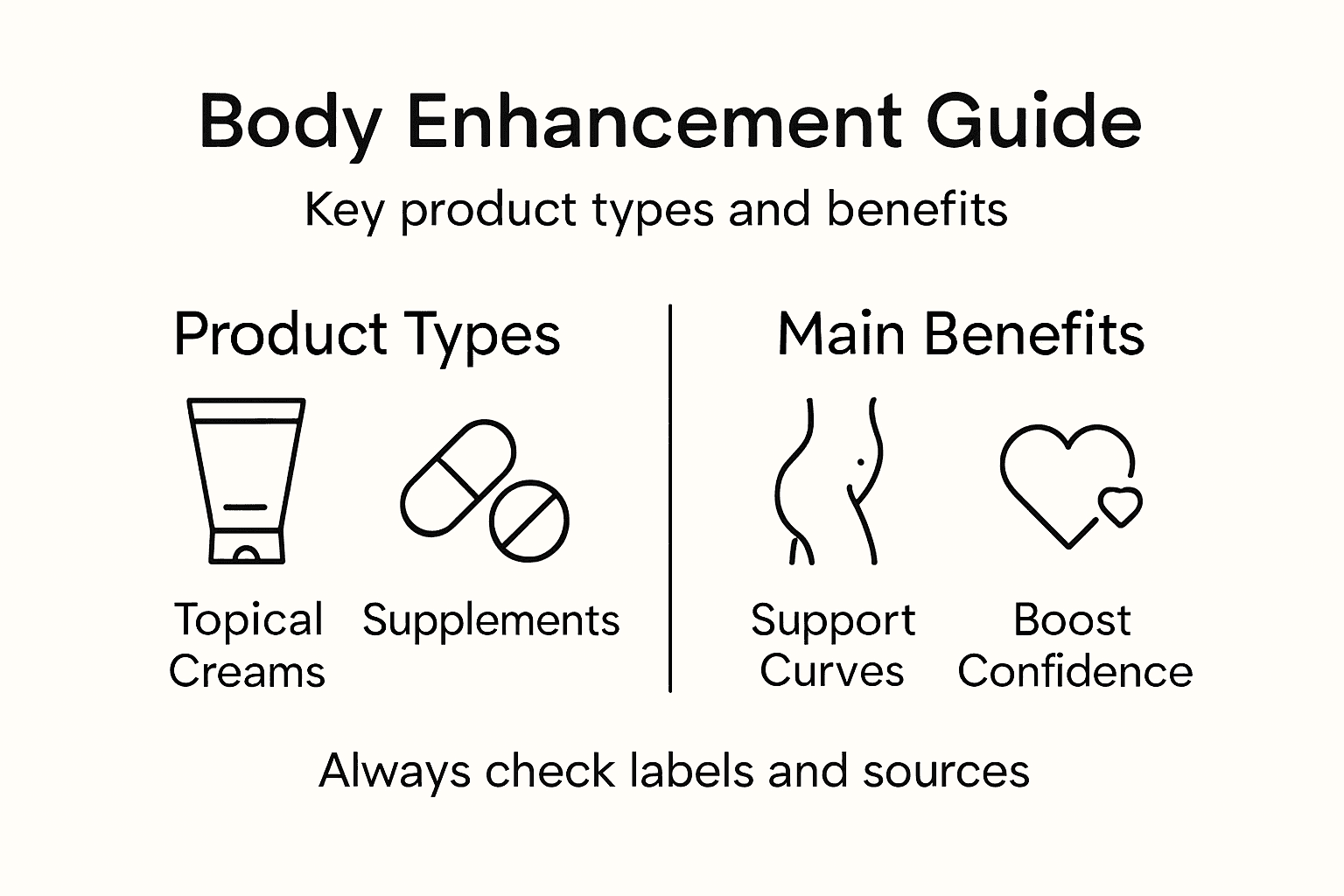
Keep topical body care, dietary supplements and procedures separate when comparing options. A moisturizer is not a nutritional product, and a supplement is not a cosmetic procedure. Do not infer a shared mechanism or a proven combined effect because products are marketed together.

Evaluating claims about creams and supplements
An ingredient name alone does not establish that the finished product enlarges hips, breasts or buttocks. This article does not establish a hormone, metabolism or targeted growth effect for any store product. For supplements, consult NIH’s consumer supplement guidance and review the actual label rather than assuming a herbal blend works like a studied nutrient.
Safety information and U.S. regulation
The FDA’s explanation of cosmetics and U.S. law states that cosmetic products generally are not pre-approved by FDA, with an exception for some color additives. Claims about treating disease or affecting body structure or function can cause a product to be regulated as a drug. Registration is not a guarantee of effectiveness.
Costs and realistic expectations
Compare the stated purpose, ingredients, directions and price. There is no verified universal timeline for visible curve changes from a cream or supplement. If you are considering a procedure, NHS advice before a cosmetic procedure explains questions to consider. Avoid treating cosmetic body care as an equivalent to a procedure.
Explore Get Thick Products
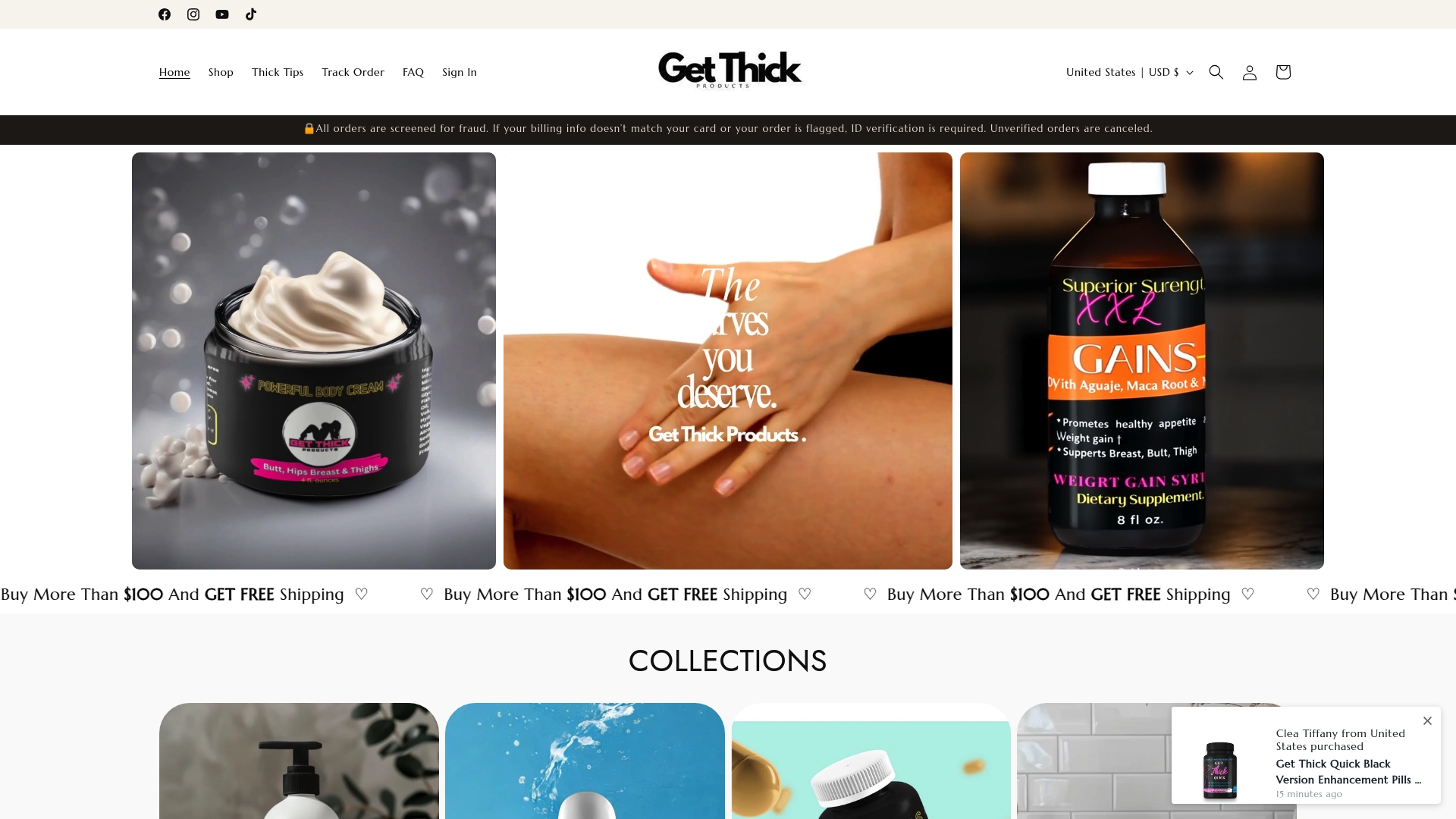
Review the information at Get Thick Products and the label on each item. Use only the product’s actual directions. No guaranteed enlargement, hormone change or treatment benefit is established by this general article.
Frequently Asked Questions
What are body enhancement cosmetics?
The term may refer to products marketed for body appearance. Check the specific product’s purpose; it does not establish tissue growth or localized weight gain.
How do topical creams for body enhancement work?
Effects depend on the finished formula and supporting evidence. Do not assume a topical cream changes hormones or grows tissue.
What types of products are available for curve support?
Topical body care, supplements and procedures are different categories. They should not be treated as interchangeable or proven to work together.
What should I consider when using body enhancement cosmetics?
Read the label and warnings, consider your allergies and health needs, and seek professional advice about supplements or procedures. No result timeline is guaranteed.