

Finding real confidence in your body goes way beyond what the scale says. For many women in the United States, the search for healthy weight gain is about building strength, celebrating curves, and embracing a version of themselves that feels powerful and energized. Understanding the difference between gaining lean muscle and just putting on fat helps you choose nutrition, supplements, and habits that support genuine transformation and body positivity.
Table of Contents
- Defining Healthy Weight Gain For Women
- Key Nutrients Essential For Safe Weight Gain
- Balanced Meal Planning Strategies That Work
- Role Of Supplements In Appearance Enhancement
- Common Mistakes And How To Avoid Them
Key Takeaways
| Point | Details |
|---|---|
| Healthy Weight Gain Focus | Women should aim for weight gain that emphasizes lean muscle and bone density rather than excess fat. |
| Nutrition and Lifestyle | Tailor your nutrition and lifestyle strategies to meet your unique needs, focusing on nutrient-dense foods and physical activity. |
| Importance of Protein | Prioritize adequate protein intake at each meal to support muscle growth and ensure healthy weight gain. |
| Realistic Progress Expectations | Set achievable goals and understand that healthy weight gain is typically gradual, aiming for one to two pounds per week. |
Defining Healthy Weight Gain for Women
Healthy weight gain for women isn’t about simply increasing the number on the scale. It’s about building a stronger, more confident version of yourself through deliberate nutrition and lifestyle choices. Weight gain that improves functional capacity happens when you gain primarily through lean muscle, bone density, and supportive tissue rather than excess fat accumulation. This distinction matters because it determines whether your weight gain translates to feeling more energized, stronger, and genuinely better in your body.
Your age, genetics, hormonal patterns, and lifestyle all play significant roles in how your body responds to weight gain efforts. What works for your friend might require adjustments for your unique metabolism and life stage. Healthy weight gain involves achieving a body weight that supports optimal health and physical function through gradual increases in quality mass. This gradual approach matters because rushing weight gain typically results in excess fat storage rather than the muscle and bone development that creates real transformation. When your body receives proper nutrition and stimulus through physical activity, it prioritizes building the tissue that makes you feel powerful and confident.
Many women approaching weight gain struggle with one key misconception: that any weight gain is the same. In reality, gaining 10 pounds of muscle feels dramatically different from gaining 10 pounds of fat. One improves your strength, posture, and how clothes fit across your body. The other often creates discomfort and doesn’t deliver the body confidence transformation you’re seeking. Understanding this difference shapes every decision you make, from the foods you prioritize to the supplemental support you choose. Your goal is intentional composition change that reflects your personal vision of health and confidence.
Factors like stress levels, sleep quality, hormonal balance, and even your workout routine influence whether your caloric surplus builds the tissue you actually want. This is why generic “eat more” advice falls short. You need a strategy tailored to your body’s needs and your lifestyle reality. The journey toward healthy weight gain is as much about understanding your body as it is about nutrition itself.
Pro tip: Track not just your weight but how your clothes fit, your energy levels, and your strength gains over 4-week periods to identify whether your current approach is building the right kind of mass for your goals.
Key Nutrients Essential for Safe Weight Gain
Your body doesn’t just need calories to gain weight effectively. It needs the right building blocks to create muscle, support bone density, and maintain the hormonal balance that keeps you feeling your best. Macronutrients and micronutrients support muscle growth and bone health while fueling your body’s daily functions. Without proper nutrient balance, you might gain weight, but you won’t gain the kind that makes you feel stronger and more confident.
Protein deserves top billing in your weight gain strategy. Your muscles repair and grow through protein, making it non-negotiable if you want your weight gain to reflect lean mass rather than excess fat. Aim for adequate protein at each meal, whether from chicken, fish, Greek yogurt, eggs, or plant-based sources like lentils and quinoa. Complex carbohydrates like sweet potatoes, oats, and brown rice provide the sustained energy you need for workouts and daily activities, while healthy fats from avocados, nuts, olive oil, and fatty fish regulate your hormones and support nutrient absorption. These three macronutrients work together. Skip any one, and your body struggles to build the tissue you’re targeting.
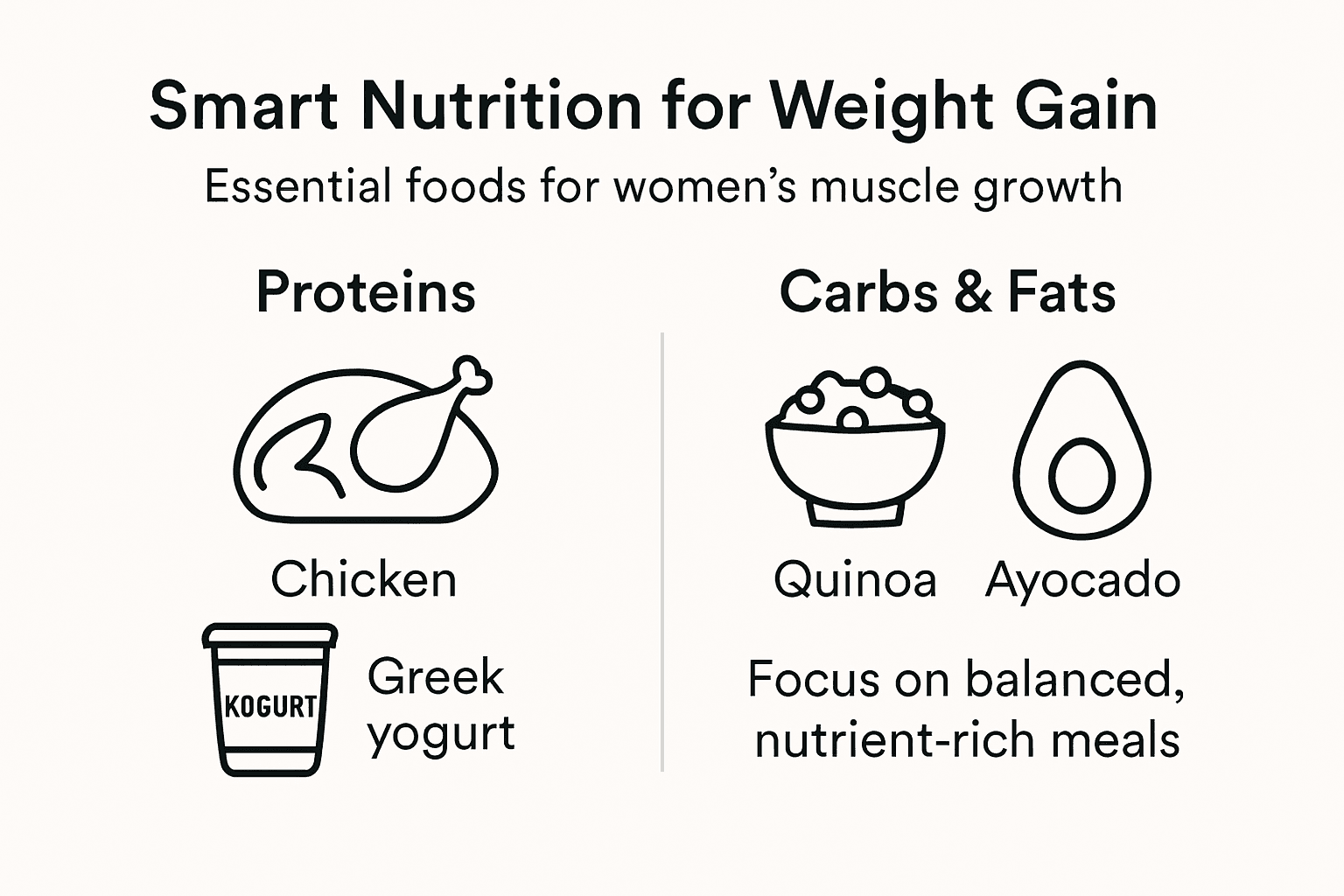
Women have unique nutritional demands that shift throughout life. Iron, calcium, vitamin D, and folate address women’s specific nutrient needs, particularly for menstruating women who lose iron monthly. Calcium and vitamin D work together to maintain bone strength, something that becomes increasingly important as you age. B vitamins support energy metabolism, helping your body efficiently use the calories you consume. Fiber from whole grains, vegetables, and fruits keeps your digestive system functioning smoothly and supports stable blood sugar levels that prevent energy crashes. A diet rich in whole foods delivers all these nutrients without relying solely on supplements.
The practical reality: nutrient timing matters. Eating protein and carbohydrates around your workouts amplifies muscle growth. Spreading protein throughout the day rather than loading it all at dinner improves muscle synthesis. Combining iron-rich foods with vitamin C sources like oranges or bell peppers enhances iron absorption. These small adjustments compound into noticeable results over weeks and months.
Pro tip: Build each meal around a protein source, add a complex carbohydrate, include healthy fat, and fill half your plate with vegetables or fruits to naturally hit all essential nutrient categories without overthinking nutrition.
Here is a summary of how different nutrients support healthy weight gain for women:
| Nutrient | Primary Function | Best Food Sources | Role in Weight Gain |
|---|---|---|---|
| Protein | Muscle synthesis | Chicken, fish, lentils, eggs | Builds lean muscle |
| Complex Carbs | Sustained energy | Sweet potatoes, oats, brown rice | Fuels workouts, prevents crash |
| Healthy Fats | Hormone regulation | Avocado, nuts, fatty fish | Supports tissue growth |
| Iron | Oxygen transport | Spinach, red meat, beans | Prevents fatigue, supports growth |
| Calcium & Vitamin D | Bone strength | Dairy, leafy greens, sunlight | Enhances bone density |
Balanced Meal Planning Strategies That Work
Meal planning isn’t about rigid restriction. It’s about creating a framework that makes healthy weight gain automatic rather than something you have to think about constantly. Balanced meal planning involves consuming a variety of foods from all food groups to ensure you hit all your nutritional targets while meeting your caloric goals. When you plan ahead, you remove the guesswork and the temptation to reach for quick, nutrient-poor options when hunger strikes at 3 p.m.

The foundation of effective meal planning starts with frequency and intentionality. Rather than three large meals, consider eating five to six smaller meals and snacks throughout your day. This approach keeps your metabolism active, prevents extreme hunger that leads to overeating, and distributes your calorie intake in a way your body can actually use for muscle building. Each meal should contain lean protein to stimulate muscle synthesis, whole grains or starchy carbohydrates for energy, healthy fats for hormone balance, and vegetables or fruit for micronutrients and fiber. Think of this as your basic formula. Apply it consistently, and composition change becomes inevitable.
Flexibility and flavor matter more than you might think. Women often abandon meal plans because they taste boring or feel restrictive. Effective meal planning incorporates flavorful and varied nutrient-dense foods adjusted for caloric needs that you actually enjoy eating. This might mean swapping chicken for salmon one week, trying a different grain, or experimenting with spices and sauces that make your meals exciting. Meal prep on Sundays sets you up for success during hectic weekdays. Prepare proteins in bulk, cook grains, chop vegetables, and portion snacks into containers. When healthy options are immediately available and require zero effort, you eat them instead of reaching for alternatives.
Timing your meals strategically amplifies results. Eating carbohydrates and protein in the hours surrounding your workout optimizes muscle growth and energy recovery. Spacing protein throughout the day rather than concentrating it at dinner improves total muscle protein synthesis. Starting your day with a protein-rich breakfast prevents the energy crashes that make you crave sugar later. These aren’t complicated tactics, but they transform outcomes when implemented consistently.
Pro tip: Pick three to four go-to breakfast options, three to four lunch templates, and three to four dinner proteins you enjoy, then rotate through them while adjusting vegetables and sides to create variety without overwhelming yourself with decision-making.
Role of Supplements in Appearance Enhancement
Supplements occupy a specific and important role in your weight gain and appearance enhancement journey, but it’s crucial to understand exactly what they can and cannot do. Think of supplements as strategic support, not magic solutions. When combined with solid nutrition and consistent effort, certain supplements enhance results by filling nutritional gaps, supporting muscle development, or promoting skin and hair health. However, supplements marketed for appearance enhancement vary widely in safety and efficacy, and many contain misleading claims about their capabilities. Your job is to be a discerning consumer who understands what evidence actually supports a product’s benefits.
Certain supplements have legitimate science behind them for appearance-related benefits. Vitamins A, C, and E, along with biotin and omega-3 fatty acids, have been studied for potential benefits in skin, hair, and nail health. These nutrients support collagen production, reduce inflammation, and provide building blocks for healthy cell turnover. Protein powders aren’t supplements in the traditional sense, but they’re invaluable for meeting your daily protein targets without consuming excessive calories from whole foods alone. Creatine monohydrate has solid research supporting muscle gains and strength development, particularly when paired with resistance training. The key difference between these and many other products on the market is that these have actual research backing their claims.
The appearance enhancement supplement landscape requires skepticism. Many products marketed for body shaping contain ingredients with minimal research, questionable sourcing, or potential side effects that aren’t adequately disclosed. Quality regulation of dietary supplements is limited, and many supplements lack strong scientific support. Before purchasing any supplement, ask yourself three questions: Is there peer-reviewed research supporting this specific ingredient at this dosage? Does the brand provide third-party testing results? Are the health claims reasonable or are they making medical promises that no supplement can legally make? A supplement company willing to show testing results and acknowledge what their product can and cannot do deserves more trust than one making outlandish promises.
Integrating supplements effectively means treating them as the supplement they are: complementary to solid nutrition and training, not replacements for either. Start with the fundamentals. Get your nutrition dialed in through whole foods first. Once you’ve established consistent meal planning and training, targeted supplements can accelerate results in specific areas, whether that’s muscle development, skin clarity, or hair health. Consult with a healthcare provider before starting new supplements, especially if you have any underlying health conditions or take medications that could interact.
Pro tip: Research any supplement on third-party testing sites like ConsumerLab or NSF Certified for Sport before buying, and look for products that list ingredient amounts transparently on the label rather than hiding them behind proprietary blends.
Common Mistakes and How to Avoid Them
Women pursuing healthy weight gain often sabotage their own progress by making predictable mistakes that slow results or derail efforts entirely. The most damaging mistake is prioritizing quantity over quality when it comes to calories. Eating an extra 500 calories daily sounds straightforward until those calories come primarily from sugary drinks, processed snacks, and fried foods. Relying on empty calories from sugary and highly processed foods leads to unhealthy fat gain rather than lean muscle development. You might gain weight faster, but you’ll feel sluggish, your skin suffers, and you won’t achieve the body composition changes that actually build confidence. The solution is simple but requires discipline: prioritize nutrient-dense foods that fuel your goals while meeting your caloric needs.
Another critical error involves treating nutrition as separate from physical activity. Weight gain without resistance training becomes fat gain by default. Your muscles don’t know to grow just because calories increased. They need stimulus. Training provides that signal. Combined with proper nutrition, training directs your body to build muscle rather than simply store excess energy as fat. Many women also underestimate their calorie needs, eating slightly more than maintenance but not enough to truly support weight gain goals. Track your food intake for a week or two to establish baseline numbers. Calculate your actual needs accounting for activity level. Then deliberately exceed those numbers. Guessing typically results in slower progress than expected.
Sleep and stress management are nutritional mistakes that often get overlooked. Inadequate sleep disrupts hormones that regulate appetite and muscle recovery. Chronic stress elevates cortisol, which promotes fat storage and interferes with nutrient absorption. Ignoring sleep and stress factors compromises healthy weight gain success. Prioritize seven to nine hours of sleep nightly. Develop stress management practices whether through exercise, meditation, or simply setting boundaries around work demands. These aren’t luxuries. They’re foundational to your results.
Women also frequently make the mistake of expecting rapid transformation. Setting realistic goals and seeking guidance from registered dietitians helps avoid common pitfalls. Healthy weight gain typically occurs at one to two pounds weekly, with much of that early gain being water and glycogen rather than pure muscle. This slower pace feels frustrating initially but proves sustainable long term. Rapid weight gain often reverses quickly once you return to normal eating patterns. Gradual change sticks because you’re building habits, not chasing quick fixes.
Compare the impact of common healthy weight gain mistakes below:
| Mistake | Long-Term Effect | Prevention Strategy |
|---|---|---|
| Prioritizing calories over quality | Gains mostly fat | Choose nutrient-rich foods |
| Neglecting resistance training | Loss of muscle tone | Include strength exercises |
| Skipping sleep and stress care | Disrupted metabolism | Improve sleep and stress habits |
| Expecting rapid results | Quick loss of progress | Set sustainable weekly goals |
Pro tip: Track your progress through photos, measurements, and how clothes fit rather than fixating solely on scale weight, since muscle weighs more than fat and genuine composition changes sometimes show up in the mirror before they show on the scale.
Support Your Healthy Weight Gain Journey with Confidence
The article highlights the challenge many women face in achieving healthy weight gain that builds lean muscle rather than unwanted fat. It emphasizes the importance of nutrient timing, quality nutrition, and tailored strategies to support your body’s unique needs. If you want to enhance your appearance while supporting your body’s natural transformation, incorporating specialized supplements and body care products can amplify your efforts and nurture your confidence.
Get Thick Products offers a range of women-focused supplements and topical enhancement creams designed to complement your healthy weight gain plan. These products work alongside proper nutrition and lifestyle habits to help you feel stronger and more empowered every day. Discover options that prioritize body positivity and appearance enhancement without relying on medical promises.
Explore our collection today and take the next step toward your ideal body composition. Act now to enjoy supplements and cosmetics crafted to support sustainable, healthy results that make you look as good as you feel. Your journey to confident body transformation begins here.
Frequently Asked Questions
What nutrients are essential for healthy weight gain in women?
Essential nutrients for healthy weight gain in women include protein for muscle synthesis, complex carbohydrates for sustained energy, healthy fats for hormone balance, and vital micronutrients like iron, calcium, and vitamin D for overall health and bone strength.
How can I ensure that my weight gain is primarily lean muscle rather than fat?
To promote lean muscle gain, focus on a balanced diet that includes adequate protein, engage in regular resistance training, and avoid excessive consumption of empty calories from processed foods. Prioritize a caloric surplus that comes from nutrient-dense foods.
Why is nutrient timing important for weight gain?
Nutrient timing is crucial because consuming protein and carbohydrates around workout times can enhance muscle growth and recovery. Spreading protein intake throughout the day rather than concentrating it at one meal can also improve muscle synthesis.
What are common mistakes women make when trying to gain weight?
Common mistakes include prioritizing caloric quantity over nutritional quality, neglecting resistance training, overlooking the importance of sleep and stress management, and expecting rapid results instead of adopting a gradual approach. These can hinder progress and lead to unhealthy weight gain.
Recommended
- 5 Effective Weight Gain Pills for Women-Get Thick Products
- The Ultimate Guide: How to Gain Weight Fast and Healthy – Get Thick Products
- Healthy Weight Gain: From Thin to Thick – Get Thick Products News
- Get Thick Pills: Natural Weight Gain & Curves Enhancement – Get Thick Products
- 7 Key Pre-Workout Nutrients for UK Female Athletes – Interval