

Craving more body confidence and natural curves can feel challenging in fast-paced city life. For many American women, gaining healthy weight is about more than numbers on a scale, it’s about feeling good in your own skin and supporting a vibrant lifestyle. By focusing on balanced nutrition and personalized routines backed by real wellness strategies, you can shape your body on your terms while prioritizing long-term health and glowing self-esteem.
Table of Contents
- Step 1: Assess Current Habits And Define Body Goals
- Step 2: Design A Nutrition Plan For Effective Weight Gain
- Step 3: Incorporate Cosmetic And Wellness Support Products
- Step 4: Adjust Daily Routines To Maximize Results
- Step 5: Evaluate Progress And Refine Your Workflow
Quick Summary
| Key Insight | Explanation |
|---|---|
| 1. Assess your current habits | Document eating patterns and activity levels honestly to understand your baseline. This helps set realistic goals. |
| 2. Set specific body goals | Define clear, measurable targets for weight gain and body measurements to create a focused plan. |
| 3. Design a nutritious plan | Calculate daily caloric needs and aim for a surplus with nutrient-dense foods to support healthy weight gain. |
| 4. Incorporate cosmetic products | Use wellness and cosmetic products strategically to enhance results but remember they complement, not replace, your efforts. |
| 5. Track progress regularly | Monitor weight, measurements, and how you feel to evaluate your progress and make necessary adjustments to your plan. |
Step 1: Assess current habits and define body goals
Before you make any changes to your lifestyle, you need a clear picture of where you stand right now. This means looking honestly at your eating patterns, activity levels, and what your body actually looks like today. Understanding your baseline helps you create realistic targets and track progress that actually matters to you.
Start by documenting what you eat and drink over the course of a week. Write down meals, snacks, coffee drinks, everything. You’re not judging yourself here, just gathering information. Pay attention to when you eat, how much you typically consume, and what triggers cravings or extra snacking. This real-world data becomes your foundation for adjusting portions and adding nutrient-dense calories later.
Next, assess your current activity level. Are you sedentary most days, do you have a desk job, or are you already active? How much sleep are you getting each night? Understanding current health behaviors like these gives you the complete picture. Stress levels matter too since they affect both appetite and metabolism. Be honest about these patterns because they shape your goals.
Now define what success looks like for you. Are you aiming for a specific weight, specific body measurements, or just overall curves and confidence? Use the Body Weight Planner to set realistic targets based on your starting point, timeframe, and lifestyle. Your goal might be gaining 10 pounds in 3 months or adding inches in specific areas. The more specific your target, the easier it becomes to build a plan that actually works.
Write down your goals in clear language. Instead of “get thicker,” try “gain 15 pounds of healthy weight while building curves” or “increase my measurements by 2 inches in 8 weeks.” Specific targets give you something concrete to work toward and measure against.
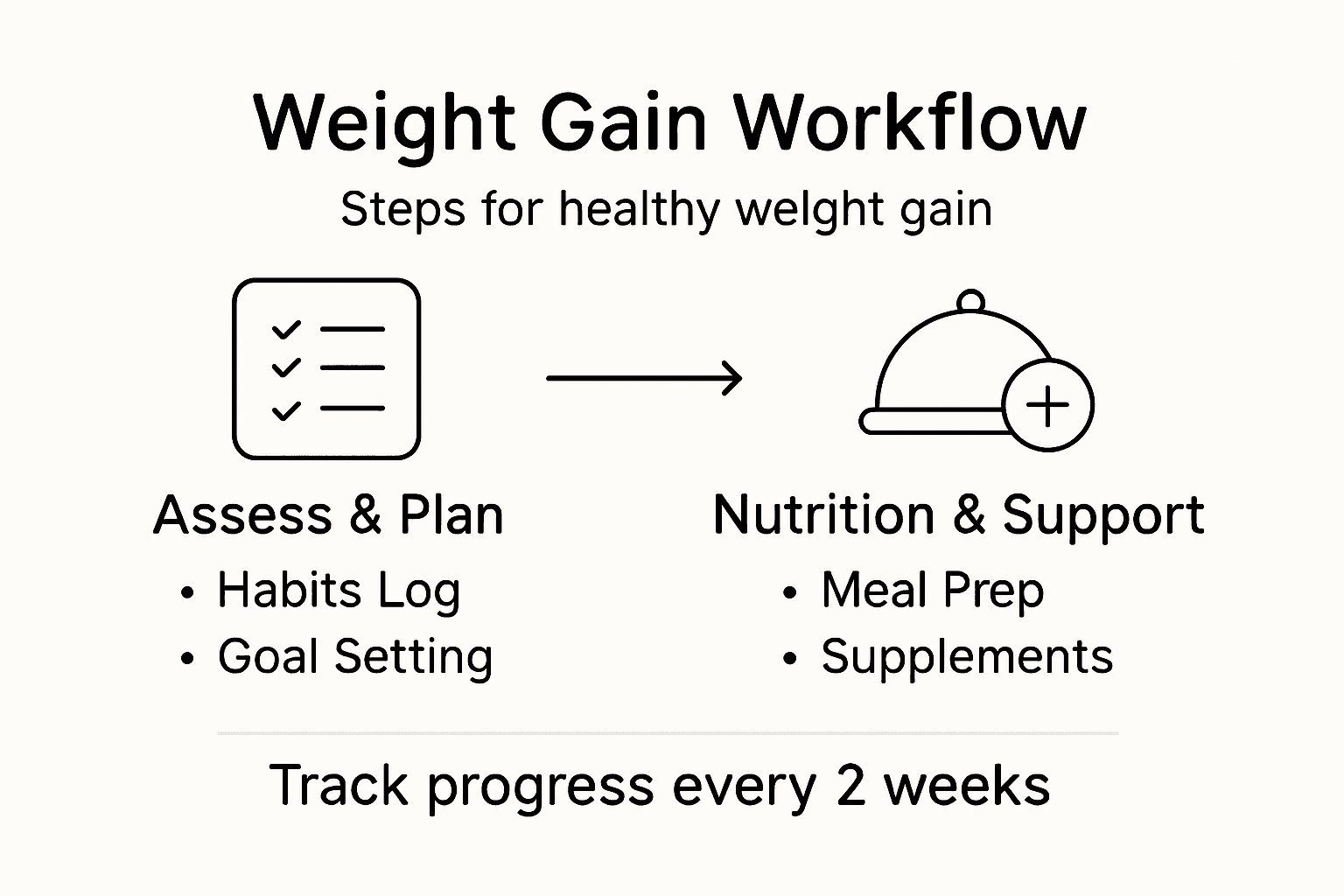
Pro tip: Take baseline measurements and photos now before making any changes. You’ll be amazed at the visual progress you make, especially in areas where the scale doesn’t tell the full story.
Step 2: Design a nutrition plan for effective weight gain
Your nutrition plan is the backbone of healthy weight gain. This isn’t about eating whatever you want, it’s about creating a strategic calorie surplus with foods that nourish your body and support the curves you’re building. The right plan turns random eating into purposeful progress.
Start by calculating your daily caloric needs. You need to know your baseline first, then add 300 to 500 calories on top of that to create a surplus that builds weight steadily. If you typically need 2000 calories to maintain your current weight, aim for 2300 to 2500 calories daily. This gradual increase prevents uncomfortable bloating and allows your body to adapt naturally.
Focus on whole, nutrient dense foods rather than empty calories. Think oatmeal with nuts and banana, chicken with rice and avocado, salmon with sweet potato, Greek yogurt with granola. These foods deliver calories alongside protein, healthy fats, and complex carbohydrates your body actually uses. Skip the ultra-processed alternatives that spike blood sugar without real nutritional benefit.

Prioritize macronutrient balance in your meals. Aim for roughly 30 percent protein, 35 percent healthy fats, and 35 percent carbohydrates. This combination supports muscle development while adding the weight you want. Include snacks between meals to hit your calorie targets without forcing yourself to eat massive portions. A protein shake with peanut butter and oats in the afternoon, almonds and cheese in the evening, these small additions compound fast.
Timing matters too. Eat breakfast within an hour of waking, then space meals about 3 to 4 hours apart. This rhythm keeps your metabolism consistent and prevents the energy crashes that make sticking to a plan difficult. Track your intake for a week or two using an app or simple notebook. You’ll see exactly where you are and where adjustments need to happen.
Your plan should be flexible and adapt as you progress. Healthy weight gain diet plans work best when personalized to your preferences and lifestyle. If you hate a food, swap it for something similar. If certain meals don’t fit your schedule, adjust the timing. Consistency beats perfection every single time.
Pro tip: Prep calorie-dense snacks in advance like energy balls made from dates, nuts, and coconut oil, or portion out trail mix with dried fruit and dark chocolate so you always have something nutritious within reach.
Step 3: Incorporate cosmetic and wellness support products
Now that you have your nutrition plan in place, cosmetic and wellness products work alongside your diet to accelerate results and boost your confidence. These aren’t shortcuts, they’re strategic tools that complement your efforts and help you see progress faster.
Start by identifying what you actually need. Are you looking for topical enhancement to specific areas, nutritional supplements to support your calorie goals, or skin health products to keep your complexion glowing as you gain weight? Different products serve different purposes. Some target appearance directly while others support your body’s internal processes. Be clear about your priorities before adding anything to your routine.
When selecting products, focus on those backed by real ingredients and transparent formulations. Wellness support products that are scientifically formulated can genuinely support your weight gain journey by providing nutrition supplementation and maintaining skin health. Look for products with protein, healthy fats, vitamins, and minerals that align with your nutrition plan. Protein bars and nutrient-dense snack supplements work beautifully with the calorie surplus you created. They make hitting your daily targets easier without adding bulk to your meals.
Here’s a quick comparison of cosmetic and wellness support product categories:
| Product Category | Primary Purpose | Ideal Usage Timing |
|---|---|---|
| Topical Enhancers | Target specific body areas | After showering, daily |
| Nutrition Supplements | Support calorie surplus | With meals or snacks |
| Skin Health Products | Enhance glow/texture | Morning and at bedtime |
Cosmetic enhancement products deserve the same attention. Understanding how plumping creams work helps you choose options that deliver real results for your body goals. Quality formulations contain ingredients that enhance skin appearance and can complement your natural weight gain. Apply these products consistently as part of your daily routine, typically after showering when your skin is warm and receptive.
Timing and consistency matter tremendously. Use wellness supplements strategically throughout your day to support your nutrition plan. Take topical products at the same time each day so they become automatic, like brushing your teeth. When you remove friction from your routine, you actually follow through instead of abandoning products after two weeks.
Track what works for your body. Everyone responds differently to products, so pay attention to how you feel and what results you see. Some women notice changes in two weeks, others in six. Patience combined with consistency beats sporadic effort every single time.
Pro tip: Stack your wellness supplements with meals or snacks you already eat, and apply cosmetic products right after your shower when you’re already in a self-care mindset to make both habits automatic.
Step 4: Adjust daily routines to maximize results
Your daily routine is where intention becomes reality. Small adjustments to when and how you eat, move, and recover compound into significant results over weeks and months. Think of your routine as the container that holds all your other efforts together.
Start by establishing consistent meal timing. Eat within a 10 to 12 hour window each day, spacing meals roughly 3 to 4 hours apart. Your body thrives on predictability. When you eat at the same times daily, your metabolism adapts and your appetite becomes more reliable. Breakfast at 7 AM, lunch at 11 AM, dinner at 5 PM, snacks in between. This rhythm keeps your calorie intake stable and prevents the erratic eating patterns that derail progress.
Fuel your body according to what you’re doing throughout the day. If you have a workout scheduled, eat a carb and protein rich snack 30 to 60 minutes before. After your session, prioritize recovery nutrition within an hour. Fueling your body strategically around your activity levels optimizes how your body uses calories. On rest days, you still need adequate energy, just distributed differently. Pay attention to what your body signals.
Incorporate movement that builds lean muscle alongside your eating routine. Regular muscle strengthening exercises help you gain weight in the right places rather than just gaining fat. Resistance training 3 to 4 times weekly with adequate rest days between sessions works beautifully. You don’t need intense workouts, just consistent effort targeting your goals. If you want curves in specific areas, focus there.
Hydration and sleep deserve as much attention as food. Drink at least 8 to 10 glasses of water daily, more if you exercise. Sleep 7 to 9 hours nightly for proper recovery and metabolism regulation. These aren’t bonus activities, they’re foundational. Dehydration makes you feel hungrier and impacts your skin. Poor sleep sabotages everything else.
Track your routine for accountability. Note what time you ate, what you consumed, how you felt, and how you looked. After two weeks you’ll see patterns that either accelerate or slow your progress. Adjust from there.
Pro tip: Set phone reminders for meals and water intake for the first two weeks until the timing becomes automatic, then you can remove the notifications and rely on habit.
Step 5: Evaluate progress and refine your workflow
Progress isn’t always linear, and that’s completely normal. Regular evaluation helps you see what’s working, what isn’t, and where to make adjustments. This step transforms your plan from static to dynamic, responding to your body’s actual needs.
Start tracking metrics that matter to you. Weight is just one number. Take measurements of your chest, waist, hips, and any specific areas you’re focused on. Track how your clothes fit. Take photos from the front, side, and back in consistent lighting. These visual markers often show progress before the scale moves significantly. Tracking weight and dietary habits at consistent times using standardized scales gives you reliable data points to assess your progress over weeks.
Here’s a summary of practical metrics to track your body transformation journey:
| Metric Type | How to Measure | Why It Matters |
|---|---|---|
| Weight | Same time, weekly scale | Shows overall mass changes |
| Body Measurements | Tape at chest, waist, hips | Reveals where gains or losses occur |
| Visual Progress | Photos in consistent light | Highlights changes scales may miss |
| Well-being Score | Journal: mood and energy | Tracks lifestyle and health impact |
Keep detailed records of what you’re eating and how you feel. Note energy levels, digestion, mood, skin quality, and sleep quality. After two to three weeks of data, patterns emerge. Maybe you feel best on days you eat more complex carbohydrates. Maybe certain supplements cause bloating. Maybe you gain weight faster on specific meal combinations. Your body is unique, and these observations guide your refinements.
Evaluate your results honestly every two weeks. Are you on track for your goals? If you aimed to gain 10 pounds in three months and you’ve gained only 2 pounds in four weeks, you need more calories. If you gained too quickly, reduce calories slightly. Small adjustments work better than dramatic changes. Body composition metrics beyond just weight including how you look and feel matter just as much as the number on the scale.
Refined workflows account for life changes. Maybe you started a new job with different hours. Maybe seasons changed and your activity level shifted. Your nutrition plan might need tweaking. Your exercise routine might need adjustment. Your product routine might need intensification. The goal stays the same, but the path flexes with your reality.
Pro tip: Create a simple spreadsheet tracking weight, measurements, photos, and how you felt each week so you can spot trends and celebrate victories you might otherwise miss.
Elevate Your Weight Gain Journey with Targeted Support
Struggling to turn your thoughtful lifestyle workflow into visible, confident results is a common challenge. This article outlines key strategies like assessing your daily habits, creating a nutrition plan, and tracking progress. To truly embrace your body goals with assurance and enhance your natural curves, consider incorporating specialized products designed to complement your routine and boost your progress. From nutrient-rich supplements that support healthy weight gain to cosmetic enhancers that target your desired areas, these tools help you transform dedication into real transformation.
Discover the difference that weight gain products-Weight Gain-Get Thick Products can make alongside your personalized habits.
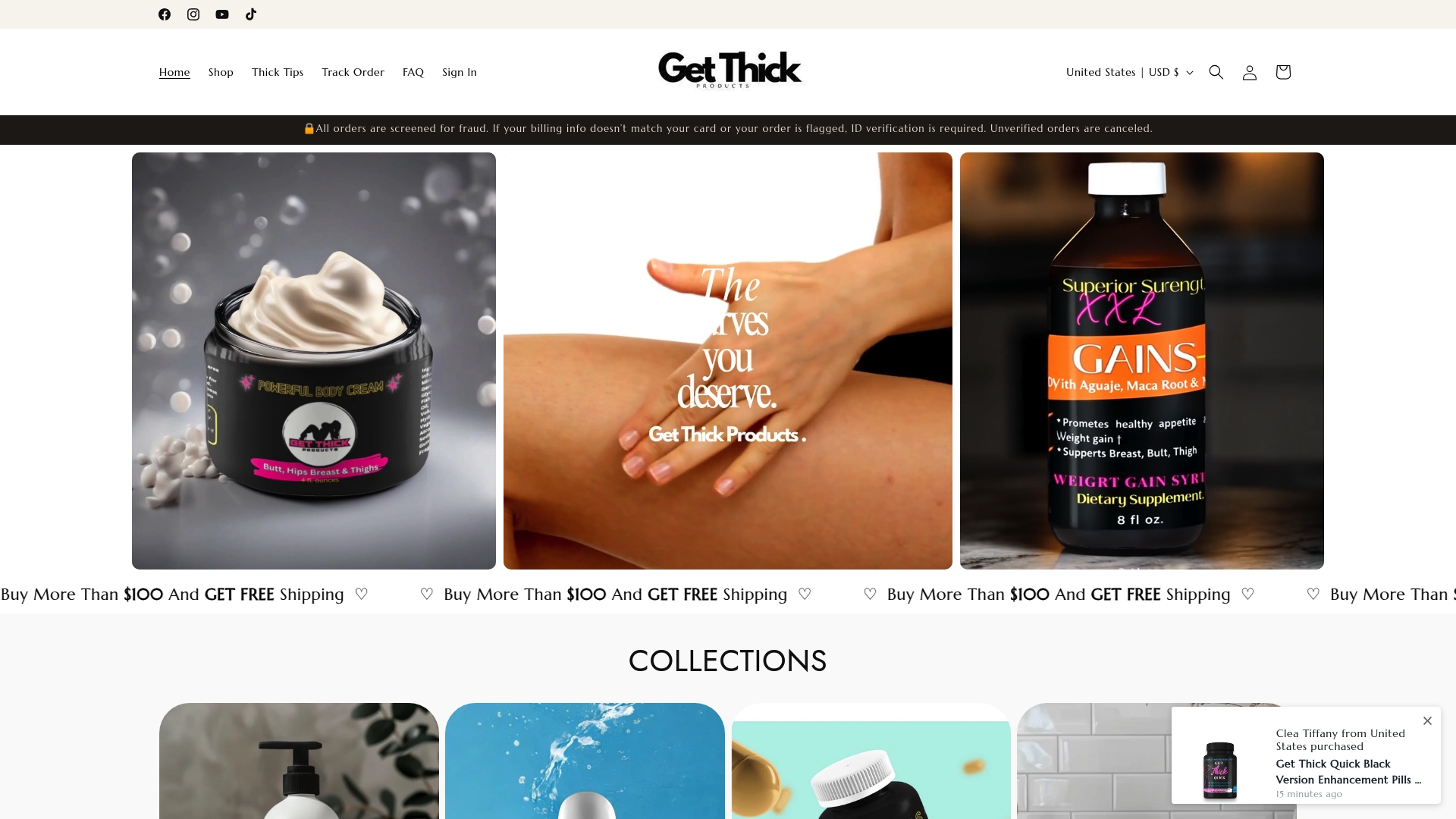
Take control of your weight gain journey now by exploring the full range available at Get Thick Products. Build confidence with body-enhancing solutions that work in harmony with your nutrition and lifestyle. Start today and see how intentional choices paired with expert-designed products bring your vision to life.
Frequently Asked Questions
How do I assess my current eating habits for weight gain?
To assess your current eating habits for successful weight gain, keep a detailed food diary for one week. Document everything you eat and drink without judgment to understand your existing patterns and make informed adjustments.
What should my daily calorie surplus be for effective weight gain?
Aim to add 300 to 500 calories to your daily intake to create a calorie surplus for steady weight gain. For example, if you typically need 2,000 calories to maintain your weight, target 2,300 to 2,500 calories each day.
How can I incorporate snacks into my nutrition plan?
Incorporate calorie-dense snacks throughout the day to meet your calorie goals without feeling overly full. Examples include a protein shake with peanut butter and oats or a handful of nuts with cheese, ensuring you have nutritious options ready.
What are the best types of exercises for gaining weight in specific areas?
To gain weight in specific areas, focus on resistance training exercises that target those muscle groups. Aim to incorporate muscle-strengthening workouts 3 to 4 times a week, emphasizing areas where you want to see more curves.
How often should I evaluate my progress while gaining weight?
Evaluate your progress every two weeks to track changes in weight, body measurements, and overall well-being. Adjust your nutrition and exercise routines as necessary, especially if you’re not meeting your weight gain goals.
What role do wellness products play in my weight gain plan?
Wellness products can enhance your weight gain plan by providing additional nutrition and supporting your overall health. Look for protein supplements and skin health products to complement your diet and boost your confidence as you gain weight.